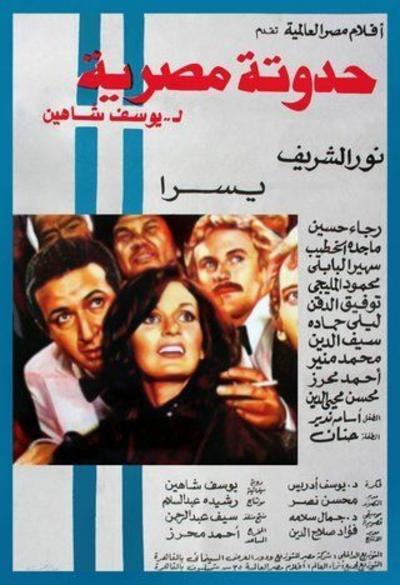
Boldly blending personal and political histories, intercutting its fast-moving fictional scenes with documentary footage, this sort of sequel to Alexandria – Why? follows the fortunes of Chahine’s charismatic film-maker hero and alter ego, forced to review his past and learn to love himself by a critical open-heart operation. The occasionally clumsy central conceit – Yehia/Chahine standing trial for his life during surgery – is amply offset by the energy and style of this indulgent, exuberant, and immensely likeable self-portrait.Read More »
Youssef Chahine
-
Youssef Chahine – Hadduta misrija AKA An Egyptian Story (1982)
1981-1990ArthouseDramaEgyptYoussef Chahine -
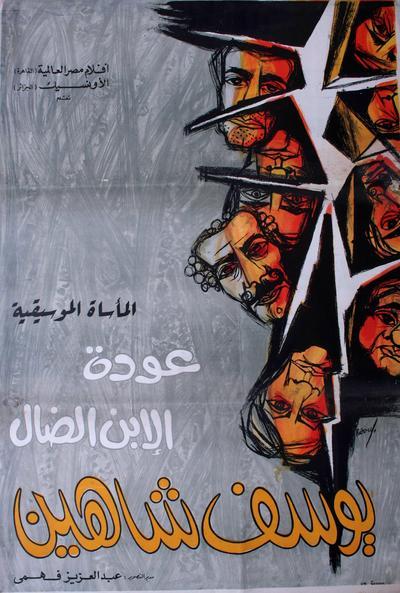
Youssef Chahine – Awdat al ibn al dal AKA The Return of the Prodigal Son (1976)
1971-1980DramaEgyptMusicalYoussef ChahineIn this Andre Gide adaptation, an activist (Ali Mahrez) is released after many years in prison and returns home, shaking up established relationships among his family members at the farm governed by his strict father. Demonstrating Chahine’s eclecticism, this is an elegant melodrama, exuberant musical, layered allegory, and profound portrait of personal and political disillusionment. This is one of Chahine’s best movies and one of the greatest Arabic films. Great performances by Mahmoud El-Meliguy and Hoda Soltan.Read More »
-
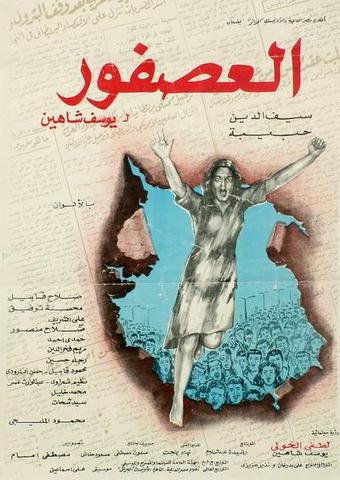
Youssef Chahine – Al-asfour AKA The Sparrow (1972)
1971-1980DramaEgyptWarYoussef ChahineOne of his most controversial films, THE SPARROW was written by Chahine in collaboration with avant-gardist Lofti el-Kholi. Set during the 1967 Six Day War between Israel and the United Arab Republic this story of familial and national divisions has become one of Chahine’s most popular films in festivals and retrospectives. A young policeman’s adoptive father occupies a high post in the force, while his biological father is reputed to have been a left-wing activist. Raouf begins to search for those who might have known his real father, while his half-brother, stationed on the Sinai front, prepares for battle.Read More »
-
Youssef Chahine – Bab el hadid AKA Cairo Station (1958)
1951-1960DramaEgyptThrillerYoussef Chahine

Quote:
In Cairo’s chaotic central station, Qinawi, an impoverished newspaper vendor, develops an infatuation with the free-spirited Hannuma, who dodges the authorities to peddle soft drinks to passengers. When he faces rejection, Qinawi’s obsession becomes dangerous as he falls into a state of insanity.Read More » -
Youssef Chahine – Al-Massir aka Destiny (1997)
Drama1991-2000EgyptPhilosophyYoussef Chahine

Ideas are imperishable, such is the premise of this powerful, upbeat allegory from one of Egypt’s most esteemed directors, Youssef Chahine. Ostensibly the true tale of revolutionary Muslim philosopher Averroes who lived in 12th-century Spain when Arabs ruled Anadulsia, it parallels the story of Chahine’s own experiences with Islamic fundamentalists when he released his 1994 film L’Emigre because it dared depict a sacred Muslim prophet. During that time, fundamentalists were not content to merely have the film banned, they also threatened Chahine’s life. Read More »
-
Youssef Chahine – Iskanderija… lih? aka Alexandria… Why? (1978)
1971-1980DramaEgyptYoussef Chahine
Set against the panoramic backdrop of war-torn Egypt, director Youssef Chahine tells a highly personal tale of love and determination. Amid the poverty, death and suffering caused by World War II, 18 year-old Yehia, retreats into a private world of fantasy and longing. Obsessed with Hollywood, he dreams of one day studying filmmaking in America, but after falling in love and discovering the lies of European occupation, Yehia profoundly reevaluates his identity and allegiances.
The first chapter of Chahine’s Alexandria Trilogy: Alexandria…Why?, An Egyptian Story and Alexandria Again and Forever.Read More »
-
Youssef Chahine – Awdat al ibn al dal AKA The Return of the Prodigal Son (1976)
Drama1971-1980EgyptYoussef Chahine

In this Andre Gide adaptation, an activist is released after many years in prison and returns home, shaking up established relationships among his family members at the farm governed by his strict father. Demonstrating Chahine’s eclecticism, this is an elegant melodrama, exuberant musical, layered allegory, and profound portrait of personal and political disillusionment. (bam.org)Read More »