Weimar Republic cinema

  • F.W. Murnau – Der Brennende Acker AKA Burning Soil (1922)

    Drama1921-1930F.W. MurnauGermanySilentWeimar Republic cinema


    29f7c043f76a2bde437fd0d52a185152

    When farmer Rog dies, his son Peter stays, but Johannes can not be satisfied with such a condition (and servant Maria’s love) and finds a job as old Count Rudenberg’s secretary. His ambition leads him to charm Gerda, the Count’s unique daughter. But when he discovers that Count’s second wife Helga will soon inherit a field that only he knows his underground is full with petroleum, he changes his allegiance… Greed and death.Read More »

  • Robert Wiene – I.N.R.I. AKA Crown of Thorns (1923)

    1921-1930DramaGermanyRobert WieneSilentWeimar Republic cinema

    Free Image Hosting at www.ImageShack.us

    29f7c043f76a2bde437fd0d52a185152

    By the director of Cabinet of Dr.Caligari, this is the Passion embedded in a contemporary story. An anarchist jailed for an attempted assassination is told the Passion story by the prison chaplain, who seeks to convince him that it is better to sacrifice ones own life than take the life of ones enemy. The framing story, taken from a novel, is believed to have been intended to give the Biblical story an anti-Bolshevist propaganda function. In any case, it was added without the knowledge of the actors in the Passion story, who included some of the major stars of the period Asta Nielsen as Mary Magdalene, Henny Porten as Mary, Grigori Chmara as Jesus, and Werner Krauss as Pontius Pilate -bampfa.berkeley.eduRead More »

  • Alfred Zeisler – Der Schuß im Tonfilmatelier AKA The Shot in the Talker Studio (1930)

    1921-1930Alfred ZeislerCrimeGermanyWeimar Republic cinema

    29f7c043f76a2bde437fd0d52a185152

    IMDB:
    During the shooting of a jealousy scene on a soundstage, one actress is murdered. Due to the fact that the male star of the movie had a relation with the victim and the female star is now his fiance, he is suspected by the police. Written by Stephan Eichenberg

    During the production of an early movie using not only pictures but also sound an actress is murdered. The arriving inspectors do not only have to get to know the circumstances of the crime but also the new conditions: how “sound-movies” are made, to solve the crime. Written by katharina_strehl public.uni-hamburg.deRead More »

  • Hans Richter – Everyday (1929)

    1921-1930ArthouseGermanyHans RichterShort FilmWeimar Republic cinema

    Image Hosted by ImageShack.us

    Quote:
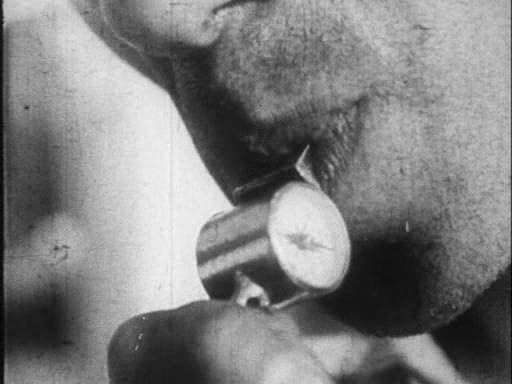
    Every Day was a film that German avant-garde filmmaker Hans Richter made as part of a film production course run by the Film Society. It features filmmaker Sergei Eisenstein playing a policeman, whilst Len Lye and Basil Wright provided technical assistance. These contributions reflect the sense of internationalism occurring at this time in British film circles. The film was completed in 1929 under the title The Daily Round, but was never released because Richter was unhappy with the result. Richter began to rework the film in 1975, but died before its completion. It was finally restored, with the addition of a soundtrack, after his death.Read More »

  • F.W. Murnau – Der Letzte Mann AKA The Last Laugh (1924)

    1921-1930ClassicsF.W. MurnauGermanySilentWeimar Republic cinema

    29f7c043f76a2bde437fd0d52a185152

    Jannings’ character, the doorman for a famous hotel, is demoted to washroom (bathroom) attendant, as he is considered too old and infirm to be the image of the hotel. He tries to conceal his demotion from his friends and family, but to his shame, he is discovered. His friends, thinking he has lied to them all along about his prestigious job, taunt him mercilessly while his family rejects him out of shame. The man, shocked and in incredible grief, returns to the hotel to sleep in the bathroom where he works. The only person to be kind towards him is the night watchman, who covers him with his coat as he falls asleep.Read More »

  • Oskar Fischinger – Twelve Short Films by Oskar Fischinger (1924 – 1942)

    1921-1930AnimationExperimentalGermanyOskar FischingerWeimar Republic cinema

    Oskar Fischinger (1900-1967) embodied the modernist ideal of the maladaptive artist so well that a balanced evaluation of his work as filmmaker and painter depends on one’s ability to withhold automatic beatification based solely on his biography. Born and educated in Germany, exiled to Los Angeles when Hitler came to power and abstraction was decreed a “degenerate art,” Fischinger was an uncompromising abstractionist who throughout his life retained a dogged faith in the transcendental potential of pure geometry and color. Persecuted in Germany and condemned to grinding poverty after he settled in L.A., Fischinger’s devotion to the integrity of his art was exemplary.Read More »

  • Fritz Lang – Das wandernde Bild aka The Wandering Image (1920)

    1911-1920DramaFritz LangGermanySilentWeimar Republic cinema

    29f7c043f76a2bde437fd0d52a185152

    Quote:
    The tangled story that unfolds in the torrid melodrama The Wandering Shadow centers around the character of Irmgard (played by actress Mia May), a virtuous woman who, like many such heroines past and present, gets involved with the wrong kind of man. As the film opens, she is seen fussing on a train headed for the picturesque mountains of Germany, fleeing an unidentified gentleman. Through flashbacks, we learn that Irmgard once found employment with a wealthy free-love advocate (Hans Marr). The two have an affair and, with Irmgard pregnant and desperate, she schemes to secretly marry the man’s brother (also played by Hans Marr) so it at least appears that the child is being raised properly. The confusing story eventually has Irmgard trudging through the mountainous terrain to come across a generous monk who offers her a chance at the redemption she so desperately desires.Read More »

  • Georg Wilhelm Pabst – The Mistress of Atlantis AKA The Lost Atlantis (1932)

    1931-1940AdventureFantasyGeorg Wilhelm PabstGermanyWeimar Republic cinema

    29f7c043f76a2bde437fd0d52a185152

    Synopsis:

    Two soldiers–searching the Sahara for Atlantis–are captured by raiders from the lost city. They are taken before its beautiful queen who has over 50 mummified ex-lovers! What follows is an endless nightmare, climaxing with the murder of one of the soldiers. There are some brilliant moments in this sci-fi fantasy classic.

    A pair of Legionnaires discover the remains of the lost city of Atlantis in the middle of the Sahara desert. It is ruled by a strange and beautiful demi-goddess. (guess who).Read More »

  • Robert Wiene – Das Cabinet des Dr. Caligari AKA The Cabinet of Dr. Caligari [2014 Restored Version] (1920)

    1911-19202011-2020GermanyHorrorRobert WieneSilentWeimar Republic cinema

    29f7c043f76a2bde437fd0d52a185152

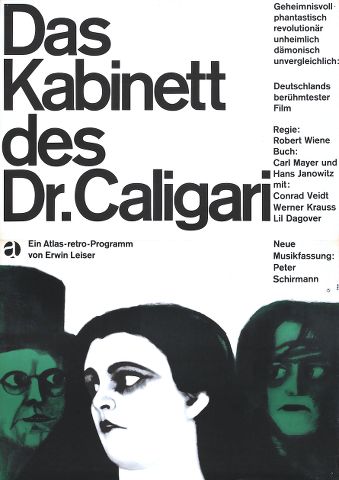
    Here is an HDTV rip of the brand new digitally restored version of the absolute masterpiece “The Cabinet of Dr. Caligari”. The film has been restored using the original camera negative, the result premiered on February 9th 2014 at the 64th Berlin International Film Festival.

    New York composer and multi-instrumentalist John Zorn presented a new composition on the Karl Schuke organ at Berlin’s philharmonic to accompany the film. This is the version that has been shown at the festival with his music.
    Read More »

Back to top button