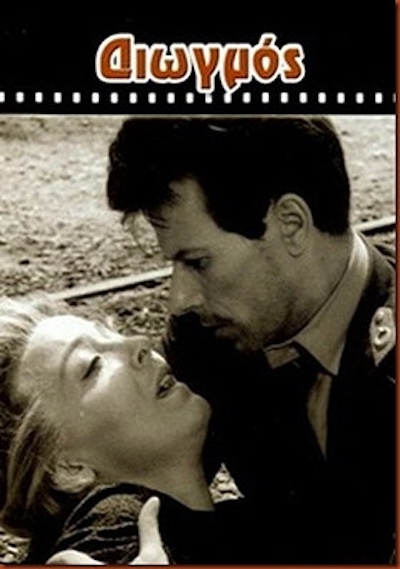

Greece 1942. In an island across the coast of Asia Minor, a woman finds an injured partisan who wants to leave for Turkey. She helps him with a boat to cross over but they will be caught by the Turks and kept in a camp.Read More »
Greece 1942. In an island across the coast of Asia Minor, a woman finds an injured partisan who wants to leave for Turkey. She helps him with a boat to cross over but they will be caught by the Turks and kept in a camp.Read More »

American-born Agnes Keith (Colbert) and her British husband (Patric Knowles) attempt to flee Borneo with their young son in the wake of the Japanese invasion. They are interned and then taken to separate prison camps, one for men, the other for women and children. Amid the brutality of the internment camp, the camp commander Lieutenant-Colonel Suga (played by Sessue Hayakawa who in 1958 was nominated for an Oscar for a similar role in The Bridge on the River Kwai) is respectful to Mrs Keith because he is familiar with her work, and is shown to be kind to the children even when his own family has been destroyed by the American atom bombs.Read More »

Voyage of the Damned is a 1976 war drama film directed by Stuart Rosenberg, with an all-star cast featuring Faye Dunaway, Oskar Werner, Lee Grant, Max von Sydow, James Mason, and Malcolm McDowell.
The story was inspired by actual events concerning the fate of the ocean liner St. Louis carrying Jewish refugees from Germany to Cuba in 1939. It was based on a 1974 nonfiction book of the same title written by Gordon Thomas and Max Morgan-Witts. The screenplay was written by Steve Shagan and David Butler. The film was produced by ITC Entertainment and released by Rank Film Distributors in the UK and Avco Embassy Pictures in the US.Read More »
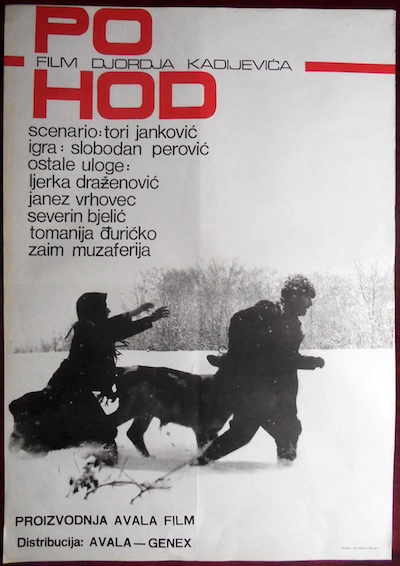
A story of a farmer and his calf, the only survivors of the German WW2 punitive expeditions that passed through their village. While evading before the dangers of war, the farmer develops a deep attachment to his calf and tries to save it at all costs, but it wouldn’t be much easier for them even after the liberation day.Read More »

Felicity Rash wrote:
During the war years, film developed as a novel and effective vehicle for primary and secondary war propaganda. Visual images of a heroic Self and a terrifying enemy Other were a popular means of conveying a nationalist message and boosting patriotic sentiment. […] In Der Heimat Schützengraben (1916) a farmer newly returned from the East Prussian front tells of the horror he experienced when fleeing from Russian soldiers. His story brings him sympathy from a group of villagers from whom he is requesting a loan. At the end of the film, children are shown opening up their piggy-banks. An old man makes an emotional speech to the villagers, and hence the film’s audience, telling them to lend money to the state …Read More »
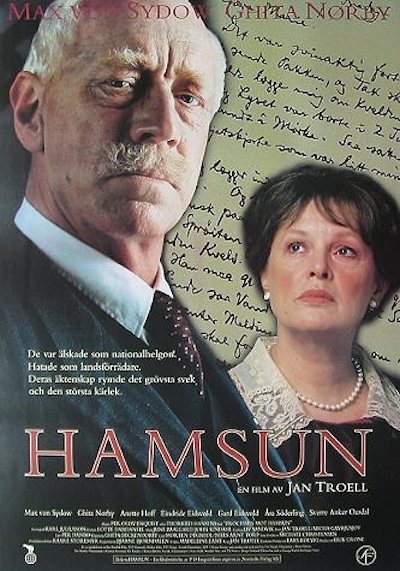
Norwegian Nobel Laureate Knut Hamsun’s controversial support for the Nazi regime during WW2 and its consequences for the Hamsun family after the war.Read More »

The Wehrmacht arrives in a small Albanian town after Italy capitulates to the Allies. Tomka and his gang decide to exact revenge when the German soldiers set up camp on their football pitch.Read More »

Synopsis
Double-agent Brigitte Lahaie is the star attraction at a strip-joint/brothel called “Le Diable Rose” in Nazi occupied France which is frequented by both Nazis and Partisans alike.Read More »
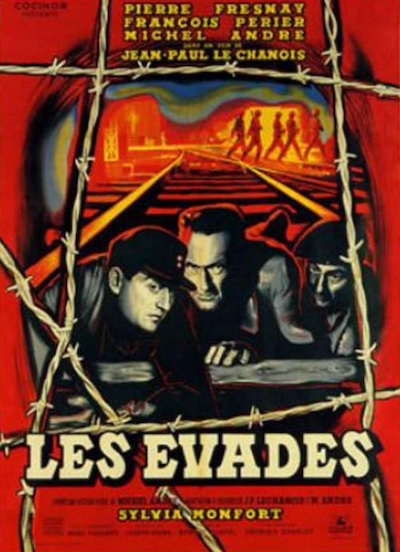
In a boxcar, three escapees hope to get to Sweden; there’s the military man who wants to resume the fight, the simple private who’s tired of being a fighter, and the intellectual, a schoolteacher fluent in German -which is useful- who does not exactly what he is going to do. Their main problem is water. On the train,their journey will be perilous: every station is a threat, for they may be discovered by the German soldiers.Read More »