USSR

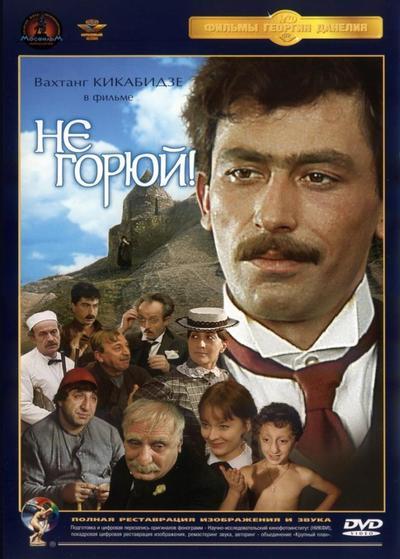
  • Georgiy Daneliya – Ne goryuy! AKA Don’t Grieve (1969)

    1961-1970ComedyDramaGeorgiy DaneliyaUSSR

    29f7c043f76a2bde437fd0d52a185152

    Synopsis:
    After graduating from St. Petersburg University, full of hopes and grand plans, returned to his native town of the young doctor Benjamin Glonti. But life as before his departure, is running its course: a growing family of sestritsy Sofiko, hard from morning till night rewrite the paper her husband, Luke, from time to time in the cellar down to “topple” bottle. And still, the elephant, without the case, “getting” all the counsel of Dodo. Benjamin became a lament for the failed life. And then, to correct the matter brother, Sofiko decided to marry his daughter to the old doctor …Read More »
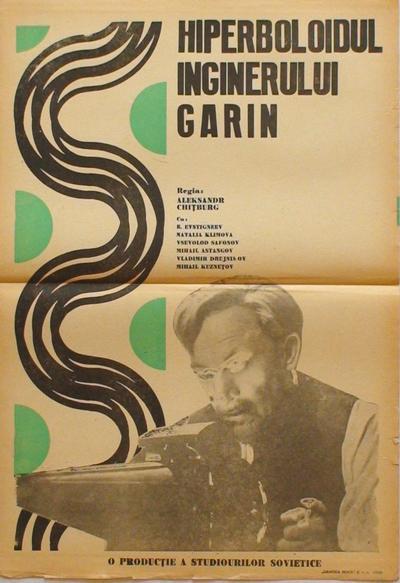
  • Aleksandr Gintsburg – Giperboloid inzhenera Garina AKA Engineer Garin’s Hyperboloid [+Extra] (1965)

    1961-1970AdventureAleksandr GintsburgSci-FiUSSR

    29f7c043f76a2bde437fd0d52a185152

    Synopsis:

    The year is 1925. Professor Mantsev invents a weapon of a formidable destructive force never seen before – a hyperboloid that strikes dead with a beam… Engineer Garin steals this prototype of the modern laser gun, with the aim to use it for the realization of his insane idea of become the ruler of the world, with no inkling of the consequences that would be dangerous for him, too. A hunt for Garin and Mantsev’s dangerous invention begins…Read More »

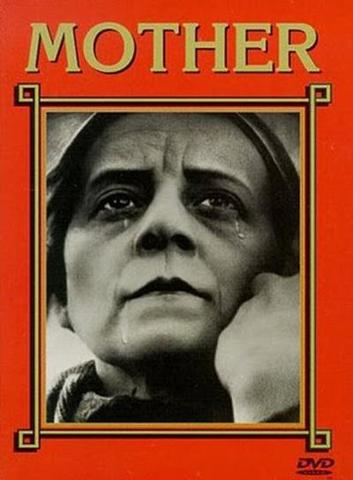
  • Vsevolod Pudovkin – Mat AKA Mother (1926)

    1921-1930DramaSilentUSSRVsevolod Pudovkin

    29f7c043f76a2bde437fd0d52a185152

    The son of a worthless alcoholic father and a hardworking mother leads
    an illegal strike during the failed 1905 uprising. In an attempt to save
    her son, the mother inadvertently gives him away to the police, but
    gradually turns to communism after experiencing injustice and suffering.

    Pudovkin’s first feature turns Maxim Gorky’s rambling novel into a
    tightly constructed narrative. The film’s emotional and visual impact
    has not diminished with time, nor has Baranovskaya’s
    performance. – Holt’s Foreign Film Guide.Read More »

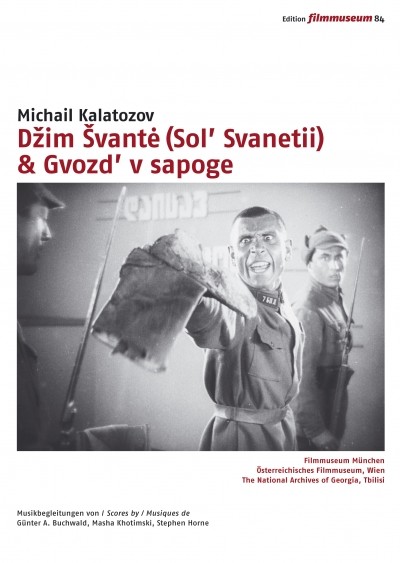
  • Mikhail Kalatozov – Jim Shvante (marili svanets) AKA Salt For Svanetia (1930)

    1921-1930Mikhail KalatozovSilentUSSR

    29f7c043f76a2bde437fd0d52a185152

    Quote:
    The Georgian-born filmmaker Michail Kalatozov (19031973) is best remembered for directing some of the most innovative and successful Soviet films of the 1950s and 1960s. This DVD presents digitally restored versions of two of his lesser-known, early works, which were highly controversial in their time but now rank among the finest achievements in Soviet silent cinema. Salt for Svanetia is an austere depiction of peasant life in the inhospitable terrain of the Caucasus Mountains. Nail in the Boot, a biting parable of wartime irresponsibility, chillingly prefigures the later Stalinist purge trials. Günter Buchwald’s and Stephen Horne’s prize-winning scores and the experimental accompaniment by Masha Khotimshi underline the poetic and expressive visual style of these exceptional masterpieces.Read More »

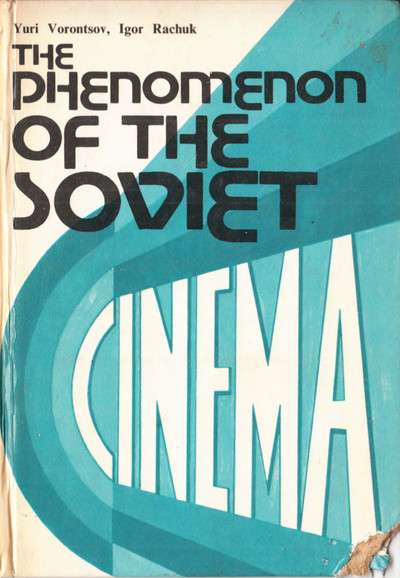
  • Yuri Vorontsov; Igor Rachuk – The phenomenon of the Soviet cinema (1980)

    1971-1980BooksIgor RachukUSSRYuri Vorontsov

    Author: Yuri Vorontsov; Igor Rachuk
    Publisher: Moskva : Progress Publishers, 1980
    Edition/Format: Print book : English

    Related Subjects:

    Motion pictures — Soviet Union — History.
    Cinéma — URSS — Histoire.
    Motion pictures.
    Soviet Union.Read More »

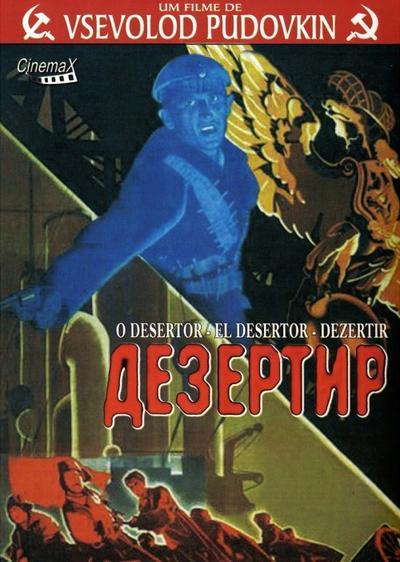
  • Vsevolod Pudovkin – Dezertir AKA The Deserter (1933)

    1931-1940ExperimentalPoliticsUSSRVsevolod Pudovkin

    29f7c043f76a2bde437fd0d52a185152

    Synopsis:
    In 1929, four years before making this film, Vsevolod Pudovkin and Sergei Eisenstein had collaborated on a Sound Manifesto that called for a radical use of asynchronous sound effects, which would be used in counterpoint to the screen image, rather than supporting it, as is normally the case. In DESERTER, Pudovkin put this theory into practice.

    Starring Boris Livanov as German dockworker Karl Renn, the film focuses upon a politically unconscious figure who learns the error of his ways. Renn becomes involved in picketing and demonstrating on the dock but walks out on his comrades one day, doubtful about the value of this kind of political activity.Read More »

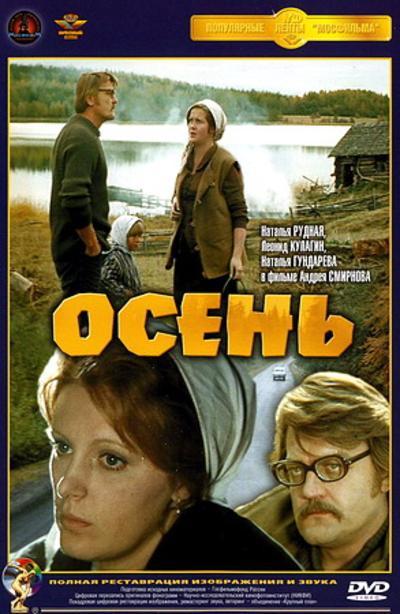
  • Andrey Smirnov – Osen AKA Autumn (1974)

    1971-1980Andrey SmirnovDramaRomanceUSSR

    29f7c043f76a2bde437fd0d52a185152

    A 7-day trip with a city couple that is struggling to get it’s relationship straightened up. She is single, he is married. The rain never stops, leaving them inside the country shack for days to make love and talk in between. It is called “The Fall (Autumn)” as the season signifies the gloomy days of their love. Read More »

  • Sergei M. Eisenstein – Drawings (1961)

    1961-1970BooksSergei M. EisensteinUSSR

    Рисунки. Dessins. Drawings.
    by Sergei M. Eisenstein

    Hardcover: 228 pages
    Publisher: Publishing House “Iskustvo” (Art) (May 30, 1961)
    Language: Russian, English, French
    Product Dimensions: 62 x 94.8

    Sergei Mikhailovich Eisenstein was a Soviet Russian film director and film theorist, a pioneer in the theory and practice of montage. He is noted in particular for his silent films Strike (1925), Battleship Potemkin (1925) and October (1928), as well as the historical epics Alexander Nevsky (1938) and Ivan the Terrible (1944, 1958).

    Eisenstein’s book presents his drawings and sketches for his films of different years as well as trilingual texts: essays by Y. Pimenov (“The Drawings of Eisenstein”), Olga Aisenstat (“Eisenstein the Graphic Artist”), Gennady Myasnikov (“Director’s View of the Film”) and Eisenstein himself (“How I Learned to Draw” and “A Few Words about My Drawings”).Read More »

  • Aleksandr Zarkhi – Dvadtsat shest dney iz zhizni Dostoevskogo AKA 26 Days in the Life of Dostoyevsky (1981)

    1981-1990Aleksandr ZarkhiDramaUSSR

    29f7c043f76a2bde437fd0d52a185152

    Twenty-Six Days in the Life of Dostoyevsky was entered on February 16th at the 1981 Berlin Film Festival to commemorate the 100th anniversary of Dostoyevsky’s death on February 9th, 1881, and won a “Best Actor” award for Anatoly Solonitsyn as Dostoyevsky. Solonitsyn was a favorite actor in Andrei Tarkovsky’s films, and this was to be his penultimate role. This brief imaginary period in the famed Russian writer’s life encapsulates one of his darker moments in 1866. At that time he was still a relatively unknown writer whose first widely acclaimed work, Crime and Punishment, was just on the horizon. His life was at a very low ebb as he struggled with debts he could not pay, and as he fought depression over the loss of his wife to tuberculosis, and the death of his brother, who was very close to him. His first literary journal had to be scrapped because of political reasons, and the second venture needed funding. The police come to see him, sent by his publisher who is demanding recompense for debts overdue. Desperate to escape the pressure on all sides, Dostoyevsky decides to undertake the impossible and write the story of The Gambler in 26 days, thereby satisfying the debt to the publisher at least.Read More »

Back to top button