USSR

  • Igor Talankin – Dnevnye zvyozdy AKA The Stars of the Day (1968)

    1961-1970DramaIgor TalankinUSSR

    Dnevnye Zvyozdy (“The Stars of the Day”, 1966) was based on poetess Olga Berggolts’s autobiography. She was a difficult figure for the authorities: though she stayed in Leningrad during the siege making inspirational radio broadcasts, her more personal work was suppressed, even after her death. Suspended strangely between interior monologue, poetic recitation, exterior action and memory, it won an award at the Venice Film Festival. It also introduced Talankin to the actress Alla Demidova, who appeared in most of his subsequent films.Read More »
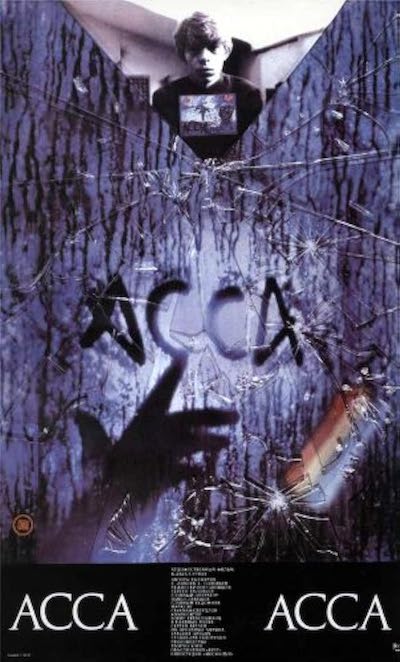
  • Sergei Solovyov – Assa (1987)

    1981-1990CrimeDramaSergei SolovyovUSSR

    ASSA is set in Crimea during the winter in the mid eighties. A young musician (Bananan) falls for mobster’s (Krymov) young mistress (Alika). The parallel story line involves an 18th century assassination plot.Read More »

  • Georgi Daneliya – Ya shagayu po Moskve AKA I Walk Around Moscow (1964)

    1961-1970ComedyGeorgi DaneliyaRomanceUSSR

    A 1964 Soviet film directed by Georgiy Daneliya and produced by Mosfilm studios. It stars Nikita Mihalkov, Aleksei Loktev, Jevgeny Steblov and Galina Polskikh. The film also features cameos by four People’s Artists of the USSR: Rolan Bykov, Vladimir Basov, Lev Durov, and Inna Churikova.

    The famous movie theme, performed by Mikhalkov, was written by the composer Andrej Petrov. The film, regarded as one of the most characteristic of the Khrushchev Thaw, premiered at the 1964 Cannes Film Festival and won a prize for the work of cameraman Vadim Yusov, best known for his subsequent collaboration with Andrei Tarkovsky.Read More »

  • Konstantin Lopushanskiy – Pisma myortvogo cheloveka AKA Dead Man’s Letters (1986)

    1981-1990ArthouseKonstantin LopushanskiySci-FiUSSR

    Wikipedia wrote:
    Dead Man’s Letters (Russian: Письма мёртвого человека, romanized: Pis’ma myortvogo cheloveka), also known as Letters from a Dead Man, is a 1986 Soviet post-apocalyptic drama film directed and written by Konstantin Lopushansky. He wrote it along with Vyacheslav Rybakov and Boris Strugatsky. It marks his directorial debut.

    The film was screened at the International Critics’ Week section of the Cannes Film Festival in 1987 and received the FIPRESCI prize at the 35th International Filmfestival Mannheim-Heidelberg.Read More »

  • Sergei Parajanov – Ukrainskaya rapsodiya AKA Ukrainian Rhapsody (1961)

    1961-1970ArthouseDramaSergei ParajanovUSSR

    Singer Oksana has lost her beloved in the war. Everyone thinks he perished, but actually he was taken prisoner, then ran away, hid, fell into American hands, and… Finally, he returns to his village, and meets Oksana.Read More »

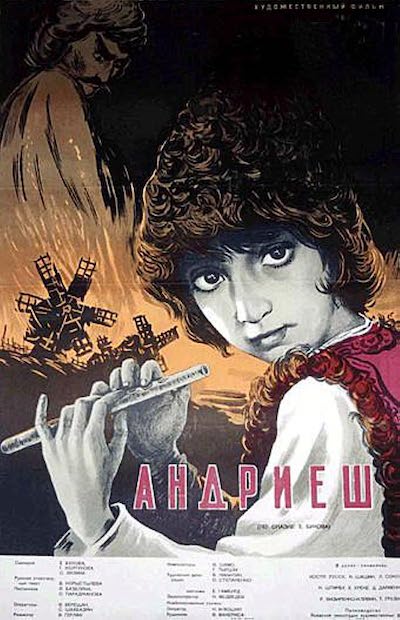
  • Yakov Bazelyan & Sergei Parajanov – Andriesh (1954)

    1951-1960AdventureFantasySergei ParajanovUSSRYakov Bazelyan

    A major foreshadowing of Paradjanov’s later work, the visually prodigious Andriesh is an entertaining tale about a young shepherd who is given a magic shawm (a flutelike instrument) to help him conquer his foes. With its flying sheep, evil wizards, and storm demons—all captured in the gloriously artifical palette of fifties Soviet color stock—Andriesh has the kind of eye-popping, whirlwind weirdness of Paradjanov’s last films, Suram Fortress and Ashik Kerib.Read More »

  • Vladimir Denisenko AKA Conscience (1968)

    Drama1961-1970USSRVladimir DenisenkoWar

    Volodymyr Denysenko’s searing partisan drama is a neglected masterpiece of Soviet Ukrainian cinema. Recounting a partisan attack on a Nazi officer and the brutal recriminations that follow, Vasyl Zemliak’s quasi-autobiographical script draws on his own experiences in occupied rural Ukraine during World War Two. Denysenko renders Zemliak’s existentialist drama of conviction and sacrifice in starkly poetic visuals, accompanied by the discordant score of Krzysztof Penderecki. Conscience was shot as a diploma project in an effort to evade the censors, but was still denied a release and only screened in 1989. Reminiscent of Larisa Shepitko’s The Ascent, it is less celebrated than its contemporaries in the Ukrainian “poetic cinema” movement, but remains a clarion call of anti-war filmmaking.Read More »

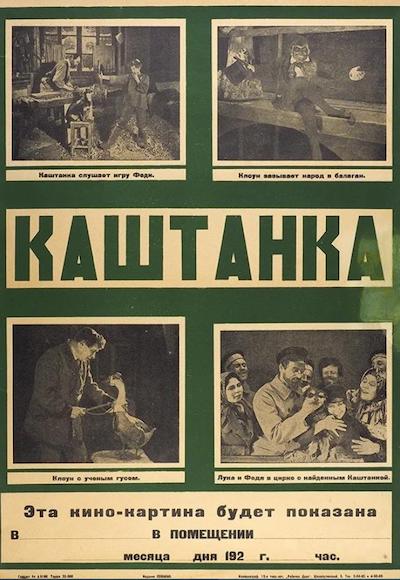
  • Ivan Pravov & Olga Preobrazhenskaya – Kashtanka (1926)

    1921-1930DramaIvan PravovOlga PreobrazhenskayaSilentSoviet silent cinemaUSSR

    Quote:
    Mariann Lewinsky (Il Cinema Ritrovato 2020): “Kashtanka by Olga Preobrazhenskaya, print 1995, a film of winter, of night and snow, of children and animals, a film about loss, a masterpiece”, read my viewing notes from 2012. My Prague colleagues had it screened for me because they knew I was interested in colour in silent cinema, and they knew a tinted Soviet silent film to be a rare item. I had never heard the name of the director. My encounter with her work was enhanced by the shock of discovering that a major director who had reached international audiences with Baby ryazanskie and Tikhiy Don (The Quiet Don) around 1930 could disappear without a trace from official film history. In 2013, Il Cinema Ritrovato dedicated a retrospective to her.” Mariann Lewinsky (Il Cinema Ritrovato 2020)Read More »

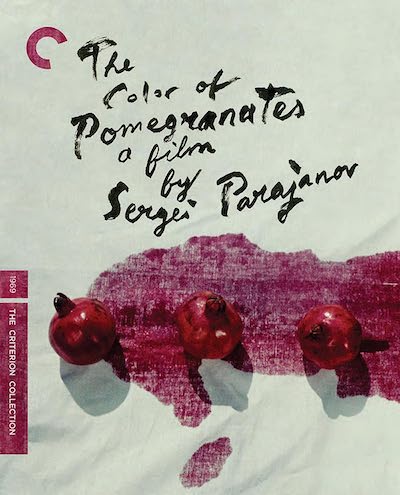
  • Sergei Parajanov – Sayat Nova aka Tsvet granata aka The Color of Pomegranates [Yutkevich cut] (1969)

    1961-1970EpicSergei ParajanovUSSR

    Quote:
    Soviet censors and Communist Party officials objected to Parajanov’s stylized, poetic treatment of Sayat-Nova’s life and complained that it failed to educate the public about the poet. As a result, the film’s title was changed from Sayat-Nova to The Color of Pomegranates, and all references to Sayat-Nova’s name were removed from the credits and chapter titles in the original Armenian release version. The Armenian writer Hrant Matevosyan wrote new, abstractly poetic Armenian-language chapter titles. Officials further objected to the film’s abundance of religious imagery, although a great deal of religious imagery still remains in both surviving versions of the film. Initially the State Committee for Cinematography in Moscow refused to allow distribution of the film outside of Armenia. It premiered in Armenia in October 1969, with a running time of 77 minutes.Read More »

Back to top button