Silent

  • A.E. Coleby – Mysteries of London (1915)

    1911-1920A.E. ColebyDramaSilentUnited Kingdom

    29f7c043f76a2bde437fd0d52a185152

    Quote:
    After her father is falsely jailed for embezzlement and her mother dies of grief, Louise is adopted by a kindly stockbroker. 15 years later, she falls in love with his dissolute son Frank, a mistake that nearly proves fatal to her. The film’s main historical point of interest, though, lies in the still highly recognisable central London locations – but Dutch intertitles and copious print damage suggest that we’re lucky that this lively three-part melodrama survives at all.

    Active in films from 1907, and making features as early as 1912, London-born AE Coleby (1876-1930) was a prolific silent-era director. Specialising in thrillers and melodramas, he was among the first to tackle such horror staples as Egyptian curses (The Mummy, 1912) and the perennial Chinese villain Fu Manchu (The Mystery of Fu Manchu, 1923). In the 1920s, he returned to making mainly short films, including a couple of early sync-sound experiments, but he died shortly after Britain’s talkie era began in earnest. Sadly, as with many silent filmmakers, most of his output no longer survives.Read More »

  • Alfred Hitchcock – The Ring (1927)

    Drama1921-1930Alfred HitchcockSilentUSA

    29f7c043f76a2bde437fd0d52a185152

    A 1927 British silent sports film directed and written by Alfred Hitchcock and starring Carl Brisson, Lillian Hall-Davis and Ian Hunter. It is one of Hitchcock’s nine surviving silent films. The Ring is Hitchcock’s only original screenplay although he worked extensively alongside other writers throughout his career.Read More »

  • King Vidor – Show People (1928)

    1921-1930ComedyKing VidorSilentUSA

    29f7c043f76a2bde437fd0d52a185152

    Colonel Pepper brings his daughter, Peggy, to Hollywood from Georgia to be an actress. There she meets Billy who gets her work at Comet Studio doing comedies with him. But Peggy is discovered by High Art Studio and she leaves Billy and Comet to work there. Read More »

  • Ernst Lubitsch – Ich möchte kein Mann sein AKA I Don’t Want to Be a Man (1918)

    1911-1920ComedyErnst LubitschGermanySilent

    29f7c043f76a2bde437fd0d52a185152

    A teenaged tomboy, tired of being bossed around by her strict guardian, impersonates a man so she can have more fun, but discovers that being the opposite sex isn’t as easy as she had hoped.

    Quote:
    I Don’t Want To Be A Man is like The Oyster Princess an early example of Ernst Lubitsch’s comic skills, and it also shares The Oyster Princess’ star, the irrepressible comedienne Ossi Oswalda, who in both films lends her name to the characters she plays. Here she plays a wild, rambunctious late teen barely under the control of her guardian/uncle and governess. (In reality it takes a while to work out that this middle-aged couple glaring disapprovingly out the window at Ossi’s mild antics outside are not her parents; they seemed rather coded as such.)Read More »

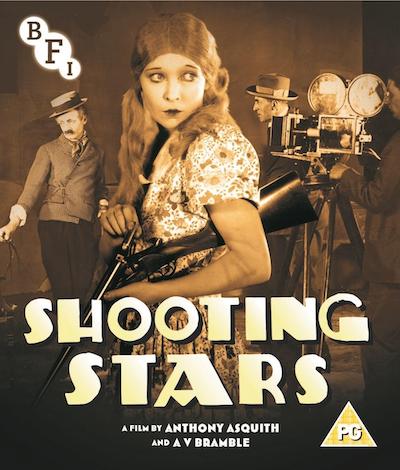
  • Anthony Asquith & A.V. Bramble – Shooting Stars (1928)

    DramaA.V. BrambleAnthony AsquithSilentUnited Kingdom

    Synopsis:
    The husband and wife acting team of Mae Feather and Julian Gordon is torn apart when he discovers she is having an affair with the screen comedian Andy Wilks. Mae hatches a plot to kill her husband by putting a real bullet in the prop gun which will be fired at him during the making of their new film, ‘Prairie Love’.Read More »

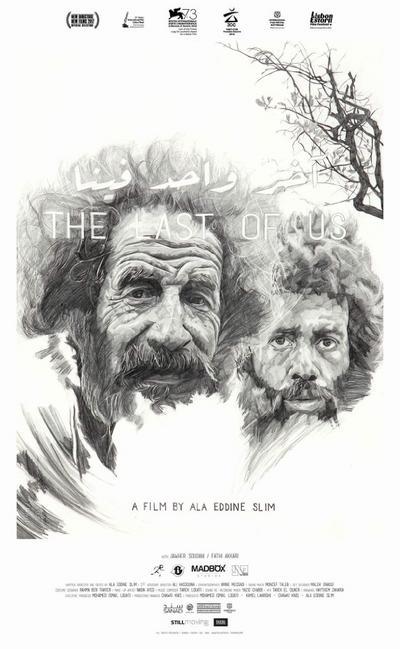
  • Ala Eddine Slim – Akher Wahed Fina AKA The Last of Us (2016)

    2011-2020Ala Eddine SlimArthouseSilentTunisia

    29f7c043f76a2bde437fd0d52a185152

    With no dialogue, The Last of Us tracks a Sub-Saharan man through the desert to North Africa where he steals a boat. When it breaks down in the middle of the sea, he begins an imaginary surrealistic odyssey where he meets an older man, who might be an altered version of himself, and, in a wild landscape, rediscovers his relationship with primary nature. “A philosophical fable on being lost” (Giona Nazzaro).

    Awarded with the Lion Of the Future in the 73rd Venice Film Festival (2016)Read More »

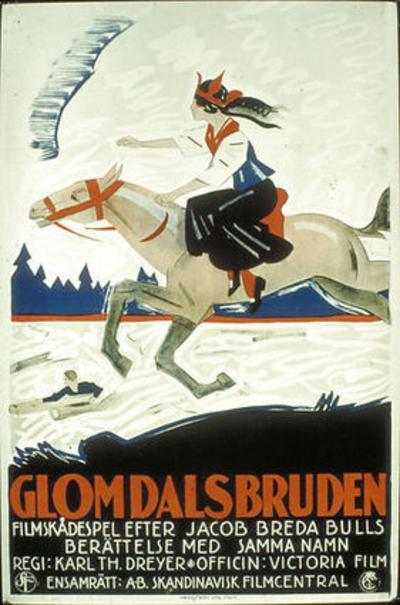
  • Carl Theodor Dreyer – Glomdalsbruden (1926)

    Drama1921-1930Carl Theodor DreyerDenmarkSilent

    29f7c043f76a2bde437fd0d52a185152

    Birgit Granhøj, CarlThDreyer.dk wrote:

    Quote:
    Tore takes over the rundown family farm. Applying his youthful energy, he intends to make it into a big farm like Glomgården on the other side of the river, where beautiful Berit loves. Tore falls in love with her, but her father has promised her to rich Gjermund. As her wedding to Gjermund draws near, Berit runs away and seeks refuge with Tore and his parents. She soon falls deathly ill but recovers, asking for, and getting, her father’s permission to marry Tore. Jealous Gjermund is determined to prevent their wedding, however, in a dramatic climactic scene playing out around the rushing river.Read More »

  • Carl Theodor Dreyer – Du skal ære din hustru AKA Master of the House (1925)

    Drama1921-1930Carl Theodor DreyerDenmarkSilent

    Quote:
    Victor Frandsen is a domestic tyrant. His wife Ida has to work as a slave for him and the rest of the family. She rises early to prepare everything for the day, she toils all day long, and she is often up also in the night, doing some sewing to earn extra money for the household. In daytime she is supported by an old woman called Mads, who was Victors’ nanny when he was a child. Mads is filled with loathing for Victor’s behavior towards his wife, and calls him a brute. She understands that Ida is on the verge of a serious breakdown, and persuades Ida’s mother, Mrs. Kryer, to take Ida away.Read More »

  • F.W. Murnau – Sunrise: A Song of Two Humans (1927)

    1921-1930ClassicsF.W. MurnauSilentUSA

    Free Image Hosting at www.ImageShack.us

    29f7c043f76a2bde437fd0d52a185152

    Roger Ebert wrote:
    The camera’s freedom to move is taken for granted in these days of the Steadicam, the lightweight digital camera, and even special effects that reproduce camera movement. A single unbroken shot can seem to begin with an entire city and end with a detail inside a window — consider the opening of “Moulin Rouge!” (2001). But the camera did not move so easily in the early days.Read More »

Back to top button