Silent

  • Dziga Vertov – Kino-Pravda No. 1 (1922)

    1921-1930DocumentaryDziga VertovSilentUSSR

    29f7c043f76a2bde437fd0d52a185152

    Quote:
    Between 1922 and 1925, a total of 23 issues of Dziga Vertov’s newsreel series Kino-Pravda (Kino-Truth) appeared (albeit irregularly and in very few copies). Vertov’s goal was to create a kind of “screen newspaper”; the title is a tribute to the newspaper Pravda founded by Lenin. Just like the Kinonedelja newsreel series (1918–19), the Kino-Pravda issues offer a fascinating insight into the early Soviet Union and demonstrate the rapid development of Vertov’s film language.

    The 22 surviving issues (No. 12 is lost) have been digitized and subtitled in German and English by the Austrian Film Museum in 2017/18 and are now available online.Read More »

  • Jean Epstein – Finis terrae (1929) (HD)

    1921-1930DramaFranceJean EpsteinSilent

    29f7c043f76a2bde437fd0d52a185152

    Quote:
    Polish-born Jean Epstein’s Finis Terrae is momentous.

    While every film exists on a sliding scale of expression whose opposite poles are documentary and fiction, this film in particular does more than merely combine the two modes; it anticipates generic (as distinct from stylistic) attempts – poetic docudrama; Italian Neorealism – to fuse them. How successful Epstein’s film is remains in dispute; its importance is incontestable.

    The initial action is set on Bannec, a Breton islet. It is summer. Two boys, in their teens or, perhaps, early twenties, are on the islet to work. These dear friends are Jean-Marie and Ambroise (played by Jean-Marie Laot and Ambroise Rouzic). They quarrel; Ambroise withdraws from Jean-Marie and another boy in their group as a cut finger causes infection and saps his health. Jean-Marie attempts to row himself to Ouessant, on the mainland, but hasn’t the strength. Braving the elements, which include dense fog, Jean-Marie takes over, attempting to bring Ambroise to a medical doctor; meanwhile, the doctor is heading to Bannec to attend to the sick boy. Will the two vessels miss one another in the fog and tragedy result?
    Read More »

  • James Sibley Watson – The Fall of the House of Usher (1928)

    1921-1930James Sibley WatsonShort FilmSilentUSA

    29f7c043f76a2bde437fd0d52a185152

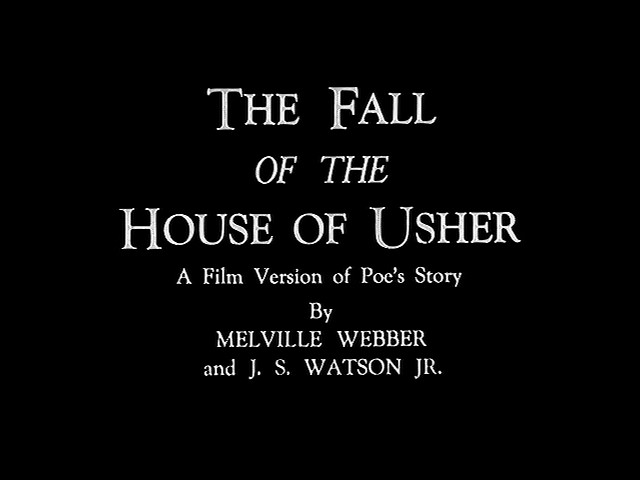
    Released the same year as Jean Epstein’s “La Chute de la Maison Usher”, this is the American avant-garde version of Poe’s classic short story.

    Quote:
    “The Fall of the House of Usher” combines European influences with something home crafted. James Sibley Watson Jr. had seen the German expressionist film “The Cabinet of Dr. Caligari” more than once during its 1921 New York City run. Not only do USHER’s impossibly angled sets draw from that film, but the top-hatted, cloaked “traveler” (played in expressionist makeup by Melville Webber) seems to echo the figure of Dr. Caligari himself. Less obvious now is the French influence. Whereas CALIGARI expressed a madman’s consciousness through set design and stylized acting alone, French experimental filmmaking of the twenties typically represented disturbed mental states through elaborate camera tricks and optical distortions. Indeed, such a style animates the more celebrated 1928 version of Poe’s story, Jean Epstein’s feature-length “La Chute de la Maison Usher”. Read More »

  • Alfred Hitchcock – Easy Virtue (1928)

    1921-1930Alfred HitchcockDramaSilentUnited Kingdom

    29f7c043f76a2bde437fd0d52a185152

    A recently divorced woman hides her scandalous past from her new husband and his family.
    Read More »

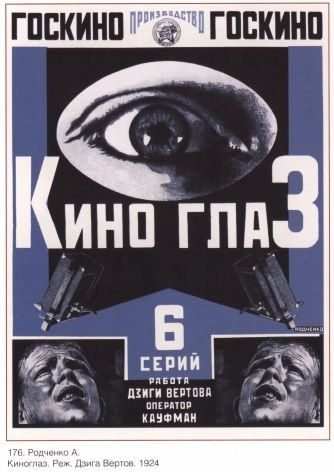
  • Dziga Vertov – Kinoglaz AKA Kino Eye (1924)

    1921-1930DocumentaryDziga VertovSilentUSSR

    29f7c043f76a2bde437fd0d52a185152

    Quote:
    This documentary promoting the joys of life in a Soviet village, centers around the activities of the Young Pioneers. These children are constantly busy, pasting propaganda posters on walls, distributing hand bills, exhorting all to “buy from the cooperative“ as opposed to the Public Sector, promoting temperance, and helping poor widows. Experimental portions of the film, projected in reverse, feature the un-slaughtering of a bull and the un-baking of bread.Read More »

  • Yasujirô Ozu – Hogaraka ni ayume AKA Walk Cheerfully (1930)

    1921-1930CrimeJapanSilentYasujiro Ozu

    ü

    29f7c043f76a2bde437fd0d52a185152

    Quote:
    Kenji is a small thief who likes drinking and fighting. When he falls in love with sweet and simple Yazue, and she finds out what kind of guy he really is, she leaves him ‘until he becomes an honest person’. But it is not easy to get rid of one’s past…Read More »

  • William A. Wellman – Beggars of Life (1928)

    1921-1930DramaQueer Cinema(s)SilentUSAWilliam A. Wellman

    29f7c043f76a2bde437fd0d52a185152

    The Louise Brooks Society: wrote:
    Beggars of Life is a terse drama about a girl (Louise Brooks) dressed as a boy who flees the law after killing her abusive stepfather. With the help of a young hobo, she rides the rails through a male dominated underworld in which danger is close at hand.

    Kevin Brownlow wrote:
    Beggars of Life, with Louise Brooks and Richard Arlen, is a story of tramps, by the hobo writer Jim Tully. The customary freshness and unstudied casualness of most American silent films is replaced here by a dignified, carefully studied style, suggestive of the European cinema, and indicating a conscious striving toward artistry.Read More »

  • Ewald André Dupont – Moulin Rouge (1928)

    Drama1921-1930Ewald André DupontSilentUnited KingdomUSA

    29f7c043f76a2bde437fd0d52a185152

    No relation to the 1952 Toulouse Lautrec biopic of the same name, Moulin Rouge was produced, directed and written by German-filmmaker E. A. Dupont. Olga Tschechowa plays the star dancer of Paris’ famed Moulin Rouge nightspot. Her daughter Eve Gray is in love with impressionable Jean Bradin. Alas, Jean adores another – Eve’s own mother. A blessed relief from the usual turgid, slapped-together British films of the period, Moulin Rouge has visual moments that approach the brilliance of Dupont’s previous backstage melodrama, the German Variety. ~ Hal Erickson, All Movie GuideRead More »

  • Alfred Hitchcock – The Pleasure Garden [+Extras] (1925)

    1921-1930Alfred HitchcockDramaSilentUSA

    http://img51.imageshack.us/img51/1534/thepleasuregarden219585.jpg

    29f7c043f76a2bde437fd0d52a185152

    Quote:
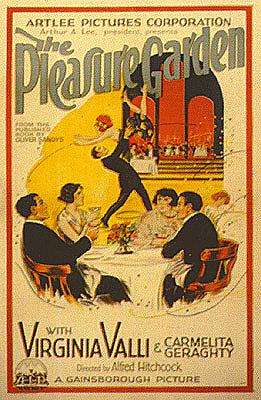
    The Pleasure Garden is the first film that Alfred Hitchcock directed to completion. It’s a nice look into the earliest directorial thoughts and techniques of the master. Even in this earliest film, we can see signs of what would become some of his signature trademarks. I enjoyed some of the point of view shots early in the film with the blurred view of the man looking through his monocle as well as the gentleman looking through the binoculars at the show girls legs. There is also a spiral staircase in the opening of this movie. Not that it was used like the staircase in Vertigo, but it made me smile thinking of how important that would be in his later film. The story deals with the idea of infidelity. Jill (Carmelita Geraghty) is an aspiring dancer who gets engaged to Hugh (John Stuart) who has to leave for work overseas. Patsy (Virginia Valli), who has helped Jill get her start, starts to worry about Jill keeping her promise to wait for Hugh. Jill’s career is taking off and she begins to fool around with other guys. Patsy marries Levett (Miles Mander), Hugh’s friend who also goes overseas to work with Hugh. Unlike Jill, Patsy remains true to her husband, thinking only of being with him. She receives a letter that her husband has taken ill and scrapes up the money to go be with her husband in his time of need. When she arrives, she finds that he has taken to drinking and island women. That’s when the trouble ensues. I enjoyed Hitch’s first film. It’s a little slow starting, but picks up pace as it goes along. I liked seeing Cuddles, the dog, thrown in for a little comic relief to contrast the seriousness of the film, which of course is another of Hitchcock’s trademarks. There was also a nice, subtle score by Lee Erwin, that fit the film well.Read More »

Back to top button