Queer Cinema(s)

  • Volker Schlöndorff – Der Fangschuß AKA Coup de grâce (1976)

    Drama1971-1980GermanyQueer Cinema(s)Volker SchlöndorffWar

    29f7c043f76a2bde437fd0d52a185152

    Synopsis wrote:
    Coup de Grâce (German: Der Fangschuß, French: Le Coup de grâce) is a 1976 West German film directed by Volker Schlöndorff. It was adapted from the novel by the same name by the French author Marguerite Yourcenar. The title comes from the French expression, meaning “finishing blow”.

    Synopsis: A countess’ unrequited love for an army officer leads to disaster. Latvia, 1919: the end of the Russian Civil War. An aristocratic young woman (brilliantly played by Margarethe von Trotta) becomes involved with a sexually repressed Prussian soldier. When she is rejected by her love, the young woman is sent into a downward spiral of psychosexual depression, promiscuity, and revolutionary collaboration. A startling tale of heartbreak and violence set against the backdrop of bloody revolution, Volker Schlöndorff’s Coup de grâce is a powerful film that explores the interrelation of private passion and political commitment.
    Read More »

  • Jonathan Caouette – Tarnation (2003)

    2001-2010DocumentaryJonathan CaouetteQueer Cinema(s)USA

    29f7c043f76a2bde437fd0d52a185152

    Feature debut of Caouette is an experimental documentary constructed from home movies, photographs, letters, phone messages, and created video footage that Caouette edited on his home computer and layered with appropriate songs. It follows the emotional journey of Caouette and his mentally ill mother from a Texas childhood legacy of abuse, neglect, and an escape into a self-created fantasy world, to their lives 20-odd years later.
    Read More »

  • Uli Edel – Last Exit to Brooklyn (1989)

    1981-1990CultDramaQueer Cinema(s)Uli EdelUSA

    29f7c043f76a2bde437fd0d52a185152

    Quote:
    Hubert Selby’s controversial 1964 cult novel Last Exit To Brooklyn is adapted to the big screen by director Ulrich Edel in this drama. The story is set in the early 1950s in Red Hook, Brooklyn, a blighted waterfront town of boarded-up storefronts and striking factory workers. Harry Black (Stephen Lang), a machinist put in charge of the local union strike office, suddenly finds himself one of the most important men in town. But for all his sudden power, there’s something disturbing Harry. He rejects his wife’s caresses and discovers himself infatuated with a frail young man who calls himself Georgette (Alexis Arquette), who has a crush on well-muscled hood Vinnie (Peter Dobson). But Harry doesn’t confront his problem head-on until he falls head-over-heels in love with Regina (Zette), a local transvestite. As the strike becomes more intense, Harry sinks deeper into an obsessive affair with Regina, using the strike fund to shower him/her with personal gifts. As Harry sinks into obsession, other characters float through the decaying streets. There’s the attractive prostitute Tralala (Jennifer Jason Leigh) who falls in love with a sailor about to be shipped overseas. There is also an agreeable young man named Tommy (John Costelloe) who is beaten by his soon-to-be father-in-law Big Joe (Burt Young) for making his daughter Donna (Ricki Lake) pregnant. Everything comes to a tragic conclusion as the workers’ strike escalates into a violent confrontation.Read More »

  • Gregg Araki – Nowhere (1997)

    USA1991-2000ArthouseComedyGregg ArakiQueer Cinema(s)

    29f7c043f76a2bde437fd0d52a185152

    Quote:
    “Described by director Gregg Araki as “A Beverly Hills 90210 episode on acid” (with no suggestions of what it might be cut with), Nowhere is a companion piece with Araki’s previous meditations on youth gone wild in the 1990s, Totally F***ed Up and The Doom Generation — Araki’s self-described “teen apocalypse trilogy.” Nowhere follows 18-year-old Dark Smith (James Duval) as he goes through a fairly typical day in Los Angeles. Dark needs, but rarely gets, emotional support from his girlfriend Mel (Rachel True). Mel, however, is also involved with a girl named Lucifer (Kathleen Robertson), while Dark moons over hunky Montgomery (Nathan Bexton). Dark’s best friend Cowboy (Guillermo Diaz) has troubles of his own, as his boyfriend and bandmate Bart (Jeremy Jordan) is back on drugs and spending most of his time with his dealer. Mel’s friends include sugar junkie Dingbat (Christina Applegate), doomsday poetess Alyssa (Jordan Ladd), and Egg (Sarah Lassez), who is being unexpectedly wooed by a Famous Teen Idol (Jason Simmons). Egg’s brother Ducky (Scott Caan) has a crush on Alyssa, but she’s keeping company with a biker named Elvis (Thyme Lewis). Alyssa’s assignation with Elvis gets a psychic boost by her twin brother Shad (Ryan Phillippe) and his tryst with Lilith (Heather Graham). Read More »

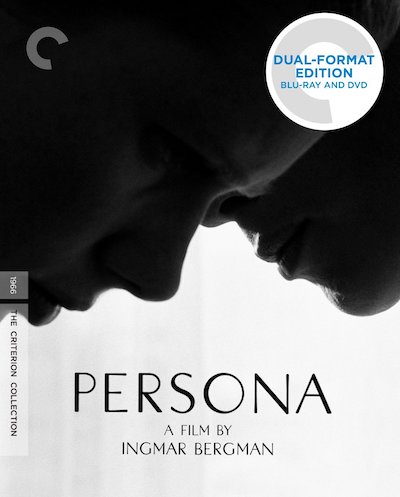
  • Ingmar Bergman – Persona [+Extras] (1966)

    1961-1970ArthouseDramaIngmar BergmanQueer Cinema(s)Sweden

    Quote:
    Persona is arguably Ingmar Bergman’s most challenging and experimental film. Elisabeth Vogler (Liv Ullman) is an accomplished stage actress who, in the middle of performing Elektra, ceases to speak. Sister Alma (Bibi Andersson), the young nurse assigned to care for her, learns that there is nothing physically or even psychologically wrong with Elisabeth – she has simply, consciously decided not to speak. Alma (the name, not accidentally, is the Spanish word for soul) describes her initial impressions of Elisabeth as gentle and childlike, but with strict eyes. She takes Elisabeth to the attending physician’s remote summer house to facilitate her recuperation. At first, the two seem ideally suited: a talkative, candid, and inexperienced nurse, and a sophisticated, enigmatic, and silent patient. They take long walks, bask in the sun, and read together. It is obvious that their isolation has cultivated a sense of intimacy between them, albeit one-sided.Read More »

  • Michel Reilhac – Polissons et galipettes aka The Good Old Naughty Days (2002)

    2001-2010EroticaFranceMichel ReilhacQueer Cinema(s)Silent

    Free Image Hosting at www.ImageShack.us

    29f7c043f76a2bde437fd0d52a185152

    This astonishing, scintillating collection from the silent era, most of which are from the 1920s, are genuine, legitimate and by today’s hardcore standards, amazingly charming, pornographic short films that leave nothing to the imagination. From predictable fantasy scenarios – monk spies on, then joins naughty nuns; teacher must spank naughty schoolgirls – to more esoteric fare (homosexuality and animal ecstasy, to name just two), vintage porn has never been more accessible…or attainable. The shorts in The Good Old Naughty Days were primarily designed to be shown in the waiting rooms of brothels, amusing patrons – and no doubt giving them some ideas – as they awaited their girl. They also reveal production standards far in advance of comparable films being made elsewhere at the time, as well as an inventive and often humorous array of diverse couplings. These films were usually created in a haphazard fashion in an afternoon with friends and local prostitutes lending a hand for a few cents. All of them requested to remain anonymous, which makes it impossible to identify who really acted or directed them. For this reason, it is rather delightful to watch these “actors” often having to readjust their wigs and fake moustaches in the middle of their scenes so as not to be recognized unmasked. It is nevertheless touching to see how fresh and naïve these films look in comparison with today’s X-rated film productions. Considering the age of these films, it is miraculous that they have been rediscovered and restored. These films are a part of our heritage and certainly a part of the secret history of cinema. In their own amusing way, these images involve us in a very direct, physical and intimate relationship with the good old days. These films have been restored by the Archives of the Centre National de la Cinématographie in France.Read More »

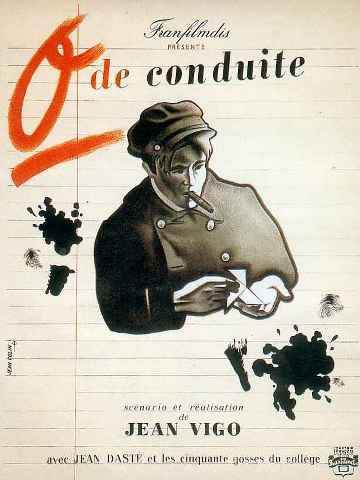
  • Jean Vigo – Zéro de conduite AKA Zero for conduct (1933)

    1931-1940ArthouseDramaFranceJean VigoQueer Cinema(s)

    29f7c043f76a2bde437fd0d52a185152

    from allmovie guide.com

    The shortest of French filmmaker Jean Vigo’s two feature-length films, Zero for Conduct (Zero de Conduite) is also arguably his most influential. The overtly autobiographical plotline takes place at a painfully strict boys’ boarding school, presided over by such petit-bourgeous tyrants as a discipline-dispensing dwarf. The students revolt against the monotony of their daily routine by erupting into a outsized pillow fight. Their final assault occurs during a prim-and-proper school ceremony, wherein the headmasters are bombarded with fruit. Like all of Vigo’s works, Zero for Conduct was greeted with outrage by the “right” people. Thanks to pressure from civic and educational groups, this exhilaratingly anarchistic film was banned from public exhibition until 1945. Among the future filmmakers influenced by Zero for Conduct was Lindsay Anderson, who unabashedly used the Vigo film as blueprint for his own anti-establishment exercise If…. Read More »

  • Bruce LaBruce – The Revolution is My Boyfriend (2004)

    2001-2010Bruce LaBruceCampEroticaGermanyQueer Cinema(s)

    http://i477.photobucket.com/albums/rr135/pcscarpa/bscap0075.jpg

    29f7c043f76a2bde437fd0d52a185152

    Plot

    The core plot begins with the kidnapping of Patrick, the son of a wealthy industrialist. Sexual and romantic engtanglements push the drama forward. At the film’s climax, Gudrun delivers a soliloquy on the importance of personal life in revolution. She puts particular emphasis on the breaking of heterosexual and possessive sexual norms, urging her comrades to join “The Homosexual Intifada”.

    The pressure of Gudrun’s controlling personality causes the group to break up. Most of the urban guerrillas escape into the night. In the dénouement, the characters are visited some time later. Several have found happiness in the homosexual relationships established during their revolutionary activities. Che has become a terrorist trainer in the Middle East. Patrick escapes with Clyde, where they embark on a spree of bank robberies. This action is reminiscent of Patty Hearst’s actions with the SLA. Gudrun and Andreas settle down and have a child named Ulrike (after Ulrike Meinhof), whom Gudrun believes could embody the next generation of the Red Army Faction.Read More »

  • Bernardo Bertolucci – The Dreamers (2003)

    2001-2010Bernardo BertolucciDramaItalyQueer Cinema(s)

    Free Image Hosting at www.ImageShack.us

    29f7c043f76a2bde437fd0d52a185152

    Left alone in Paris whilst their parents are on holiday, Isabelle (Eva Green) and her brother Theo (Louis Garrel) invite Matthew (Michael Pitt), a young American student, to stay at their apartment. Here they make their own rules as they experiment with their emotions and sexuality while playing a series of increasingly demanding mind games. Set against the turbulent political backdrop of France in the spring of 1968 when the voice of youth was reverberating around Europe, THE DREAMERS is a story of self-discovery as the three students test each other to see just how far they will go. THE DREAMERS was helmed by Bernardo Bertolucci, whose THE LAST EMPEROR swept the 1987 Academy Awards garnering nine Oscars© including Best Director and Best Picture. It marks his third film shot in Paris, following THE CONFORMIST and the Oscar-nominated LAST TANGO IN PARIS. The screenplay, adapted for the screen from his original novel, is by English author and film critic Gilbert Adair. THE DREAMERS was produced by Jeremy Thomas (BROTHER, SEXY BEAST) who teamed with Bertolucci on THE LAST EMPEROR, THE SHELTERING SKY and LITTLE BUDDHA. THE DREAMERS strikes a personal chord for both Bertolucci and Adair, for although their paths never crossed, they were both living in Paris at the end of the 60s, experiencing the events against which the film is set. Their love of cinema took them to the birthplace of the Nouvelle Vague (New Wave), immersing them in a strong international cinema culture.Read More »

Back to top button