Poland

  • Andrzej Zulawski – Trzecia czesc nocy AKA The Third Part of The Night (1971)

    1971-1980Andrzej ZulawskiArthouseDramaPoland

    29f7c043f76a2bde437fd0d52a185152

    Quote:
    A short excerpt from the Booklet essay by Daniel Bird

    Trzecia część nocy (The Third Part of the Night, 1971) is a film by Andrzej Żuławski, the enfant terrible of Polish Cinema. It is also a film about the Polish experience, but one made by a filmmaker too young to remember the War. It was made in 1971, before the so-called Polish cinema of moral concern of Holland, Kieslowski and Zanussi. It is based (in part) on the life of Żuławski s father, Miroslaw, during the Second World War. It is perhaps the first (and probably the last) film about Weigl Institute in Lwow. But above all else, it is the debut film of one of cinema s true visionaries.Read More »
  • Wojciech Has – Szyfry AKA The Codes (1966)

    1961-1970ArthouseDramaPolandWojciech Has

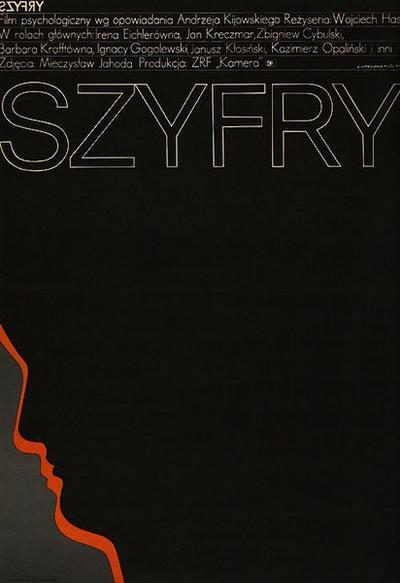
    Tadeusz (Jan Kreczmar) is a Polish veteran of World War II who fled to London at the end of the war, leaving behind his wife Zofia (Irena Eichlerówna) and son, Maciek (Zbigniew Cybulski), who disappeared when he was 12 years old. Tadeusz returns to Kraków to discover that Maciek is alive, his wife may have been a partisan and that his son may have turned in his own mother in to the authorities. During Maciek’s struggle to understand his parents’ history, questions of collaboration with the Gestapo and Home Army retribution arise. Has pictures the mystical lost boy in a dark fairy-tale forest, full of the ghosts of the war and wholesale executions. The hypnotic quality of these excursions foreshadows the mesmerizing passages of Has’s later film, The Hour-Glass Sanatorium.Read More »

  • Wanda Jakubowska – Ostatni etap AKA The Last Stage (1948)

    1941-1950DramaPolandThe Female GazeWanda JakubowskaWar

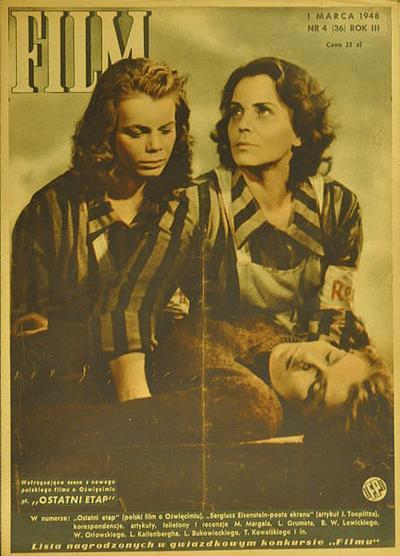
    Martha Weiss, a Jew, is sent to Auschwitz concentration camp with her family. On the first day of their arrival Martha is, by a coincidence, chosen as an interpreter, but her entire family is killed. Waiting for the Red Army to deliver them from the prison camp, the film depicts Martha and her friends’ struggling life under the tyranny of camp guards and equally bad ‘capos’, administrative personnel chosen from among the prisoners.Read More »

  • Andrzej Wajda – Popiól i Diament AKA Ashes and Diamonds (1958)

    1951-1960Andrzej WajdaDramaPolandWar

    As WWII and the German occupation ends, the Polish resistance and the Russian forces turn on each other in an attempt to take over leadership in Communist Poland.Read More »

  • Krzysztof Kieslowski – Szpital AKA Hospital (1976)

    1971-1980DocumentaryKrzysztof KieslowskiPolandShort Film

    29f7c043f76a2bde437fd0d52a185152

    Quote:
    A film made in the emergency room of the traumatic surgery hospital located on Barska Street in Warsaw. Doctors attempt to help the injured in the face of frequent power shortages typical of the Polish People’s Republic. @culture.pl
    Read More »

  • Krzysztof Kieslowski – Przeswietlenie AKA X-Ray (1974)

    1971-1980DocumentaryKrzysztof KieslowskiPolandShort Film

    29f7c043f76a2bde437fd0d52a185152

    Quote:
    Made at the sanatorium of Sokolowsko in Lower Silesia, this film looks at individuals suffering from pulmonary disease and is a moving portrait of those living with illness. @culture.pl

    Quote:
    In this short film, Kieslowski tries to penetrate the world of people affected by lung disease. In style, this picture closely resembles a documentary completed four years earlier titled I Was a Soldier which gives voice to veterans who had lost their sight to war, whereas in this picture, it’s the lung disease patients whose stories we hear. The entire movie is composed of their tales. The only binding element of the story is the buckle of the movie’s landscape which places the story at a physical location, indicating its threshold – going home after their stay at the sanatorium. The statements are made directly into the camera; the director uses close up on their faces. He listens.Read More »

  • Krzysztof Kieslowski – Klaps AKA Slate (1976)

    1971-1980DocumentaryKrzysztof KieslowskiPolandShort Film

    29f7c043f76a2bde437fd0d52a185152

    Quote:
    A short impression composed of outtakes from Krzysztof Kieślowski’s feature film titled The Scar / Blizna (1976). @culture.pl

    Quote:
    Slate (1976, color, 6 min.): While some of these outtakes (from The Scar) are “bloopers”, other do not appear so. The film becomes something of an editing experiment, unified by the musical rhythm of the clapping slate.
    – Joseph G. Kickasola, The Films of Krzysztof Kieslowski, 2006Read More »

  • Krzysztof Kieslowski – Gadajace glowy AKA Talking Heads (1980)

    Documentary1971-1980Krzysztof KieslowskiPolandShort Film
    Gadajace glowy (1980)

    Quote:
    Basic existential questions are asked here in the form of a street survey probe: Who are you? What is most important to you? What would you like? As a result, we see a collective portrait of Poles in 1979 – 44 people, from a one-year-old child who cannot speak yet, to a nearly hundred-year-old woman who, in turn, cannot hear, but certainly wants to live even longer. The shocking sadness of a few-year-old girl contrasts with the optimism of an old woman, the idealism of a young man contrasts with the cynicism of an old alcoholic.Read More »

  • Katarzyna Roslaniec – Szatan kazal tanczyc AKA Satan Said Dance (2017)

    2011-2020DramaKatarzyna RoslaniecPoland

    29f7c043f76a2bde437fd0d52a185152

    Quote:
    In her latest feature film, Satan Said Dance, which was released in Polish theatres on 5 May by Kino Swiat, Katarzyna Roslaniec once again turns her attention to her favourite type of character. Indeed, in all her films she focuses on young girls from today’s youth whose world revolves around shopping, (often unsafe) sex, alcohol, drugs and building up an image. A model which is pushed to extremes in this new opus.Read More »

Back to top button