Poland

  • Andrzej Zulawski – Na srebrnym globie AKA On the Silver Globe (1987)

    1981-1990Andrzej ZulawskiFantasyPolandSci-Fi

    Quote:
    Polish filmmaker Andrzej Zulawski is best known for his anguished monster flick Possession, which featured Sam Neill and Isabelle Adjani as a married couple spiraling toward domestic meltdown. His films are aggressive shrieks of madness, doomed love, trance-state convulsions, and shrieking emotional upheavals. The octopus creature that materializes halfway through Possession, completing the film’s bizarre love triangle, transports a fairly naturalistic, if explosive, kitchen-sink drama into the realm of magical realism; Zulawski swore that his 1981 masterwork was partially autobiographical, coming as it did so soon after a vicious and harrowing divorce.Read More »

  • Jerzy Kawalerowicz – Austeria AKA The Inn (1982)

    1981-1990ArthouseDramaJerzy KawalerowiczPoland

    29f7c043f76a2bde437fd0d52a185152

    Quote:
    Austeria takes place during the opening days of World War I, in the Austro-Hungarian province of Galicia. Tag (Franciszek Pieczka) is a Jewish innkeeper whose inn (austeria means inn in the local Polish dialect) is located near the border with Russia. War has broken out and local civilians are fleeing the advancing Russian Army, and several groups of refugees have taken shelter in Tag’s inn for the night. A group of Hassidic jews from the neighboring village arrive, followed by an Austrian baroness on and a Hungarian hussar cut off from his unit…Read More »

  • Andrzej Wajda – Czlowiek z zelaza AKA Man of Iron (1981)

    Drama1981-1990Andrzej WajdaPolandPolitics

    29f7c043f76a2bde437fd0d52a185152

    Quote:
    Wajda’s remarkable sequel to Man of Marble welds newsreel footage of the Solidarity strike to fiction in a strong investigative drama. A disillusioned, vodka-sodden radio producer is bundled off to Gdansk in a black limousine. His mission: to smear one of the main activists – who also happens to be the son of the hapless ‘Marble’ worker-hero. But, tempered by bitter experience of the failed reforms of ’68 and ’70, these new men of iron are more durable than their fathers, not as easily smashed. Media cynicism, censorship and corruption are again dominant themes, this time anchored through the TV coverage of the strike, though the conclusion hints with guarded optimism at a possible rapprochement between workers and intelligentsia. An urgent, nervy narrative conveys all the exhilaration and bewilderment of finding oneself on the very crestline of crucial historical change; and for the viewer, all the retrospective melancholy of knowing that euphoria shattered by subsequent events.Read More »

  • Krzysztof Zanussi – Constans AKA The Constant Factor (1980)

    1971-1980ArthouseDramaKrzysztof ZanussiPoland

    29f7c043f76a2bde437fd0d52a185152

    Quote:
    Apart from the conscience provoking “A Short Film About Killing” I have always found Western European audiences’ adulation of the Polish director, Krzysztof Kieslowski, rather excessive, all the more so when compared to the comparative neglect of Zanussi, that other, to my mind , infinitely greater Krzysztof. During the late ’70’s and early ’80’s he produced a remarkable body of work that, although dealing with rigorous intellectual concepts, perfectly balanced head with heart. In “Night Paths” he examines a contemporary generation’s indifference to history; in “The Contract” he uses the stag as a metaphor for the nobility and strength that, in his view, Polish society fails to aspire to, while in “The Constant Factor” he makes use of mathematics in an attempt to shed light on the awesome possibilty of being in the wrong place at the wrong time. This latter is a multi-layered work, on the one hand dealing with the consequencies of maintaining integrity within a corrupt employment situation and at a deeper level attempting to understand the randomness of fate that mankind is exposed to regardless of political dogmas or individual standards of morality. Witold, the main protagonist of the film, is a young man whose father, a famous mountaineer, has been killed in a climbing accident. He has one objective, to follow in his footsteps by joining a Himalayan expedition. However his failure to come to terms with the corrupt working practises of his colleagues leads to their thwarting his ambition. “The Constant Factor” is without doubt one of the most deeply pessimistic films I know. When I first saw it I could hardly believe the ghastliness of its ending. Even though I consider it to be one of the most profound masterworks of cinema I have to steel myself beforehand whenever I bring myself to sharing it with anyone, let alone seeing it by myself.Read More »

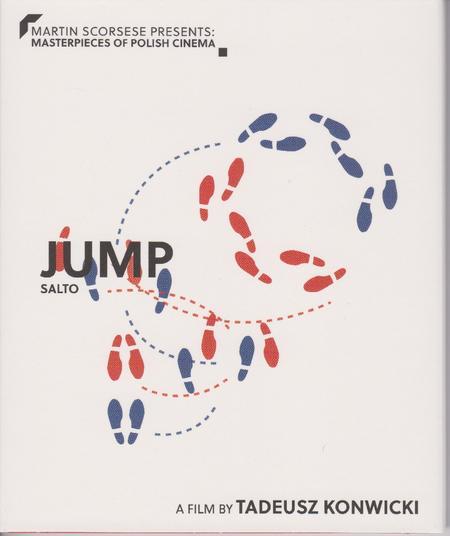
  • Tadeusz Konwicki – Salto (1965)

    1961-1970ArthouseDramaPolandTadeusz Konwicki

    29f7c043f76a2bde437fd0d52a185152

    Quote:
    In this rich and subtle dream-play, a man arrives in a small country town and demands sanctuary from an unspecified threat. But who is he, why do people remember him differently, and can he really perform miracles? Many Poles consider this Cybulski’s greatest performance and he’s certainly on riveting form, especially when performing a ‘salto’ folk dance towards the end.Read More »

  • Agnieszka Holland – Aktorzy prowincjonalni AKA Provincial Actors (1979)

    1971-1980Agnieszka HollandComedyDramaPoland

    29f7c043f76a2bde437fd0d52a185152

    Quote:
    Talented Polish director Agnieszka Holland who would be better known in later years because of her films like Europa, Europa (1991) or some of her American works like Washington Square (1997), hits the mark early and again with this ostensible story about provincial actors in Poland. In reality, the comedy-drama can be read as a commentary on the contemporary Polish scene in politics and society. The story begins as a savvy director arrives in a small town to put on a stage play. His leading man is filled with insecurities and goes beyond the confines of his lead role to expand his part, restore his cut lines, and generally outdo himself while taking on some of everyone else’s job, including the director’s. No one wants to lose him because of his drawing power, and the director is caught in a bind. At the same time, the lead actor’s wife is slowly losing her chances at success, being relegated to a much lesser position in the troupe. This fine comedy won the Fipresci award at the 1980 Cannes Film Festival.Read More »

  • Jerzy Kawalerowicz – Faraon (1966)

    1961-1970ArthouseEpicJerzy KawalerowiczPoland

    29f7c043f76a2bde437fd0d52a185152

    Quote:
    The Walter Reade Theatre at Lincoln Center in New York City’s retrospective – History Lessons: The Films of Jerzy Kawalerowicz, 30 January to 12 February 2004, screened the major work of this Polish director whose career spanned 50+ years. The programme offered, amidst the veteran’s varied output, a very special, culture vulture/archaeologist’s dream: Pharaoh (aka: Faraon), co-scripted by Kawalerowicz with Tadeusz Konwicki, and based on a novel by Boleslaw Prus. The best cinematic recreation of circa 1100 BC Late New Kingdom Dynastic Egypt ever, photographed on location at authentic sites and environs, the production design, costumes and props were all meticulously researched.Read More »

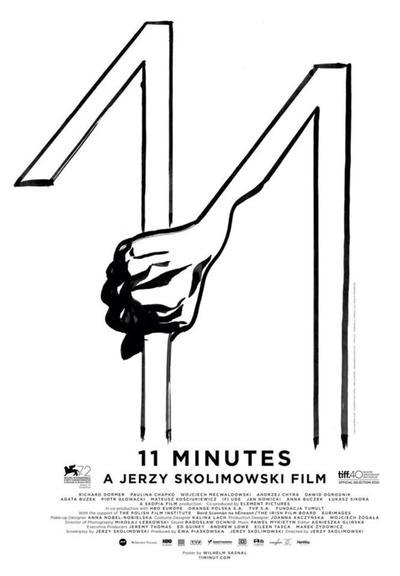
  • Jerzy Skolimowski – 11 minut AKA 11 Minutes (2015)

    2011-2020DramaJerzy SkolimowskiPolandThriller

    29f7c043f76a2bde437fd0d52a185152

    A jealous husband out of control, his sexy actress wife, a sleazy Hollywood director, a reckless drug messenger, a disoriented young woman, an ex-con hot dog vendor, a troubled student on a mysterious mission, a high-rise window cleaner on an illicit break, an elderly sketch artist, a hectic paramedics team and a group of hungry nuns. A cross-section of contemporary urbanites whose lives and loves intertwine. They live in an unsure world where anything could happen at any time. An unexpected chain of events can seal many fates in a mere 11 minutes. Read More »

  • Wojciech Has – Osobisty pamietnik grzesznika przez niego samego spisany AKA Memoirs Of A Sinner (1986)

    1981-1990ArthouseDramaPolandWojciech Has

    Quote:
    In the 18th century, a recently deceased young man is exhumed by a gravedigger, suddenly revives, and then launches into the story of his highly eventful life. Brought up in a puritanical household, Robert is seduced by a mysterious stranger into killing his wine-, woman- and song-loving brother. What follows is a descent into a hallucinatory hell, where reality and illusion merge, as Robert’s evil doppelganger sins with terrible abandon–and Robert stands accused.Read More »

Back to top button