Philosophy

  • Shuji Terayama & Shuntaro Tanikawa – Video Letters 1982-1983 (1982)

    1981-1990AsianJapanPhilosophyShuji Terayama and Shuntaro Tanikawa

    http://img842.imageshack.us/img842/4623/jakelxy1.jpg

    Shuji Terayama (December 10, 1935—May 4, 1983) was an avant-garde Japanese dramatist, writer, director, and photographer, noted for such films as Emperor Tomato Ketchup and Fruits of Passion.
    In 1967, Terayama started an experimental cinema and gallery called ‘Universal Gravitation,’ which is in fact still in existence at Misawa as a resource center. The Terayama Shuji Memorial Hall, which has a large collection of his plays, novels, poetry, photography and a great number of his personal affects and relics from his theatre productions, can also be found in Misawa.
    source: artandpopularcultureRead More »

  • Yong-Kyun Bae – Dharmaga tongjoguro kan kkadalgun AKA Why Has Bodhi-Dharma Left for the East?: A Zen Fable (1989)

    1981-1990DramaPhilosophySouth KoreaYong-Kyun Bae

    29f7c043f76a2bde437fd0d52a185152

    Synopsis:
    Three people live in a remote Buddhist monastery near Mount Chonan: Hyegok, the old master; Yong Nan, a young man who has left his extended family in the city to seek enlightenment – Hyegok calls him Kibong!; and, an orphan lad Haejin, whom Hyegok has brought to the monastery to raise as a monk. The story is mostly Yong Nan’s, told in flashbacks: how he came to the monastery, his brief return to the city, his vacillation between the turbulence of the world and his hope to overcome passions and escape the idea of self. We also see Hyegok as a teacher, a protector, and a father figure, and we watch Haejin make his way as a curious and nearly self-sufficient child.Read More »

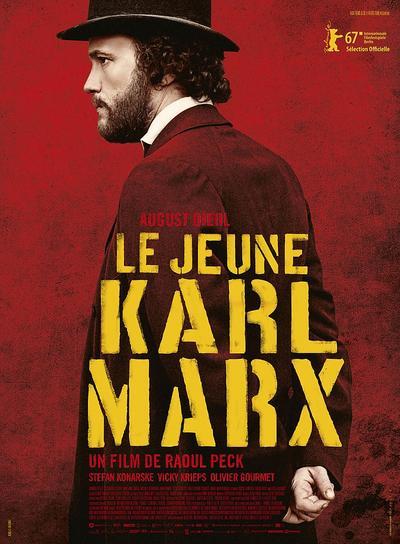
  • Raoul Peck – Le jeune Karl Marx AKA The Young Karl Marx (2017)

    2011-2020DramaGermanyPhilosophyRaoul Peck

    29f7c043f76a2bde437fd0d52a185152

    The early years of Karl Marx, Friedrich Engels and Jenny Marx, between Paris, Brussels and London.
    Read More »

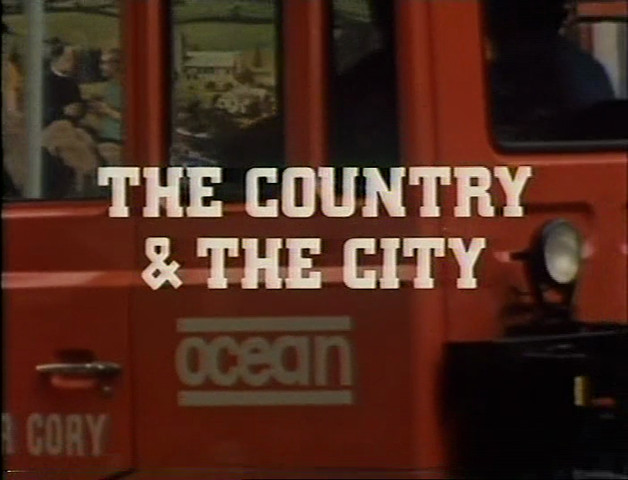
  • Michael Dibb – The Country and the City: A Film With Raymond Williams [+ Extras] (1979)

    1971-1980Michael DibbPhilosophyPoliticsUnited Kingdom

    An extremely dense translation to film of Raymond Williams’ 1973 book of the same title which traces images of ‘nature’ and ‘town’ through 200 years of English literature. The connections Williams establishes as he traces the history of Tatton Park near Manchester – ‘an almost perfect example of how the English country house has influenced if not dominated our images of the country’ – are often startling and the film’s style continually illuminates the overall argument. All of the details taken from writers, painters, landscape artists and from 19th and 20th history of major urban centres are placed within a framework of class-based economic history – ‘the country and the city are parts of an interacting system dominated by a single class’- and the result is a unique TV essay. Michael Dibb, the director, has worked well with Williams to ensure that every image, every snatch of sound-track plays its part in the structure.
    Time OutRead More »

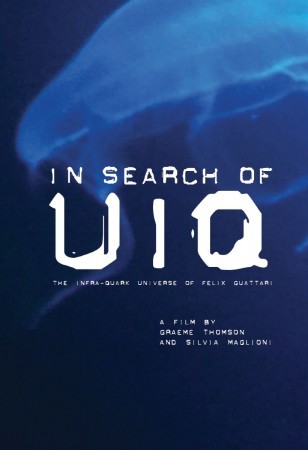
  • Silvia Maglioni & Graeme Thomson – In Search of UIQ (2013)

    2011-2020PhilosophySci-FiSilvia Maglioni and Graeme Thomson

    FOR THOSE WHO WANTS LOVE AND FREEDOM
    In Search of UIQ unfolds the story of Félix Guattari’s lost science-fiction screenplay, Un Amour d’UIQ. Conceived during the 1980s, this unmade film imagines the discovery of the Infra-quark Universe (UIQ), an alien intelligence from a parallel dimension that falls in love with one of its human hosts, an event which has catastrophic consequences for the whole planet. Moving between documentary, fiction and essay, through the deployment of video, film and sound archives, letters and other documents that are enmeshed in a series of fabulations, In Search of UIQ explores what the cinema of the Infra-quark might have been (and may still become) and considers its rapport with key social and political transformations of our time from autonomist struggles to the digital recoding of life.Read More »

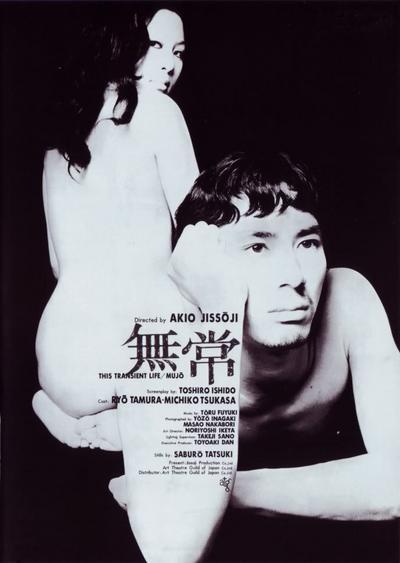
  • Akio Jissôji – Mujô AKA This Transient Life (1970)

    1961-1970Akio JissojiArthouseJapanPhilosophy

    29f7c043f76a2bde437fd0d52a185152

    Quote:
    One of the recurrent themes of the Art Theatre Guild (ATG)’s films of the 60s and early 70s was incest. In Funeral Procession of Roses (Bara No Soretsu, 1968) Toshio Matsumoto told a modern version of the Oedipus tale, transplanting the story into the gay subculture of present-day Tokyo. The hero of Susumu Hani’s The Inferno of First Love (Hatsukoi Jigokuhen, 1968) suffers from the sexual abuse of his stepfather. In Yoshishige Yoshida’s Heroic Purgatory (Rengoku Eroica, 1970) a young girl who creeps into the life of a scientist and his wife pretending to be their daughter seduces her alleged father. The family head in Nagisa Oshima’s masterful critique of the patriarchic family, The Ceremony (Gishiki, 1971), rapes his son’s bride. In Masahiro Shinoda’s Himiko (1974) the prehistoric shaman empress of Japan falls in love with her brother and is killed by ruthless elders who can no longer exercise control over her. In Kazuo Kuroki’s Preparations for the Festival (Matsuri No Junbi, 1975) the disabled Kikuo is sexually comforted by his mother, and in Shuji Terayama’s Pastoral: To Die in the Country (Den’en Ni Shisu, 1974), the story of a boy who tries to escape his mother, incest is omnipresent.Read More »

  • Jean-Luc Godard & Anne-Marie Miéville – Le rapport Darty (1989)

    1981-1990FranceJean-Luc GodardJean-Luc Godard and Anne-Marie MiévillePhilosophyPolitics

    29f7c043f76a2bde437fd0d52a185152

    “French companies never seemed to learn that Godard would never make anything like a traditional advertisement, so when the Darty appliance chain commissioned a pub from the mischievous director, they were in for trouble: a daring deconstruction of consumerism, rejected by its funders.”Read More »

  • Claire Denis – L’intrus AKA The Intruder [+Extras] (2004)

    2001-2010Claire DenisDramaFrancePhilosophyPhilosophy on Screen

    29f7c043f76a2bde437fd0d52a185152

    Quote:
    L’Intrus opens to a shot of the Franco-Swiss border as a border guard performs a customs check and inspection of a random vehicle with the aid of a contraband-sniffing dog. The seemingly mundane image of frontier, wilderness, and deception provides a curiously appropriate introduction into the Claire Denis’ impenetrably fractured, enigmatically allusive, otherworldy, and indelible metaphysical exposition into the mind of an emotionally severe, morally bankrupt, and profoundly isolated heart transplant patient named Louis (Michel Subor). Idiosyncratically unfolding in elliptical, often reverse chronology (with respect to the heart surgery) through the lugubriously fluid intertwining of Louis’ alienated existence and deeply tormented subconscious, the film is a fragmented and maddeningly opaque daydream (or perhaps more appropriately, a haunted nightmare) of the price exacted by his disreputable past, estranged relationships, hedonism, and instinctual quest for survival: his inability to reconcile with his only son and his family; his sexually motivated, yet emotionally distant relationship with a materialistic pharmacist; his dubious, transcontinental past (a suppressed history that may have included murder). Perpetually followed by a beautiful, enigmatic sentinel (Katia Golubeva) – or conscience – who seems to have been instrumental in obtaining his new heart, what emerges is an indelible, elegiac, and poetically abstract dreamscape through the wondrous, alien terrain of unreconciled (and irreconcilable) personal history, unrequited longing, and haunted memory.Read More »
  • François Caillat – Foucault Against Himself [Subbing Copy] (2014)

    2011-2020DocumentaryFranceFrançois CaillatPhilosophy

    29f7c043f76a2bde437fd0d52a185152

    “Don’t ask me who I am, and don’t tell me to remain the same.” —Michel Foucault

    From the history of madness, to sexuality and pleasure in classical antiquity, to the law and penal institutions, the breadth of Michel Foucault’s thought was astonishing.

    One of the leading intellectuals of the 20th century, Foucault bridged the roles of intellectual and activist, attaining the highest honours of the French academy while using his position to attack the very institutional power that gave him a platform.

    Divided into four chapters, FOUCAULT AGAINST HIMSELF focuses on Foucault’s critique of psychiatry, his work on the history of sexuality, the growth of his radicalism arising from his research into the French penal system, the nature of knowledge and underlying structures of human behavior, and his immersion in American counter-cultural movements—in particular the resistance to current social structures that he found among sexual minority communities in San Francisco.Read More »

Back to top button