Philosophy

  • Kon Ichikawa – Enjo aka The Temple of the Golden Pavilion (1958)

    1951-1960AsianJapanKon IchikawaPhilosophy
    Enjô (1958)
    Enjô (1958)

    Quote:
    Yukio Mishima’s acclaimed 1956 novel Kinkakuji (The Temple of the Golden Pavilion) was inspired by an actual incident in 1950 when a disturbed monk burned down one of Kyoto’s most beautiful temple buildings. The temple requested that the name be changed to Shukakuji for this adaptation, which opens out the book’s internal monologue, structuring the anguished protagonist’s progress towards final conflagration through flashbacks as the police piece together their investigation. Raizo Ichikawa’s central performance attracts sympathy for this stuttering temple acolyte from a broken family, who sees in the Golden Pavilion a purity of beauty in direct contrast to his own imperfect existence. It’s a purity in danger of being defiled, however, as post-war occupation and reconstruction open the site to tourism, so he resolves to destroy pavilion in order to preserve it. Ichikawa’s fragmented direction draws together this awful logic, leaving the audience dangling exquisitely between understanding and outright horror as flames obliterate a priceless cultural monument. The director’s favourite among his own films.Read More »
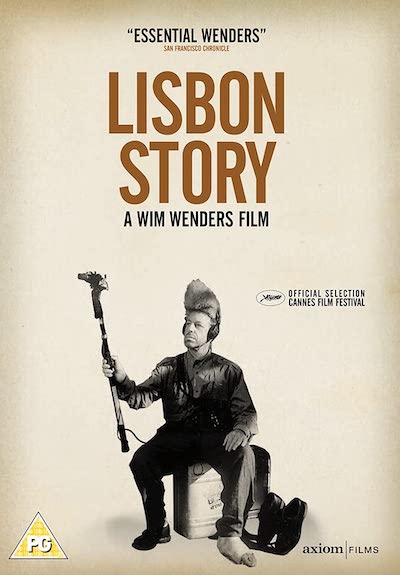
  • Wim Wenders – Lisbon Story (1994)

    1991-2000ArthousePhilosophyPortugalWim Wenders

    Quote:
    Lisbon Story is more dream than story – and this, I think, defines and justifies it most effectively. There is no clear structure, no consistently cohesive or progressive dialogue. Wim Wenders subtly reveals some form of portrait of the city, but not in the way one might expect. The film is largely made up of sounds, scattered pieces of Lisbon, strange children, a mysterious filmmaker and Wenders’ protagonist, the sound engineer, Philip Winter. In Philip Winter’s efforts to understand his friend Friedrich’s disappearance, in his enchantment with Portuguese band Madredeus, the singer Teresa Salgueiro and his search for the sounds that would accompany Friedrich’s film about Lisbon, Wender’s self-proclaimed “most entertaining film” emerges.Read More »

  • Wim Wenders – Palermo Shooting (2008)

    2001-2010GermanyPhilosophySci-FiWim Wenders

    Wim Wenders muses on love, death and his perennial bugbear, the ‘Crisis of the Image’ in The Palermo Shooting, a metaphysical thriller cum philosophical essay that marks another step on the downwards slope for this once-vital film-maker. Unwisely cast, leadenly written and ultimately farcical in its earnestness, The Palermo Shooting is a glossy travelogue-thriller with metaphysical pretentions, and one of the low points of this year’s Cannes Competition. Unlikely to fare well in the market, the film may also find festivals preferring to tactfully take a rain check.Read More »

  • Chris Marker – L’héritage de la chouette (1989)

    1981-1990Chris MarkerDocumentaryFrancePhilosophyPhilosophy on Screen

    29f7c043f76a2bde437fd0d52a185152

    Made as a series of 13 programmes about the influence of Greek culture in our society.

    The Owl’s Heritage: Sequence

    1. Symposium, or Accepted Ideas
    2. Olympics, or Imaginary Greece
    3. Democracy, or the City of Dreams
    4. Nostalgia, or the Impossible Return
    5. Amnesia, or History on the March
    6. Mathematics, or the Empire Counts Back
    7. Logomachy, or the Dialect of the Tribe
    8. Music, or Inner Space
    9. Cosmogony, or the Ways of the World
    10. Mytholody, or Lies like Truth
    11. Mysogyny, or the Snares of Desire
    12. Tragedy, or the Illusion of Death
    13. Philosophy, or the Triumph of the Owl
    Read More »

  • Tony Guzman – Philosophy in the Bedroom (1995)

    USA1991-2000ArthousePhilosophyTony Guzman
    Philosophy in the Bedroom (1995)

    29f7c043f76a2bde437fd0d52a185152

    This comedy chronicles the experiences of Juliette, a young woman who undergoes a deep exploration of her sexuality as she is given a series of special lessons in sex and philosophy by the extremely decadent Dolman. During the course of an evening Dolman helps demolish Juliette’s conservative ideology and replaces it with his own libertine perspectives. Juliette becomes an enthusiastic convert in this bicentennial production of the Marquis de Sade’s classic book. ~ WorldCatRead More »

Back to top button