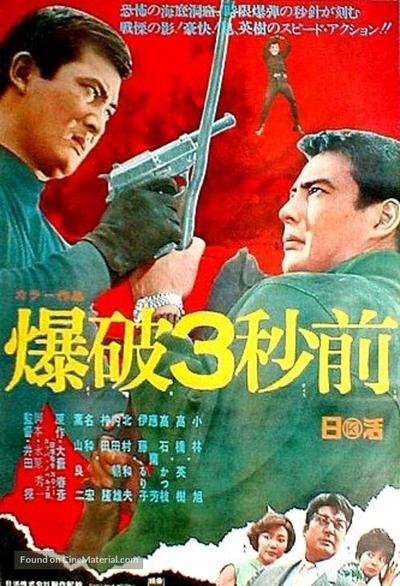
A renegade superspy infiltrates a violent gang of international jewel thieves in this fast-paced crime thriller from Nikkatsu Studios. His killer instincts honed to deadly perfection by a shadowy espionage bureau, Yabuki (Akira Kobayashi) abandons the organization that rained him and joins forces with fearless mercenary Yamawaki (Hideki Takahashi) to follow a trail of jewels stolen during the last days of World War II. When that trail leads Yabuki and Yamawaki to the highest levels of government and corporate malfeasance, the conspiracy is blown sky high and the bullets start to fly.Read More »
Japan
-
Tan Ida – Bakuhatsu sanbyômae aka 3 Seconds Before Explosion (1967)
1961-1970ActionAsianJapanTan Ida -
Akira Kurosawa – Shizukanaru ketto AKA A Silent Duel (1949)
1941-1950Akira KurosawaAsianDramaJapanSynopsis
Toshirō Mifune (in the second of many films with Kurosawa), plays a young idealistic doctor, still a virgin, who works at his father’s (Takashi Shimura) clinic in a small and seedy district. However, during the war, he contracts syphilis from the blood of a patient when he cuts himself during an operation. Treating himself in secret and tormented by his conscience and celibacy, he rejects his heartbroken fiancée without explanation.Read More » -
Akira Kurosawa – Tengoku to jigoku AKA High and Low (1963)
1961-1970Akira KurosawaAsianDramaJapanSynopsis
“Criterion” wrote:
Toshiro Mifune is unforgettable as Kingo Gondo, a wealthy industrialist whose family becomes the target of a cold-blooded kidnapper in Akira Kurosawa’s highly influential High and Low (Tengoku to jigoku). Adapting Ed McBain’s detective novel King’s Ransom, Kurosawa moves effortlessly from compelling race-against-time thriller to exacting social commentary, creating a penetrating portrait of contemporary Japanese society.Read More » -
Yoshitaro Nomura – Suna no utsuwa AKA The Castle of Sand (1974)
1971-1980AsianCrimeJapanYoshitaro NomuraVery intriguing film from whom many consider the Hitchcock of Japan, Yoshitaro Nomura.
“Two detectives, Imanishi and Yoshimura, are assigned to the murder of a 60-year-old man whose body was found dumped in a railroad yard. It turns to be that of a former policeman, Miki; the murder now seems even more mysterious, as Miki was well liked by all and had been on holiday when he was killed. The detectives visit all the places to which Miki has traveled, with little luck, but then they read an account buried in a lengthy report of how Miki years before had befriended a destitute, leprous man and his young son. Amazingly, that boy had grown up to become Eiryo Waga, a rising star in the music world. Could such an eminent figure have anything to do with the murder? Read More »
-
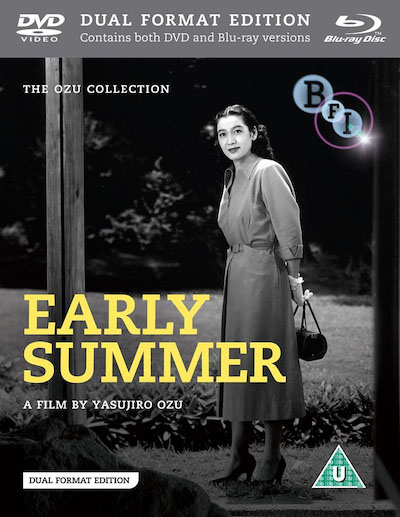
Yasujiro Ozu – Bakushû AKA Early Summer (1951)
Drama1951-1960AsianJapanYasujiro Ozu

Quote:
An independent-minded 28-year old woman living in cosmopolitan, postwar Tokyo may seem immune from the societal pressures of marriage, but in Noriko’s (Setsuko Hara) environment, it is a perennially surfacing, unavoidable topic. Her father, Shukichi (Ichirô Sugai), and mother, Shige (Chieko Higashiyama), are unable to retire to her uncle’s house in the provincial town of Yamato until their duty to marry off Noriko to a worthy suitor has been fulfilled. Her visits with school friends invariably break down into playful arguments between the married and unmarried women. Even her office director offers to introduce her to a 40-year old business acquaintance, providing her photographs of the obscured prospective suitor to take home to show her family. Read More » -
Yasujiro Ozu – Otona No Miru Ehon – Umarete Wa Mita Keredo AKA I Was Born, But… (1932)
1931-1940ComedyJapanSilentYasujiro Ozu

Otona no miru ehon – Umarete wa mita keredo / 大人の見る繪本 生れてはみたけれど
PLOT: Two young brothers become the leaders of a gang of kids in their neighborhood. Ozu’s charming film is a social satire that draws from the antics of childhood as well as the tragedy of maturity.Read More »
-
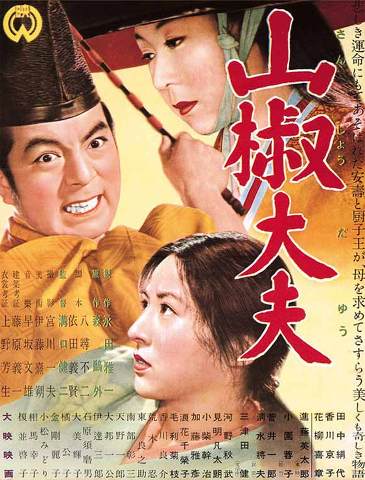
Kenji Mizoguchi – Sanshô dayû AKA Sansho the Bailiff (1954) (HD)
1951-1960ClassicsDramaJapanKenji MizoguchiSansho Dayu… is the triumphant summation of Mizoguchi’s style and themes, as well as the most compassionate response imaginable to those atrocities which had been committed in then very recent years, in Japan and all over the world. It is the most humanist of films, but it asserts that humanism is powerless without politics, just as politics is purposeless without humanism. The last sequence is the most perfect ending in cinema, so broad in implication, so exquisite in form. The reunion of mother and son – the revelation of human love – is at once the most important thing in the world, and an event insignificant against the panorama of human suffering. The double perspective – never to see things in isolation, always in context – is assured by Mizoguchi’s style, and defines his art. Sansho Dayu is, in Gilbert Adair’s words, “one of those films for whose sake the cinema exists”.
Alexander Jacoby, Senses Of Cinema.comRead More » -
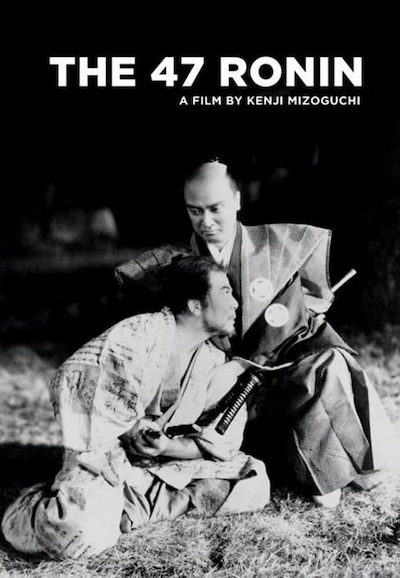
Kenji Mizoguchi – Genroku Chûshingura aka The 47 Ronin (1941)
1941-1950ActionAsianJapanKenji Mizoguchi

In 1701, Lord Takuminokami Asano has a feud with Lord Kira and he tries to kill Kira in the corridors of the Shogun’s palace. The Shogun sentences Lord Asano to commit suppuku and deprives the palace and lands from his clan, but does not punish Lod Kira. Lord Asano’s vassals leave the land and his samurais become ronin and want to seek revenge against the dishonor of their Lord. But their leader Kuranosuke Oishi asks the Shogun to restore the Asano clan with his brother Daigaku Asano. One year later, the Shogun refuses his request and Oishi and forty-six ronin revenge their Lord.Read More »
-
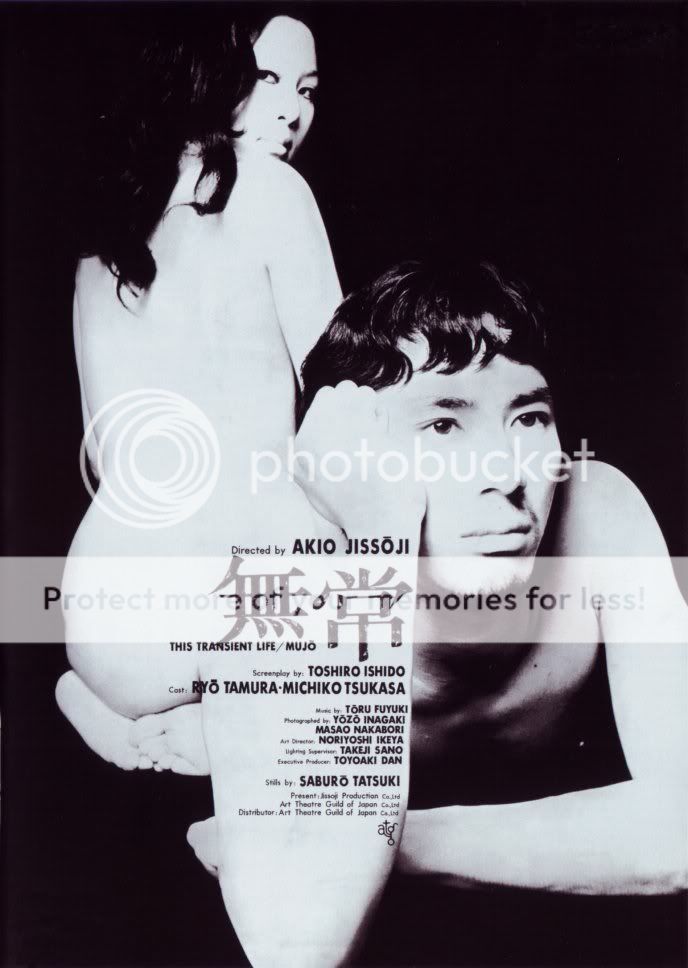
Akio Jissoji – Mujo aka This Transient Life (1970)
1961-1970Akio JissojiAsianJapanPhilosophy
Synopsis
This Transient Life tells the story of the siblings Masao and Yuri who live in a huge estate near Lake Biwa north of Kyoto. Masao refuses to go to university and is infatuated with Buddhist sculptures. Iwashita, a student who lodges at the house, and Ogino, a young priest and former classmate of Masao, are both in love with Masao’s beautiful sister Yuri, who rejects all proposals from her parents to marry her off. One day, while being alone in the big house and playing with No-masks, Masao and Yuri end up in a passionate embrace. Thus starts their forbidden relation that soon bears fruit. When Yuri gets pregnant the siblings plot a perfidious plan. Yuri seduces Iwashita only to be discovered by her parents, who then force Iwashita to marry her. Masao leaves for Kyoto to become an apprentice to the famous sculptor of Buddhist statues, Mori Takayasu. He starts a relation with the much younger wife of the impotent sculptor, who secretly enjoys watching them make love. A year later Masao briefly returns to his parents’ house.Read More »