from IMDB:
The deranged Roman emperor Gainus ‘Caligula’ (Little Boots) Caesar (12-41 A.D.) rules Rome with an iron fist and has anyone tortured and exectued for even the slightest insubordination. Mostly set during his last year of his reign, as Caligula loses support due to his brutal and crazed excess, a young Moor woman, named Miriam, becomes his lover while ploting to kill him to avenge the murder of a friend which Caligula was responsible for. But Miriam is torn between her personal vandeda against Caligula and her own personal feelings towards him despite his madness and debauched lifestyle of orgies and bloody torture murders. Written by Matthew PatayRead More »
Italy
-
Joe D’Amato – The Emporer Caligula: The Untold Story AKA Caligula 2 (1982)
1981-1990EpicEroticaItalyJoe D'Amato -
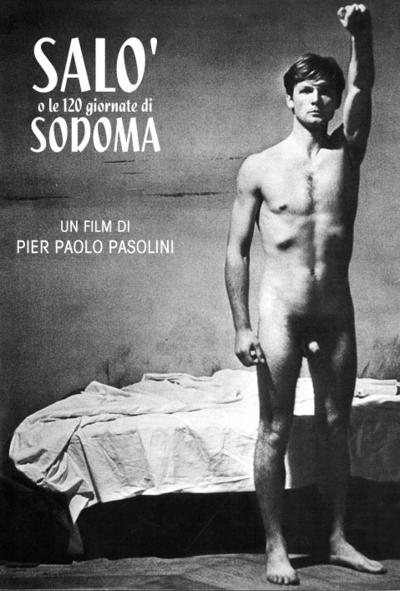
Pier Paolo Pasolini – Salò o le 120 giornate di Sodoma AKA Salo, or the 120 Days of Sodom (1975)
1971-1980ArthouseItalyPier Paolo PasoliniSet in the Nazi-controlled, northern Italian state of Salo in 1944, four dignitaries round up sixteen perfect specimens of youth and take them together with guards, servants and studs to a palace near Marzabotto. In addition, there are four middle-aged women: three of whom recount arousing stories whilst the fourth accompanies on the piano. The story is largely taken up with their recounting the stories of Dante and De Sade: the Circle of Manias, the Circle of Shit and the Circle of Blood.Read More »
-
Pier Paolo Pasolini – Il Fiore delle mille e una notte AKA Arabian Nights (1974)
Arthouse1961-1970FantasyItalyPier Paolo PasoliniQuote:
The concluding part of Pier Paolo Pasolini’s “Trilogy Of Life”, following The Decameron and The Canterbury Tales, Arabian Nights corrects many of the mistakes found in the latter, noticeably its ramshackle, uneven approach, and returns to the charming territory of the former. Indeed, the film is as good as The Decameron, if not better, and is generally considered to be the trilogies crowning moment and one of Pasolini’s finest films (critic Tony Rayns recently included it amongst his choices for Sight and Sound’s 2002 Top Ten Critics’ Poll).Read More »
-
Pier Paolo Pasolini – Porcile aka Pigsty (1969)
1961-1970Amos Vogel: Film as a Subversive ArtArthouseDramaItalyPier Paolo PasoliniQuote:
One of Pasolini’s most enigmatic films, it extends his cinematic obsessions into the realms of cannibalism and bestiality with two interweaving stories of two young men who become sacrificial victims of their different societies. One of them is a soldier and cannibal (Clementi) in a medieval wasteland and the other a son (Léaud) of an ex-Nazi industrialist (Tognazzi) in modern-day Germany. The young German is more attracted to pigs than to his fiancée (Wiazemsky). This rather silly parable, very much a product of the late 1960s, in which the bourgeoisie is caricatured, is filmed with such calm beauty and underlying disgust that it seems to gain in significance. Theorem (1968) and Pigsty were the only films in which the Marxist Pasolini dealt directly with the hated middle classes; thereafter he left the 20th-century behind until his final film, Salo (1975), which looks at even more extreme human actions.Read More » -
Camillo Mastrocinque – La banda degli onesti AKA The Band of Honest Men (1956)
1951-1960Camillo MastrocinqueComedyCrimeItaly

Description: Janitor Antonio Buonocore joins his friend Lo Turco e Cardone, to print some counterfeit bills. When they decide to circulate one counterfeit bill, they are only able to spend the right one, used as a mould for the others. Crime is not for them and so they decide to renounce their plans.Read More »
-
Romolo Guerrieri – La Controfigura AKA The Double (1971)
1971-1980GialloItalyRomolo GuerrieriPlot / Synopsis
A young man gets shot in an underground parking lot. His recent experiences flash before him as he leaves his last breath… This excellent, surreal and sexy giallo (with a plot reminiscent of Aldo Lado’s MALASTRANA also starring Sorel) is brought to you in its rarest form.Read More »
-
Dino Risi – Fantasma d’amore (1981)
1981-1990Dino RisiDramaItaly

Quote:
After witnessing the brutal murder of an elderly lady, a man has an encounter with a bizarre woman who claims to an old lover of his… A lover who apparently committed suicide years ago.Read More » -
Enrico Guazzoni – Quo Vadis? (1912)
1911-1920Enrico GuazzoniEpicItalySilent

Directed by Enrico Guazzoni
Scenario by Enrico Guazzoni, from a novel by Henryk Sienkiewicz
Amleto Novelli (Vinicius), Gustav Serena (Petronius), Amelia Cattaneo (Eunice), Carlo Cattaneo (Nero)The birth of the motion picture epic is generally dated to the 1913-1914 Italian films Quo vadis, The Last Days of Pompeii, Cabiria and Cajus Julius Cesar, many of them based on a standard set of 19th century religious novels that would be made and remade over the next half of the 20th century. One of several specialists in the genre, Enrico Guazzoni filmed this second version Quo Vadis?, the prime exemplar of a subsidiary genre to “Life of Christ” films, one that might be called the “Christ vs. Caesar” genre. The title of this film means “Where are you going?” and the question is posed by the Ascended Christ to Peter in a vision as the latter departs Rome on the eve of an Imperial persecution. The main story, however, focuses on a Roman commander, Vinicius, who falls for a Christian girl, Lygia, and is so drawn into the underground Christian community, experiencing a personal transformation along the way.Read More »
-
Eriprando Visconti – La Orca (1976)
Drama1971-1980Eriprando ViscontiExploitationItalyA teenage girl is kidnapped by 3 guys and taken to an abandoned house in the country, and make her write her own ransom letter. She soon discovers that one of her captors is infatuated with her and she will use those feelings to stay alive.Read More »


