Quote:
An old shepherd lives his last days in a quiet medieval village perched high on the hills of Calabria, at the southernmost tip of Italy. He herds goats under skies that most villagers have deserted long ago. He is sick, and believes to find his medicine in the dust he collects on the church floor, which he drinks in his water every day.Read More »
Italy
-
Michelangelo Frammartino – Le quattro volte aka The four times (2010)
2001-2010ArthouseDramaItalyMichelangelo Frammartino -
Mario Camerini – Gli Uomini, che mascalzoni! AKA What Scoundrels Men Are! (1932)
Comedy1931-1940Italian Cinema under FascismItalyMario CameriniRomanceThis delightful romantic comedy, had it been made in America during this same period might have featured Jimmy Stewart and Jean Arthur and might have been directed by Gregory La Cava.
It gives us a Vittorio De Sica as a chauffeur, Bruno, who passes himself off as a man of importance by offering Mariuccia (Lia Franca) a ride in the car which he passes off as his own. She is the daughter of taxi driver Cesare Zoppetti. From the city of Milan they go off to the country for, spending some time at an inn, enjoying each other’s company. Bruno romances her with the song “Parlami d’amore, Mariù” or “Talk Love to Me, Mariuccia” by Cesare A. Bixio, which made the Italian hit parade of the time.Read More » -
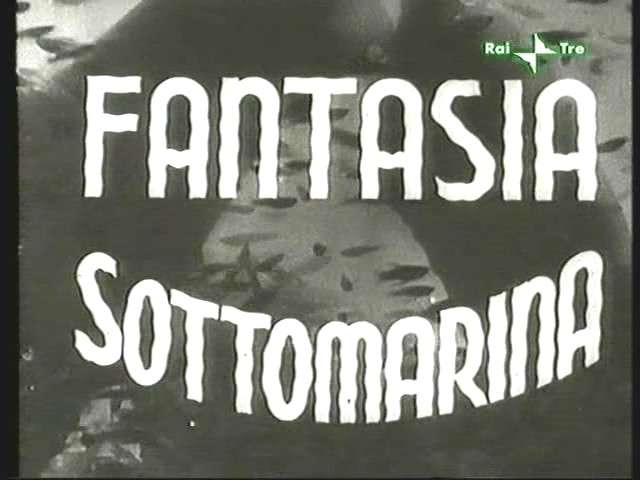
Roberto Rossellini – Fantasia Sottomarina aka Undersea Fantasy (1940)
1931-1940Italian Cinema under FascismItalyRoberto RosselliniShort Film
Funny cinematic exercise made by Rossellini before his first feature. Something between a Discovery Channel animal documentary and a fable under the sea.
Worth seeing for its historical status.Read More » -
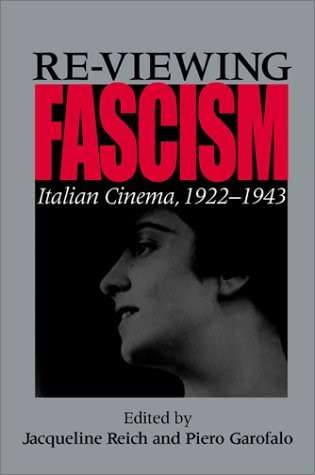
Jacqueline Reich & Piero Garofalo – Re-viewing Fascism: Italian Cinema, 1922-1943 (2002)
2001-2010BooksItaly
* Publisher: Indiana University Press
* Number Of Pages: 400
* Publication Date: 2002-04-14
* ISBN-10 / ASIN: 0253215188
* ISBN-13 / EAN: 9780253215185
* Binding: PaperbackReview
“Each essay makes a point of correcting misconceptions about the cinema during the ventennio [the period of fascist rule], which makes this book a significant contribution to the literature.” — S. Vander Closter, Rhode Island School of Design, Choice, December 2002Read More »
-
Vittorio De Sica – Un Garibaldino al convento AKA A Garibaldian in the Convent (1942)
Drama1941-1950ComedyItalian Cinema under FascismItalyVittorio De Sica
Summary:
An old woman’s poignant reminiscence of her youth in a convent school, the happy moments and the sad, and her tragic love for a Garibaldian.Read More » -
Roberto Rossellini – L’Amore (1948)
1941-1950Amos Vogel: Film as a Subversive ArtDramaItalyRoberto Rossellini
Two related vignettes which deliberate on the nature of human love and emotional attachment, both starring Magnani in the key role. In ‘The Miracle,’ a suggestible, innocent young mother-to-be deeply believes that her child was divinely conceived. A woman adjusts to her newfound solitude after her lover leaves in ‘The Human Voice,’ based on the one-act play by Jean Cocteau. The film is an homage to the great Anna Magnani, Roberto Rossellini’s two-part film features the Italian actress in Cocteau’s one-act play “The Human Voice,” in which she speaks to an unseen lover on the phone, and the controversial “The Miracle,” which casts her as a peasant who believes she has given birth to the new Messiah.
— www.virtualitalia.comRead More » -
Franco Zeffirelli – The Taming of the Shrew (1967)
Arthouse1961-1970Franco ZeffirelliItalyMusicalWilliam Shakespeare
Quote:
Franco Zeffirelli’s adaptation of William Shakespeare’s The Taming of the Shrew is a zesty version of the classic comedy, highlighted by performances by Richard Burton and Elizabeth Taylor and Nino Rota’s score. Instead of simply filming a play, Zeffirelli turned Shakespeare’s text into a lively, cinematic movie, with sweeping sets and cinematography. Set in Padua, Italy in the late 1500s, the story concerns the shy Bianca (Natasha Pyne) and the mean-spirited Katarina (Elizabeth Taylor), the two daughters of a rich merchant named Baptista (Michael Hordern). Though Bianca is being courted by a number of young men, Baptista announces that she may not marry until Katarina is wed. Read More » -
Amleto Palermi – Carnevalesca (1918)
1911-1920Amleto PalermiArthouseItalySilent
Carnevalesca with the beautiful Lydia Borelli is divided in to 4 parts, the white carnival, the innocent and pure childhood, the blue carnival love & youth, the red carnival the violent and destructive passion, the black carnival, death and madness.Read More »
-
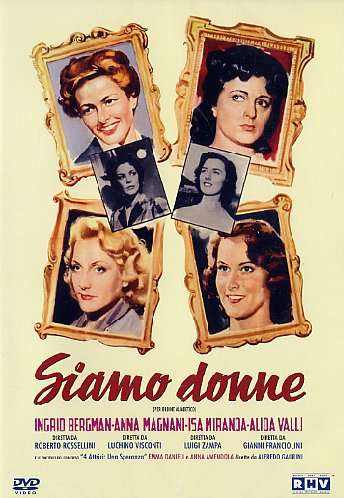
Various – Siamo donne aka We, the Women (1953)
1951-1960Alfredo GuariniClassicsComedyGianni FrancioliniIngmar BergmanItalian Neo-RealismItalyLuchino ViscontiLuigi ZampaRoberto RosselliniVariousDetailed plot summary of the five episodes
“Concorso 4 Attrici 1 Speranza” (“Four stars and a starlette”)
Anna Amendola decides to leave her home to become an actress, even though her mother says that she can not come back if she does. She goes to Cinecittà, where a casting is taking place to find a girl to be included in a segment of Siamo donne. The contest begins with the girls walking through a line, where they are checked for certain requirements, especially age. The ones who pass this stage are given a meal by the studio, while a spotlight scans through the tables, finding girls for the screen test stage. Amendola passes through these stages. Then, there are a series of screen tests, where several girls are asked questions about their dreams and ambitions. The results of the screen tests are not decided until the next day; therefore, Amendola sleeps at a neighbor’s house, since she does not want to go home and forfeit her chances of winning the contest. The next day, she is called up as a finalist, along with Emma Danieli. The story ends with the two finalists about to give interviews.Read More »