Summary:
After the death of Claudius, Agrippina announced Nero the heir to the throne, which leads to despair of the true heir – Brittanicus.
Not daring to oppose Agrippina, Senators declare Nero the emperor.
Agrippina is against of an affair of Nero and Poppaea.
Agrippina threaten Nero that if he neglect his wife Octavius, she will give the throne to Brittanicus.
The threats of Agrippina had their effect. Brittanicus is poisoned.
Perversity of Nero is insatiable and he gives his trusted man, Anicetus a terrible order.
Agrippina is looking for salvation, but the indomitable hatred of Emperor Nero decides the fate of Agrippina…Read More »
Italy
-
Enrico Guazzoni – Agrippina (1911)
1911-1920Enrico GuazzoniEpicItalySilent -
Mauro Bolognini & Tinto Brass & Luigi Comencini – La mia signora aka My wife (1964)
1961-1970ComedyItalyLuigi ComenciniMauro BologniniTinto BrassAlberto Sordi co-stars with Silvia Mangano in this Dino DeLaurentiis comedy production gang-directed by Tinto Brass, Mauro Bolognini, and Luigi Comenichi. The sketches primarily deal with the endearing battles between husbands and wives, giving Sordi the chance to mug for the camera in the comic fashion that made him famous. ~ Dan Pavlides, All Movie GuideRead More »
-
Piero Bargellini – The Lost Cinema (1966)
1961-1970ExperimentalItalyPiero Bargellini
Quote:
Piero Bargellini was born in Arezzo in 1940. An agronomist, film lover and amateur filmmaker, he joined the “Cinema Indipendente” Cooperative in 1968 and became one of the most important figures of Italian underground cinema. His films are intensely poetic and reflect artisanal wisdom, based on his scientific knowledge of optics and chemistry. He made films like Morte all’orecchio di Van Gogh, Fractions of Temporary Periods, Trasferimento di modulazione, Gasoline, Stricnina, between 1966 and 1973, in a total identity of art and life. These works tell “the history, in its own way exemplary, of one of the secret protagonists, and of the famous victims, of the revolution of 1968.” Ideally conceived as a dialectic interface between the Italian Competition and Detours, this tribute (curated by Fulvio Baglivi with the help of Adriano Aprà) is also the way we have chosen to remember Marco Melani on the tenth anniversary of his death. Marco, who was a friend and collaborator of Bargellini’s, and who continues to be our inspiration and a “hidden” prompter, organized for the first festival in Torino (1982) a commemoration of his friend, who had recently passed away. His intent was to remove the label of “experimental”: “his cinema was cinema tout court, like that of Rossellini, Hawks, Bertolucci, Schifano, Brakhage and all the other filmmakers he loved.”Read More » -
Abel Ferrara – Go Go Tales (2007)
2001-2010Abel FerraraComedyDramaItalyDescription:
A screwball comedy centered on a Manhattan go-go dancing club, where a financial struggle between the owner, his accountant and his silent partner brother threatens the business’s future.Read More » -
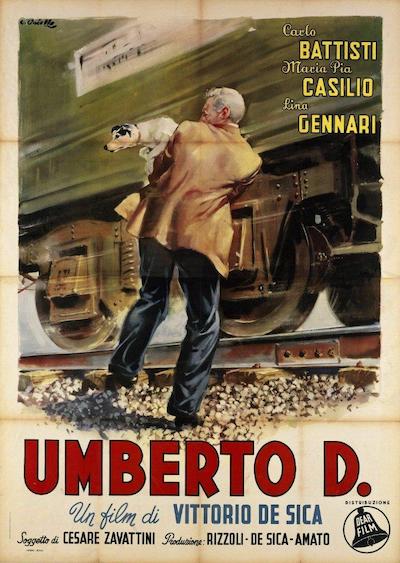
Vittorio De Sica – Umberto D. (1952)
1951-1960ClassicsDramaItalyVittorio De Sica

Quote:
Shot on location with a cast of nonprofessional actors, Vittorio De Sica’s neorealist masterpiece follows Umberto D., an elderly pensioner, as he struggles to make ends meet during Italy’s postwar economic boom. Alone except for his dog, Flike, Umberto strives to maintain his dignity while trying to survive in a city where traditional human kindness seems to have lost out to the forces of modernization. Umberto’s simple quest to fulfill the most fundamental human needs—food, shelter, companionship—is one of the most heartbreaking stories ever filmed and an essential classic of world cinema.Read More » -
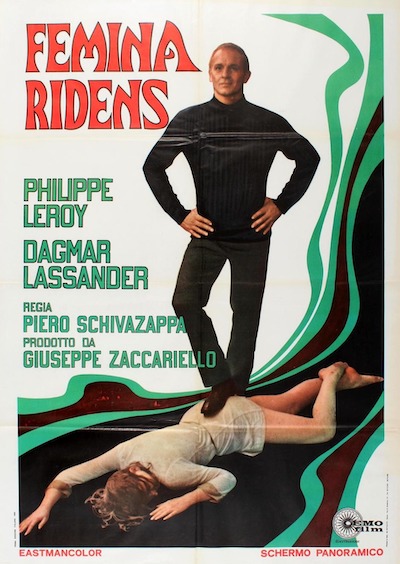
Piero Schivazappa – Femina ridens AKA The Frightened Woman (1969)
1961-1970EroticaItalyPiero SchivazappaThrillerWith a style that is reminiscent of erotica guru, Radley Metzger, it is hard to believe that he did not direct The Frightened Woman. However, one can see why Metzger chose to release the film under his company Audubon Films. Imagine sets that are similar to Camille 2000, a sensual score by Stelvio Cipriani, and the perversity (though not nearly as extreme) of the Marquis de Sade combined in one film.Read More »
-
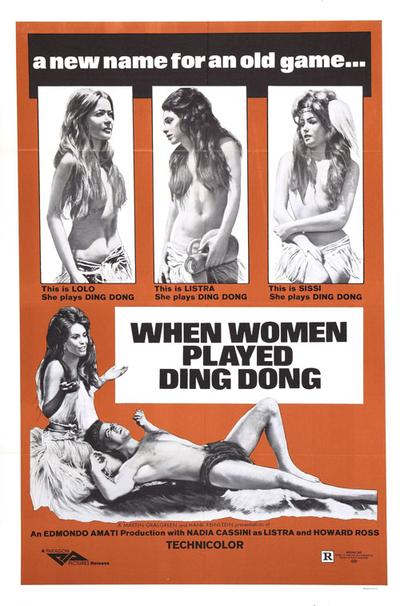
Bruno Corbucci – Quando gli uomini armarono la clava e… con le donne fecero din-don AKA When Women Played Ding Dong (1971)
1971-1980Bruno CorbucciCampComedyItalyDescription:
Ever hear the classic Greek tale of Lysistrata? Well this is the comedic stone-age version. A tournament is taking place between the male cave-dwellers and the male water-dwellers. The beautiful Listra is prize to the victor Ari. Got is a sore loser and he spitefully cuts off the water supply to the cave-dwellers and demands Listra as ransom. A stone-age arms race ensues and the men in both camps are wholeheartedly enjoined. Listra instigates a plan…the women on both sides retire to the mountains and simply refuse to “put out”. The men are seriously frustrated and agree to end the war. Domestic tranquility is restored. But as the testosterone levels rise, so does the threat to peace and trouble is again brewing on the horizon.Read More » -
Franco Rubartelli – Veruschka (1971)
1971-1980ArthouseDramaFranco RubartelliItalyfrom IMDB:
The copy of this film that I have is in Italian language with no subtitles, so there is little risk of my giving away any real spoilers, but suffice to say it does not take sitting through much of the film’s running time to determine that “Veruschka”, which is named after the then-popular supermodel who plays the lead, is not going to be the fun and frothy story of the jet set life one would expect a woman like Veruschka to lead. Instead we are treated to the story of a very unhappy young woman who is apparently so lost and hopeless that the viewer early on wants to help her, but likewise feels equally hopeless. Much of the film takes place in a car on the road, with Veruschka and her boyfriend (the great Luigi Pistilli) driving and getting into personal trouble all over Italy.Read More » -
Marco Bellocchio – Sorelle Mai (2010)
2001-2010DramaItalyMarco Bellocchio
Almost exclusively featuring his family, Bellocchio filmed over a ten year period with segments shot from 1999 to 2008. It begins when Elena (Bellocchio’s daughter, and an incredibly natural performer) is five. Elena’s mother, Sara (Finocchiaro), is an actress and is often away from home so Elena spends much of her time with her uncle Pier Giorgio (Bellocchio’s son), a frustrated artist. They live in the small town of Bobbio (Bellocchio’s hometown) with Pier Giorgio’s spinster aunts (Letizia and Maria Luisa Bellocchio).
Over ten years, the film follows these difficult relationships as the characters come and go from Bobbio, and Bellocchio captures the hopes, disappointments and yearnings of his own family. Moments from Bellocchio’s other films including Fist in His Pocket and The Nanny are also interspersed throughout as quick flashes that relate to the family’s onscreen drama.Read More »