Italy

  • Joris Ivens, Paolo Taviani, Vittorio Taviani – L’Italia non è un paese povero (1960)

    1951-1960DocumentaryItalyTVVittorio Tavian

    29f7c043f76a2bde437fd0d52a185152

    According to Carlos Böker’s thesis, Joris Ivens, Film-Maker: Facing Reality (“Studies in Photography and Cinematography, No. 1”, UMI Research Press, 1978):

    Quote:
    …… Ivens was approached by Enrico Mattei, head of ENI, the Italian State Natural Gas Monopoly. Mattei, who died mysteriously in an air crash in 1962, and was the subject of a later film by Francesco Rosi (Il caso Mattei, The Mattei Affair, 1972), had been put in charge of ENI on the understanding that he would wind it up. However, he expanded its activities and investment programme against much internal political opposition and external opposition from the US-controlled multinational oil firms. Ivens’s films, collectively entitled Italia non è un Paese povero, were to be shown on television. The first part, Fuochi della Val Padana (Fire in the Po Valley), deals with the extraction and distribution of methane in the Po Valley. The second part is divided in two: Due città (Two Cities), devoted to Venice (Porto Maghera) and Ravenna, is a treatment of the production of agipgaz and its by-products; and La storia di due alberi (The Story of Two Trees), set in Lucania, which contrasts the impoverishment of peasant life in a southern village, where seven families are dependent on one olive tree, with the future benefits to come through the newly exploited natural resource (mechanisms for controlling the gas outlets, lit up at night, are called “Christmas trees”). Read More »

  • Renato Castellani – Due soldi di speranza AKA Two Cents Worth of Hope (1952)

    1951-1960ClassicsComedyItalyRenato Castellani

    29f7c043f76a2bde437fd0d52a185152

    Synopsis:
    The story concerns the romance between Carmela and Antonio. Faced with the hostility of their parents, they symbolically shed themselves of all responsibilities to others in a climactic act of stark-naked bravado.
    Read More »

  • Alessandro Blasetti – Retroscena (1939)

    1931-1940Alessandro BlasettiClassicsDramaItalian Cinema under FascismItaly

    http://img843.imageshack.us/img843/6940/retroscenaposter.jpg

    29f7c043f76a2bde437fd0d52a185152

    Review (amazon.com)
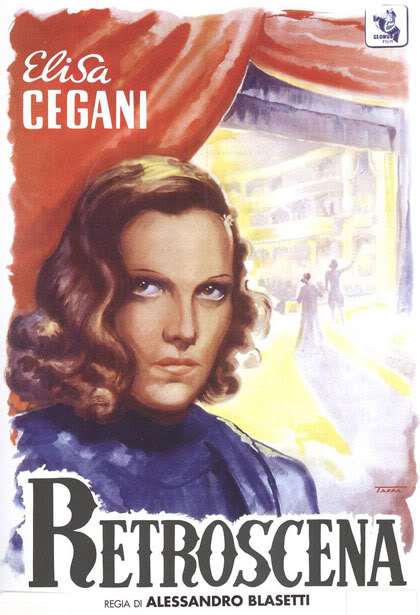
    Un celebre baritono incontra sul piroscafo che lo conduce dall’America in Italia, una non meno celebre pianista. Costei è ricchissima e superba. Il baritono se ne innamora ma soffre per l’alterigia di lei. Poiché la ragazza ha beffato alcuni cantanti che si sono esibiti durante un concerto a bordo, il baritono si rifiuta di cantare, ed anzi, se la ragazza non promette di starsene rinchiusa nel camerino della Scala, egli è deciso a non partecipare alle recite liriche per cui è stato scritturato a Milano. Per quanto altezzosa la ragazza, che ricambia segretamente i sentimenti dell’uomo, si reca durante il suo debutto nel camerino di lui. Intanto un famoso critico nega qualunque valore al nuovo cantante, anche perché è geloso dell’interessamento che la ricca ereditiera dimostra per lui. Il cantante, d’accordo con la direzione del teatro, si presenta in una nuova opera sotto il nome di un suo collega polacco, di cui il critico è entusiasta. Durante l’intervallo egli, alla presenza di tutti, svela la propria identità al critico stesso che aveva tessuto pubblicamente le lodi dell’interprete straniero. Dopo questa vittoria egli ha modo di conoscere i veri sentimenti della ragazza di cui è innamorato. I due concluderanno l’avventura con il matrimonio.Read More »

  • Mario Camerini – Rotaie aka Rails (1929)

    1921-1930DramaItalian Cinema under FascismItalyMario CameriniSilent

    http://img444.imageshack.us/img444/8472/vlcsnap4056820.png

    29f7c043f76a2bde437fd0d52a185152

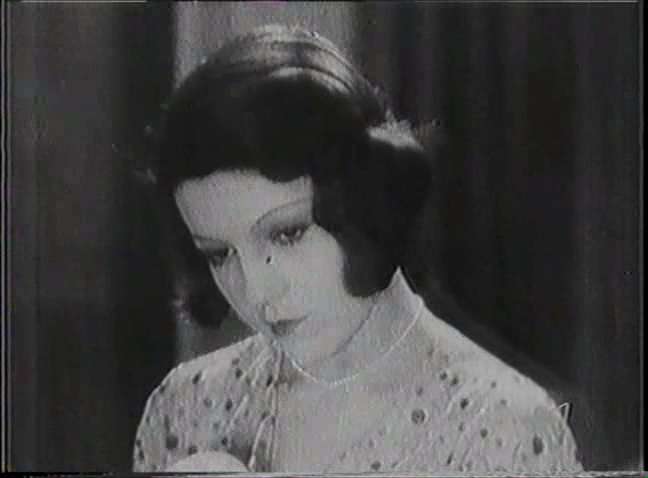
    A young honeymooning couple are lured away to a seaside resort by a high-society sleazeball, who has plans to seduce the girl, while at the same time her hubby in desperation stakes all his money on the roulette wheels.Read More »

  • Roberto Roberti – Napoli che canta AKA When Naples sings (1926)

    1921-1930DocumentaryItalian Cinema under FascismItalyRoberto RobertiSilent

    http://img38.imageshack.us/img38/9932/naple.png

    29f7c043f76a2bde437fd0d52a185152

    From il cinema muto italiano 1923-1931:
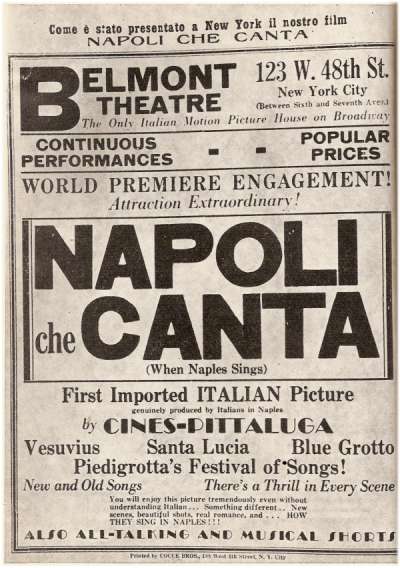
    Si tratta di una antologia di canzoni napoletane, interprete dai maggiori cantanti dell’epoca, i quali seguirono alcune prime visioni, cantando direttamente sotto lo schermo.

    Translation:
    This is an anthology of Neapolitan songs, singers from the major interpreter of the time, which followed some premieres, singing directly below the screen.Read More »

  • Vittorio Cottafavi – I nostri sogni AKA Our Dreams (1943)

    1941-1950ComedyItalian Cinema under FascismItalyVittorio Cottafavi

    Leo (Vittorio De Sica) is young man trying to make a living without any success. Through fortuitous circumstances, he is assigned by the director of a big firm to accompany for one night the daughter of the firm’s accountant, Titi (María Mercader). Leo pretends then to be the son of a tycoon, and takes her in a luxurious restaurant.Read More »

  • Danièle Huillet & Jean-Marie Straub – Quei loro incontri AKA These Encounters of Theirs (2006)

    2001-2010Danièle Huillet and Jean-Marie StraubExperimentalItalyPhilosophy

    In the last feature-length collaboration between Straub and Huillet before Huillet’s death in 2006, villagers from across the length of Italy — a peasant, a postmaster, a theater director, a mayor, a rope maker — gather in the Tuscan countryside to recite the five final scenes of Cesare Pavese’s Dialogues with Leucò.

    Published in 1947, just two years after the Holocaust and the Second World War and two years before Pavese’s suicide, the Dialogues offer a series of meditations on human destiny, both comical and tragic, between ancient Greek mythological figures. Desperate in their hunger for immortality, mortals are blind to the gift of being human — of their ability to experience joy and suffering; to feel a passing breeze or the touch of another body; to name, remember, and act.Read More »

  • Ken Russell – il mefistofele (1989)

    1981-1990ItalyKen RussellMusicalPerformance

    29f7c043f76a2bde437fd0d52a185152

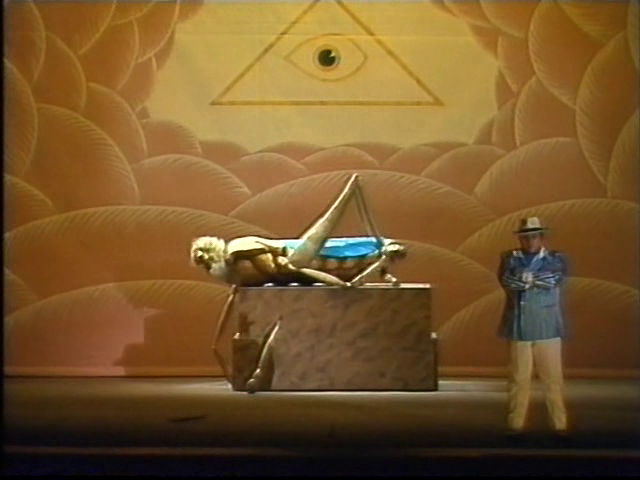
    Arrigo Boito’s Il Mefestefele was first performed in 1868 and his most known work. In Ken Russell’s modern interpretation presented by the Genoese Opera, it has Faust as an ageing hippy. He smokes marijuana and is tormented by his lost youth. Mephisto makes a bet with God that he can turn anyone to pagan life, even someone as innocent as Faust. From then on it is a battle of good against evil in a flamboyant, surreal display of primary colours, PVC costumes, nurses with swastikas, rocket trips, love and even characters dressed as Donald Duck and Mickey Mouse. Ken Russell said because the devil is always with us is his reason for the contemporary setting. Written by Archie MooreRead More »

  • Abel Ferrara – Napoli, Napoli, Napoli (2009)

    2001-2010Abel FerraraDocumentaryDramaItaly

    Quote:
    Napoli, Napoli, Napoli, Abel Ferrara’s new project, is not only a portrait of the city itself, but a deep sight into its humanity, vital and brutal, passionate and cruel at the same time. While interviewing a group of female convicts in Pozzuoli State Prison, Ferrara was deeply impressed by their statements, so harsh and fatalistic. He then decided to base on their life experiences three different screenplays, written by Peppe Lanzetta, Maurizio Braucci and Gaetano Di Vaio. Di Vaio’s episode is inspired by his actual experience as a convict; Braucci’s depicts a sad and brutal adolescence; Lanzetta’s a family melodrama of violence, expectations and vengeance. By interweaving reality and fiction, this innovative docu-drama is a complex and compelling mosaic; like the city of Naples, so fascinating and indecipherable at the same time.Read More »

Back to top button