Iran

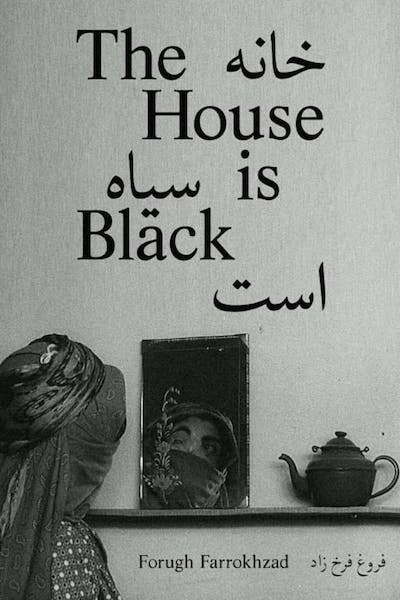
  • Forugh Farrokhzad – The House is Black aka Khaneh siah ast (1963)

    1961-1970Amos Vogel: Film as a Subversive ArtDocumentaryForugh FarrokhzadIranShort Film

    From Village Voice: In 1962, beloved and controversial poetess Forugh Farrokhzad went to Azerbaijan and made this short film on the grounds of a leper colony, presaging in 22 minutes the entirety of the Iranian new wave and the international quasi-genre of “poetic nonfiction.” It’s a blackjack of a movie, soberly documenting the village of lost ones with an astringently ethical eye, freely orchestrating scenes and simply capturing others, while on the soundtrack Farrokhzad reads her own poetry in a plaintive murmur—this in the same year as Vivre sa Vie and La Jetée. (Chris Marker has long been a passionate fan, as has Abbas Kiarostami, whose The Wind Will Carry Us owes its title and climactic verse to Farrokhzad.) It was the only substantial piece of cinema Farrokhzad ever made. Five years later, having already attained near legendary status in Iran for her writing, she was killed in a car crash at the age of 32, guaranteeing her posthumous fame as a feminist touchstone for generations of angry Persian women.Read More »

  • Jafar Panahi – Offside (2006)

    2001-2010ComedyDramaIranJafar Panahi

    Since women are banned from soccer matches, Iranian females masquerade as males so they can slip into Tehran’s stadium to see the game between Iran and Bahrain. The ones who are caught and arrested are taken to a holding area and guarded by soldiers. One sympathetic soldier agrees to watch the game through a peephole and recount the action to the impatient fans.Read More »

  • Manijeh Hekmat – Zendan-e zanan aka Women’s Prison (2002)

    Drama2001-2010IranManijeh Hekmat

    29f7c043f76a2bde437fd0d52a185152

    Spanning 18 years in an Iranian women’s prison, this follows two women: the new prison warden, a tough as nails devout Muslim who has served in the army on the Iraqi front, and a young midwife, Mitra, who is serving her sentence for killing her mother’s abusive husband. In the early years, Mitra is repeatedly punished as the warden tries to break her. This includes punishment for delivering a baby in the prison cell while all of the prison staff has taken shelter during an Iraqi bombing. The warden’s attitude starts to change after 8 years, when Mitra tries to protect a new inmate from rape at the hands of her older cellmates. When the baby comes back in 1991 as a 17 year old delinquent, Sepideh, the warden respects Mitra enough to protect the girl.Read More »

  • Dariush Mehrjui – Postchi AKA The Postman (1972)

    1971-1980ArthouseDariush MehrjuiDramaIran

    Image Hosted by ImageShack.us

    29f7c043f76a2bde437fd0d52a185152

    This film firnly establishes as a major talent the Iranian
    Mehrjui, whose successful fusing of pathos, humor, and pre-
    occupation with the poor resembles nothing less than Chaplin
    or early De Sica in its ferocity. In his earlier The Cow, the
    only owner of such a precious animal in a poverty-stricken
    village goes insane over its loss and assumes its place;
    berserk, he is put into a harness, is dragged off to a
    nearby hospital, beaten like an animal, and finally
    dies the death of a beast in a mudhole. The Mailman
    is an unforgettable Wozzeck-like figure, the eternal
    simple-minded victim who finally rises to mistaken
    grandeur in a murderous gesture that leaves him
    braying with despair over the body of his victim.
    Since such films can never be popular, they are living
    proof of the fact that box-office returns must not
    be allowed to determine the life of a work of art.Read More »

  • Mani Haghighi – Kargaran mashghoole karand AKA Men at Work (2006)

    Arthouse2001-2010IranMani Haghighi

    29f7c043f76a2bde437fd0d52a185152

    Quote:
    A bare bones synopsis of this film might lead you to expect that it is lethally boring. Four middle aged buddies are returning to Tehran from a trip to the mountains, trying to get back in time to watch an important soccer match on TV. Their homeward journey grinds to a halt when they round a curve in the highway and are confronted by a natural monolith, a 10 foot high, narrow rock formation, projecting straight up out of the ground, overlooking the canyon below. They spend the rest of the movie trying to topple it.Read More »

  • Abbas Kiarostami – Nan va Koocheh AKA The Bread and Alley (1970)

    1961-1970Abbas KiarostamiArthouseIranShort Film

    A playful boy heads for home after buying bread, only to find out the road is blocked by a frightening stray dog. As no passerby stops to offer assistance, it finally occurs to the boy to be friend the dog by throwing it a piece of bread. Kiarostami’s first film is a wordless, bittersweet classic. 1970, b&w, 10 minutes.Read More »

  • Abbas Kiarostami – Mashgh-e Shab aka Homework (1989)

    1981-1990Abbas KiarostamiDocumentaryIran

    According to Kiarostami, “Homework” is not a film, but rather a filmed inquiry motivated by the Iranian educational problems his own children brought home every night from school. In the delightful result, young scholars are questioned on camera by Kiarostami himself: backs to the wall, framed in close-up, they face the camera and talk about excessive amounts of homework, the allure of TV cartoons, and the punishment that results from temptation.Read More »

  • Abbas Kiarostami – Roads of Kiarostami (2006)

    2001-2010Abbas KiarostamiArthouseDocumentaryIran

    29f7c043f76a2bde437fd0d52a185152

    Roads of Kiarostami, a documentary that reflects on the power of landscape, combining austere black-and-white photographs with poetic observations, engaging music with political subject matter.
    Read More »

  • Abbas Kiarostami – Shirin (2008)

    2001-2010Abbas KiarostamiArthouseExperimentalIran

    Free Image Hosting at www.ImageShack.us

    29f7c043f76a2bde437fd0d52a185152

    Variety Review :
    Though his name continues to pop up regularly as writer or story man on a good chunk of Iranian cinema, Abbas Kiarostami himself has not filmed anything even vaguely commercial since 2002’s “Ten.” The maestro has disappeared into making more abstract, experimental installations, theater pieces and films (“Five”). His latest, “Shirin,” wherein 112 Iranian actresses and Juliette Binoche are shot watching a 12th-century Persian play, with the play’s performance itself kept entirely offscreen, is unlikely to pack ’em in. Yet “Shirin” offers a feast for the bedazzled eye and a crash course in narrative obsession for the benumbed mind.Read More »

Back to top button