Iran

  • Manijeh Hekmat – Zendan-e zanan aka Women’s Prison (2002)

    Drama2001-2010IranManijeh Hekmat

    29f7c043f76a2bde437fd0d52a185152

    Spanning 18 years in an Iranian women’s prison, this follows two women: the new prison warden, a tough as nails devout Muslim who has served in the army on the Iraqi front, and a young midwife, Mitra, who is serving her sentence for killing her mother’s abusive husband. In the early years, Mitra is repeatedly punished as the warden tries to break her. This includes punishment for delivering a baby in the prison cell while all of the prison staff has taken shelter during an Iraqi bombing. The warden’s attitude starts to change after 8 years, when Mitra tries to protect a new inmate from rape at the hands of her older cellmates. When the baby comes back in 1991 as a 17 year old delinquent, Sepideh, the warden respects Mitra enough to protect the girl.Read More »

  • Dariush Mehrjui – Postchi AKA The Postman (1972)

    Drama1971-1980ArthouseDariush MehrjuiIran
    Postchi (1972)

    This film firnly establishes as a major talent the Iranian
    Mehrjui, whose successful fusing of pathos, humor, and pre-
    occupation with the poor resembles nothing less than Chaplin
    or early De Sica in its ferocity. In his earlier The Cow, the
    only owner of such a precious animal in a poverty-stricken
    village goes insane over its loss and assumes its place;
    berserk, he is put into a harness, is dragged off to a
    nearby hospital, Read More »

  • Mani Haghighi – Kargaran mashghoole karand AKA Men at Work (2006)

    Arthouse2001-2010IranMani Haghighi

    29f7c043f76a2bde437fd0d52a185152

    Quote:
    A bare bones synopsis of this film might lead you to expect that it is lethally boring. Four middle aged buddies are returning to Tehran from a trip to the mountains, trying to get back in time to watch an important soccer match on TV. Their homeward journey grinds to a halt when they round a curve in the highway and are confronted by a natural monolith, a 10 foot high, narrow rock formation, projecting straight up out of the ground, overlooking the canyon below. They spend the rest of the movie trying to topple it.Read More »

  • Abbas Kiarostami – Nan va Koocheh AKA The Bread and Alley (1970)

    1961-1970Abbas KiarostamiArthouseIranShort Film

    A playful boy heads for home after buying bread, only to find out the road is blocked by a frightening stray dog. As no passerby stops to offer assistance, it finally occurs to the boy to be friend the dog by throwing it a piece of bread. Kiarostami’s first film is a wordless, bittersweet classic. 1970, b&w, 10 minutes.Read More »

  • Abbas Kiarostami – Mashgh-e Shab aka Homework (1989)

    1981-1990Abbas KiarostamiDocumentaryIran

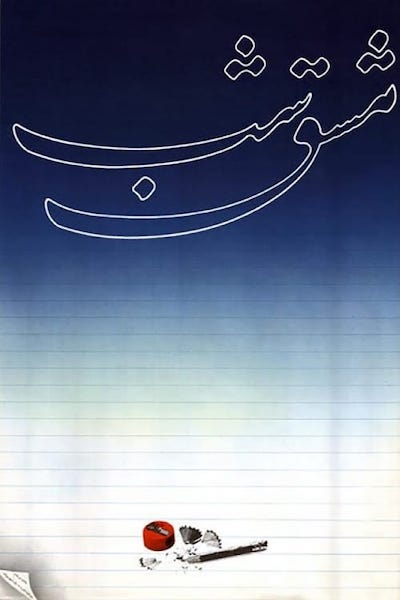
    According to Kiarostami, “Homework” is not a film, but rather a filmed inquiry motivated by the Iranian educational problems his own children brought home every night from school. In the delightful result, young scholars are questioned on camera by Kiarostami himself: backs to the wall, framed in close-up, they face the camera and talk about excessive amounts of homework, the allure of TV cartoons, and the punishment that results from temptation.Read More »

  • Abbas Kiarostami – Roads of Kiarostami (2006)

    Documentary2001-2010Abbas KiarostamiArthouseIran
    Roads of Kiarostami (2006)

    Quote:
    Abbas Kiarostami has recently been exhibiting his black-and-white landscape photographs at venues around the world, and Roads of Kiarostami is both a companion piece to these exhibits and an extension of them. Static shots of his photos alternate with footage of Kiarostami’s car winding through mountain roads, as the Iranian filmmaker muses in voice-over on the significance of the journey and on the path of his work and Persian literature as a whole.Read More »

  • Abbas Kiarostami – Shirin (2008)

    2001-2010Abbas KiarostamiArthouseExperimentalIran
    Shirin (2008)

    Quote:
    A hundred and fourteen famous Iranian theater and cinema actresses and a French star: mute spectators at a theatrical representation of Khosrow and Shirin, a Persian poem from the twelfth century, put on stage by Kiarostami. The development of the text — long a favorite in Persia and the Middle East — remains invisible to the viewer of the film, the whole story is told by the faces of the women watching the show.Read More »

  • Abbas Kiarostami – Ghazieh-e Shekl-e Aval, Ghazieh-e Shekl-e Dou Wom AKA First Case, Second Case (1979)

    Documentary1971-1980Abbas KiarostamiIranPolitics

    This banned and rarely seen pseudo-documentary by Kiarostami is a testimony to his seldom acknowledged political shrewdness and his objective, complex perspective on the tumultuous events of the late 70s in Iran, culminating in the revolution. Remarkably, he achieved this without leaving his comfort zone, the classroom setting, and by staying faithful to his inquiring style, with its subtle, imaginative manipulation of recorded reality. Here, he also introduced the interview format into his body of work, putting his finger on the pulse of Iranian society by collaging conflicting viewpoints.Read More »

  • Abbas Kiarostami – Hamsarayan AKA The Chorus (1982)

    1981-1990Abbas KiarostamiArthouseIranShort Film

    Quote:
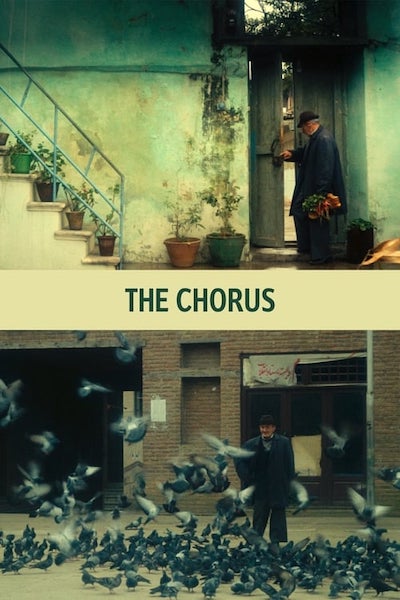
    A deaf old man wearing a hearing aid is walking in the streets of Rasht. When the surroundings get too noisy, he turns off his sound. Unfortunately, when he returns home, he doesn’t hear his granddaughter, home from school, vainly ringing the doorbell. A chorus of children gathers to penetrate the old man’s silence.Read More »

Back to top button