Germany

  • Wolf-Eckart Bühler – Der Havarist AKA The Shipwrecker (1984)

    Drama1981-1990GermanyWolf-Eckart Bühler

    Actor Sterling Hayden found himself cooperating with the House Un-American Activities Committee in 40s and 50s Hollywood. This film tracks the restless actor’s search for meaning, his discomfort with Hollywood’s easy money and the circumstances that led to his naming names through re-enactments.Read More »
  • F.W. Murnau – Phantom (1922) (HD)

    Germany1921-1930F.W. MurnauSilent

    Quote:
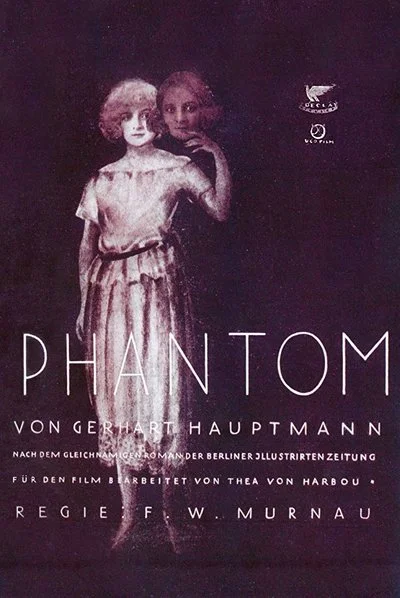
    Phantom is a 1922 silent film that was directed by F. W. Murnau the same year Murnau directed Nosferatu. It is an example of German Expressionist film and has a surreal, dreamlike quality.Read More »

  • Michael Haneke – Das weisse Band – Eine deutsche Kindergeschichte AKA The White Ribbon (2009)

    2001-2010DramaGermanyMichael HanekeMystery

    Quote:
    Ever wonder about the ancestors of the murderous jocks in Funny Games? In the Palme d’Or-winning The White Ribbon, Michael Haneke time travels to rural Germany on the cusp of WWI to find the answer—or, rather, to make the audience’s collective skin crawl at the question. The setting is the small village of Eichwald, a bucolic commune that, presided over by such stern patriarchs as the landowning baron (Ulrich Tukur) and the pastor (Burghart Klaussner), is presented as a 19th-century holdover inexorably giving way to the darkening modernity of new times. Not that Haneke displays much nostalgia for the town’s traditions: Life here is dismal, oppressive, and rigidly hierarchical, erected on puritanical morals and reinforced with ritualized punishment. Hitler—the “bitter flower of German irrationalism,” as Hans-Jürgen Syberberg once put it—may still lurk beyond the horizon, but the seeds of fascism have already been sown in society’s unquestioning adherence to power structures.Read More »

  • Donatello Dubini & Fosco Dubini – Ludwig 1881 (1993)

    1991-2000Donatello DubiniDramaFosco DubiniGermany

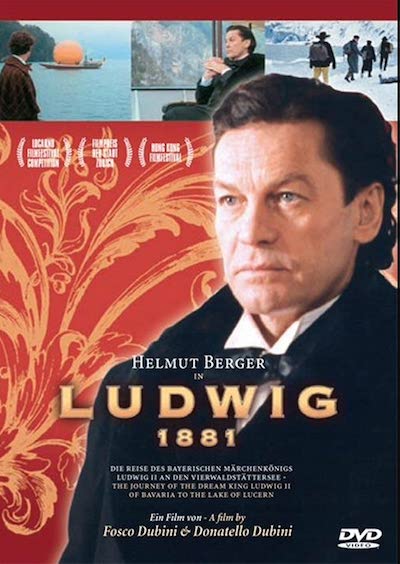
    While Luchino Visconti’s “Ludwig” (1972) is regarded as a classic, it is little-known that Helmut Berger appeared a second time as Bavaria’s troubled king. “Ludwig 1881” (1993) by Donatello and Fosco Dubini focuses on Ludwig’s journey through Switzerland in summer 1881. Munich court actor Josef Kainz was hired to recite Schiller’s “Wilhelm Tell” in front of the alleged historical locations, to transport the King into a world of poetry and imagination. After a few days the trip had turned into a nightmare for Kainz, who was soon exhausted from the King’s eccentric demands and antics. Once again, the desire for the ideal was marred by the all-too-human.Read More »

  • Donatello Dubini & Fosco Dubini – Die Reise Nach Kafiristan AKA The Journey to Kafiristan (2001)

    2001-2010ArthouseDocumentaryDonatello DubiniFosco DubiniGermany

    In 1939, the author Annemarie Schwarzenbach and the ethnologist Ella Maillart travel together by car to Kabul, but each is in pursuit of her own project. Annemarie Schwarzenbach, who was among Erika and Klaus Mann’s circle of friends in the 30s, is searching for a place of refuge in the Near East to discover her own self. Ella Maillart justifies her restlessness, her need for movement and travel, with a scientific pretext: she would like to explore the mysterious Kafiristan Valley and make a name for herself with publications on the archaic life of the nomads living there. Both women are on the run, but political developments and their own biographies catch up with them again and again. Their mutual journey through the outside world, which runs from Geneva via the Balkans and Turkey to Persia, is compounded by the inner world of emotions with a tender love story.Read More »

  • F.W. Murnau – Schloß Vogeloed AKA The Haunted Castle (1921)

    Crime1921-1930F.W. MurnauGermanyMysteryWeimar Republic cinema

    PLOT: In the castle Vogeloed, a few aristocrats are awaiting baroness Safferstätt. But first count Oetsch invites himself.. Everyone thinks he murdered his brother, baroness Safferstat’s first husband, three years ago. So he is rather undesirable. But Oetsch stays; arguing he is not the murderer and will find the real one…Read More »

  • Rüdiger Sünner – Schwarze Sonne aka Black Sun (1998)

    1991-2000DocumentaryGermanyPoliticsRüdiger Sünner

    Quote:
    A historical analysis of how groups such as the Nazi’s may use language, symbols, and religious connotation in order to come to power. It raises questions that deserve in depth analysis and consideration. Questions include: Where do legends expand our thinking and where do they bury it? When does spiritual pursuit suddenly turn into fanaticism and violence? Last, have we as a society learned from our past, and if so have forgotten the lessons of the 20th Century? Are we now embarking on a new level only to learn the same old lessons about humanity again? In addressing these questions we are taken into the back drop of the history of Germany beginning in the late 1800’s through the late 20th Century at the eve of the 21st. “A society that does not take archetypes, myths, and symbols seriously will possibly be jumped by them from behind.”Read More »

  • Harun Farocki – Der Auftritt AKA The Appearance (1996)

    Documentary1991-2000GermanyHarun Farocki

    Quote:
    The head of a Berlin advertising agency explains his proposed strategy to his potential client, a Danish optical company. The communication strategy that we ultimately came up with as a basis or any creative act or means of communication has three headings.

    The first is ‘relevant, not arrogant’; the second, ‘varied, not uniform’; and the third is, ‘creative, not pushy’. These are essentially translations, strategic translations of your basic requirements and your analysis of the market, as well.Read More »

  • Ulrich Seidl – Jesus, Du weisst AKA Jesus, you know (2003)

    2001-2010DocumentaryGermanyUlrich Seidl

    Quote:
    Six Catholics share their thoughts and problems with Jesus in different churches. The camera accompanies them.

    Great, uncompromising semi-documentary about six people who tell Jesus any given detail that is on their mind. They practice in such detailed manner that not seldomly you won’t manage to keep serious. For instance Elfriede who while cleaning the church’s floor and dusting the crucifixes starts her whining soliloquy about her Muslim husband’s behavior after sickness, his TV habits which appear to have taken influence on their relationship. Read More »

Back to top button