Germany

  • Ingemo Engström & Gerhard Theuring – Fluchtweg nach Marseille AKA Escape Route to Marseilles (1977)

    Ingemo Engström1971-1980ArthouseDocumentaryGerhard TheuringGermany
    Fluchtweg nach Marseille (1977)
    Fluchtweg nach Marseille (1977)

    Documentary in two parts that blends dramatized reconstructions, personal reminisces and newsreel footage to tell the story of the flight of German refugees through occupied France to Marseille in 1940.

    Quote:
    Anna Segher’s novel Transit (1944) is the leitmotif of this film essay on German exiles in France and their escape to the South after Hitler marched into Paris. But Fluchtweg nach Marseille is neither adaptation nor documentary: actors recite and react to passages from the novel. Eyewitnesses speak. Documents from the Nazi era are contrasted with images of places and landscapes in which the settings of persecution and escape come back to haunt both the filmmakers and us. This is a search for evidence that interweaves facts, personal recollections, and both literary and visual reflections.
    -Anke HahnRead More »

  • Bettina Böhler – Schlingensief – In das Schweigen hineinschreien AKA Schlingensief: A Voice That Shook the Silence (2020)

    2011-2020Bettina BöhlerDocumentaryGermany
    Schlingensief In das Schweigen hineinschreien (2020)
    Schlingensief In das Schweigen hineinschreien (2020)

    Bettina Böhler creates a memorial to the director Christoph Schlingensief on the 10th anniversary of his death, a portrait of the filmmaker’s work and influence.Read More »

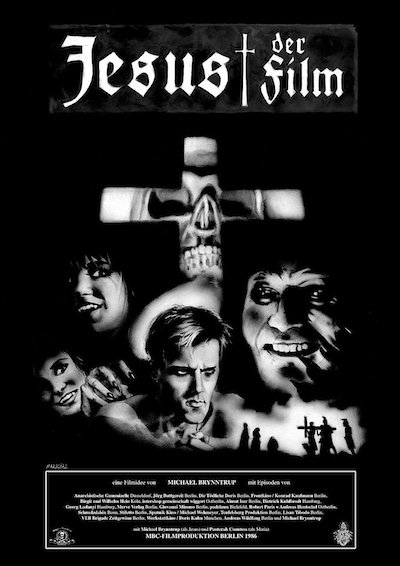
  • Various – Jesus – Der Film (1986)

    Various1981-1990DramaExperimentalGermany
    Jesus Der Film (1986)
    Jesus Der Film (1986)

    Synopsis
    JESUS – THE FILM is a monumental feature film in 35 episodes, shot on Super8. The individual episodes retell the story of the New Testament and were made by a total of 22 filmmakers from East and West Germany in 12 months. The project’s own history follows the story of Jesus Christ recruiting his apostles. The film’s creator Michael Brynntrup is a central and controversial figure of Berlin’s vivid independent community. His transgressive obsessions, as well as his capability to smuggle miles of Russian Super8 film-material through East-West customs, gathered a group of believers around him. Individuals and groups from various art factions filled the holy frame, inspired by the Dadaistic idea of an ‘ecriture automatic’. From one to another, they passed ideas, material and actors, including Michael Brynntrup himself as the title character. (IMDB)Read More »

  • Arthur Maria Rabenalt – Chemie und Liebe AKA Chemistry and Love (1948)

    Arthur Maria Rabenalt1941-1950ComedyGermanySci-Fi
    Chemie und Liebe (1948)
    Chemie und Liebe (1948)

    The first science fiction film of the DEFA: Futuristic comedy about a revolutionary invention.

    Synopsis:
    In the country “Kapitalia” Dr. Alland has made a breakthrough invention.
    The profit-hungry industrialist Da Costa tries to get to it by sending a series of alluring women towards him.Read More »

  • Isabel Prahl – 1000 Arten Regen zu beschreiben AKA Different Kinds of Rain (2017)

    2011-2020DramaGermanyIsabel Prahl
    1000 Arten Regen zu beschreiben (2017)
    1000 Arten Regen zu beschreiben (2017)

    A family struggles with the teenager son who suffers from Hikikomori phenomenon. Suddenly, he closes the door and locks himself in, shutting out a helpless father, mother and sisterRead More »

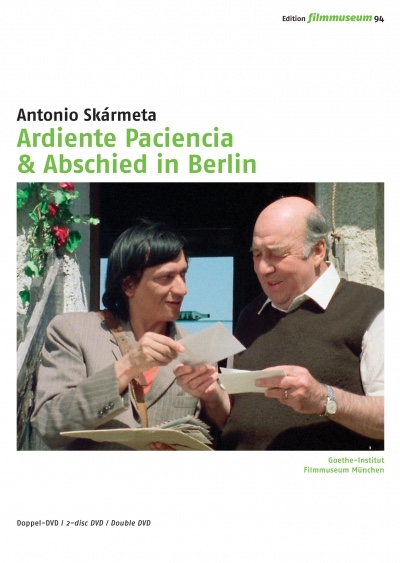
  • Antonio Skármeta – Ardiente paciencia AKA With Burning Patience (1983)

    Antonio Skármeta1981-1990ArthouseDramaGermany
    Ardiente paciencia (1983)
    Ardiente paciencia (1983)

    A poor postman in Isla Negra, Chile, befriends Pablo Neruda and asks his help in writing poems to the woman of his dreams.Read More »

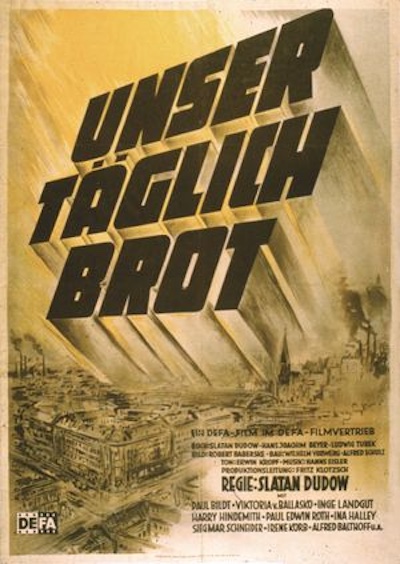
  • Slatan Dudow – Unser täglich Brot AKA Our Daily Bread (1949)

    Slatan Dudow1941-1950GermanyPolitics
    Unser täglich Brot (1949)
    Unser täglich Brot (1949)

    Quote:
    A story about a family after the Second World War. The petty bourgeois cashier Karl Weber of Berlin observes from a distance how his son Ernst participates in the building of a new socialist society. Karl does not understand Ernst’s visions, instead he confides in his other son Harry. However, Harry becomes involved in illicit business and Karl quickly realizes that it would be best to join his son Ernst in the citizen-owned factory. With this film, director Slatan Dudow (1903-1963) continued the traditions of proletarian German film from the Weimar Republic. As with his first feature film Kuhle Wampe, from a screenplay by Bertolt Brecht, Dudow wanted an art that “cultivates the viewer’s psyche.” His postwar films were intended to make the viewers realize the importance of supporting the “new order” in East Germany. Our Daily Bread became known as a premiere film of its day under the rubric of “socialist realism.” Slatan Dudow’s work was convincing mainly through his detailed descriptions of socialist everyday life. Music by Hanns Eisler was the centerpiece of contemporary review. After coming back from his exile in America, the composer created a score that challenged, thrilled, and focused. Berlin’s world of ruins is captured in almost documentary fashion.Read More »

  • Klaus Lemke – Moto-Cross (1977)

    Klaus Lemke1971-1980ComedyCultGermany
    Moto Cross (1977)
    Moto Cross (1977)

    Another beautiful comedy with Cleo Kretschmer & Wolfgang Fierek!

    Inge, Drogistin in einer bayerischen Kleinstadt, hat ihr Herz an den Kraftfahrzeugmechaniker Hub verloren, ohne dass dieser auch nur im Entferntesten davon etwas ahnt. Inge will fürs erste auch gar nicht, dass Hub erfährt, wie es um sie steht. Nichts soll ihn ablenken von dem großen Ziel, dass er und ihr Bruder Wolfgang – Kraftfahrzeugmechaniker wie Hub – mit Verbissenheit und Energie verfolgen: den Bau einer Rennmaschine, um an einem Moto-Cross-Rennen teilnehmen zu können. Inge möchte einen Helden lieben, und so tut sie alles dafür, dass der Traum der Jungen in Erfüllung geht. Freilich kränkt es sie, dass der motorradbesessene Hub überhaupt keine Notiz von ihr nimmt. Read More »

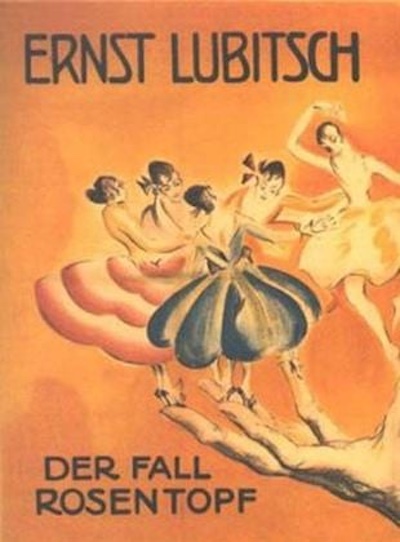
  • Ernst Lubitsch – Der Fall Rosentopf AKA The Rosentopf Case [Incomplete] (1918)

    Ernst Lubitsch1911-1920ComedyGermanyShort FilmSilent
    Der Fall Rosentopf (1918)
    Der Fall Rosentopf (1918)

    Translated from German wikipedia wrote:
    The film was shot in the UFA-Union-Filmstudios, Berlin-Tempelhof. The sets were designed by Kurt Richter. Although the National Film Archive also has designs by Paul Leni for the film, his involvement cannot be confirmed due to rediscovered film credits. The same applies to Ossi Oswalda’s involvement as an actor, as stated by Hermann G. Weinberg in 1977.
    The 1,163-meter-long film was examined by the censors in July 1918. The premiere of the film, which was announced in the Lichtbild-Bühne as Der Fall Rosenblum,[4] was on September 20, 1918 at the U.T. Friedrichstraße in Berlin.Read More »

Back to top button