

A parachute jump is performed by an artist and his girlfriend at the opening of an exhibition in the artist’s studio. An art dealer and a number of friends are invited to the event.Read More »
A parachute jump is performed by an artist and his girlfriend at the opening of an exhibition in the artist’s studio. An art dealer and a number of friends are invited to the event.Read More »
Quote:
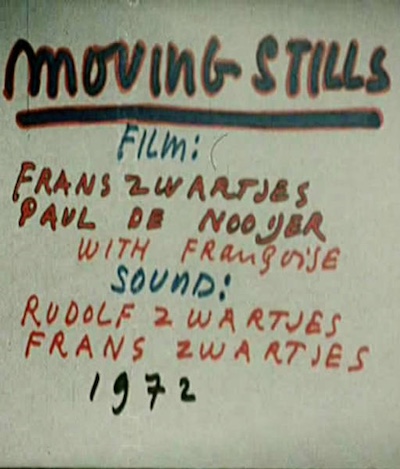
First film by Paul de Nooijer, in collaboration with his artistic father Frans Zwartjes. Moving Stills shows a series of photographs by Françoise de Nooijer, which are joined, by means of editing and colour effects, and turned into a moving picture. The erotic image gets an explosive charge.
(Netherlands Film Commission)Read More »
Quote:
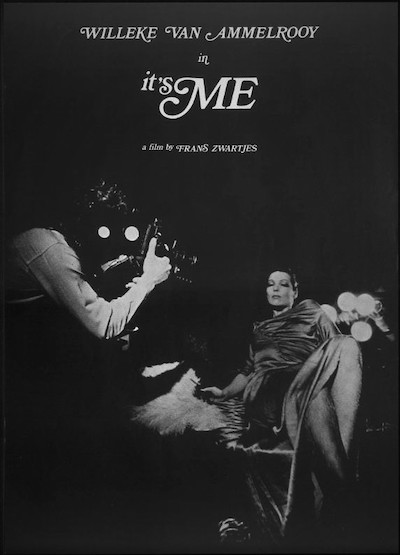
First full-length experimental feature by filmmaker Zwartjes about an actress, played by Willeke van Ammelrooy, who during the whole film, in continuously changes moods, is busy in her room. Eventually, she is made an offer by telephone. But what offer does the actress get? – letterboxd.com
Willeke van Ammelrooy stars in this acting tour de force, never leaving the screen for an instant. The movie follows her in her role as an actress who is trying to decide whether or not to accept a certain role. While she is worrying at the problem, she smokes, bathes, dresses, has a tantrum or two, makes phone calls, and cleans her room. – by Clarke Fountain, allmovie.comRead More »

Description: A major new talent in international avant-garde cinema, Zwartjes creates hermetic, obsessive, and “decadent” universes, in which desperate, dissociated males and females, though inextricably bound to each other, never “connect”. Here an impassive, Keaton- like figure engages in a sexual, ominous food orgy with voluptuous, half-nude women whom he paws impotently. A mysterious, powerful tension informs the action. Despite non-communication and mutual defilement of the grossest kind, a profoundly humanist statement emerges; compassion for these victims, “partners” in loneliness. Expressionist style, make-up and lighting as well as complex montage heighten the effect of the tragic tableaux, in which tortured non-heroes operate impotently in hostile space, facing us blindly, nakedly, with all defenses down; compelling us, perhaps, to confront ourselves in like manner.Read More »

Description: This film is dominated by an icy blue. In a monumental building a group of scientists submit women to obscure and inhuman experiments, in which sexuality and cruelty constantly merge into one another. When the film was released, this horrifying game of power and powerlessness was condemned severely by a militant group of feminists. The criticism was undeserved. After all, ‘Pentimento’ is an art-historical term for a hidden image underneath the actual image giving an indication of how the latter evolved to its current state. The film does not endorse the lopsided power relations in our world but actually challenges them.Read More »
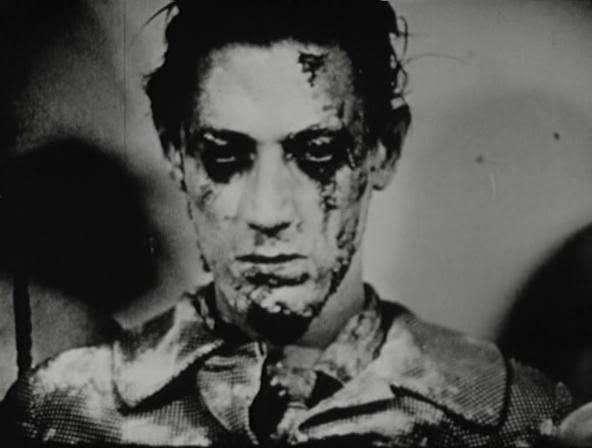
Description: “Visual Training” is a short 1969 experimental film from the Netherlands. The film looks so ahead of its time, with its goth makeup and gritty look. I wonder if Marylin Manson or the band the Misfits have ever seen Visual Training? A man and two topless ladies sit at a table and eat. They grotesquely smear food on one another. The one girl is blindfolded and covered with baking powder by the guy. The screen sometimes turns black, as the camera cuts fast between shots. When the camera zooms in on the actor’s face, it looks as if he’s staring right at the viewer. The one girl’s nude body is used as a canvas for body food art. Frans Zwartjes has a created a rare short film that’s unique for viewers. It’s like a mild version of the “Vienna Aktionists” for the surreal at heart.Read More »

“Living (1971), Zwartjes’ own favourite film is the much praised climax of his series Home Sweet Home, in which he explores the rooms of his new house in The Hague. ‘Living has this weird, indefinable atmosphere’, Zwartjes said in an interview. ‘The strange way people move around and the whining music with it…’ The film is a demonstration of Zwartjes’ virtuoso camera work. He plays the main character and at the same time operates the camera, which is hand-held while he films himself. Zwartjes: ‘I was strong as a horse in those days.’ Two persons, Zwartjes and his wife Trix, move aimlessly through the house. Living was filmed with an extremely wide-angle lens (a 5.7) that suggests a powerful atmosphere of alienation.”Read More »