

Synopsis
The portrait of a female student in the mid-60s Paris.Read More »
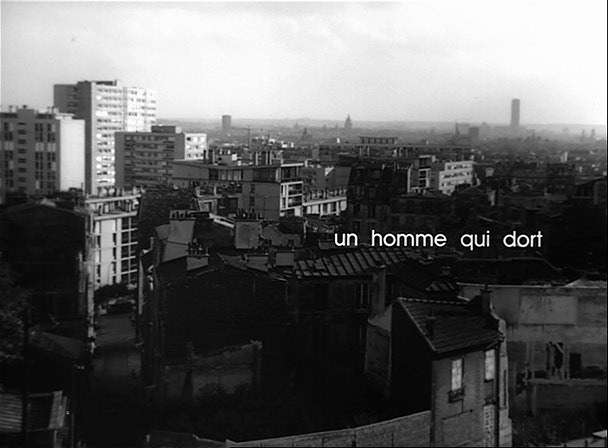
english description :
In this French tour-de-force a young student (Jacques Speisser) decides to have no more interaction with the world than is needed to minimally sustain life. His increasingly automaton-like behavior is coupled with a strange clarity of insight about the world around him. His inner musings as he wanders the luminous streets of Paris are narrated in the form of an unwritten diary by Ludmila Mikael.Read More »

Quote:
Jean-Luc Godard, pioneer of the New Wave, has always delighted in breaking rules. Even with almost 90 features to his name, the long an established master still shows the same glee thumping his nose at convention as he did over thirty years ago, when he burst on the scene with “Breathless.”
His latest film, “Notre Musique,” is a unqiue blend of almost abstract cinema, fiction, and documentary. It opens with a montage entitled “Hell,” which shows real and fictional footage of carnage: soldiers, atrocities, war. As brief as it is, the relentless and strangely beautiful barrage of violence is enough to make anybody despair of the human race.Read More »

Reviews:
Although Eric Rohmer’s fresh, unadorned style rarely sits heavily on his films, The Romance of Astrée et de Céladon, his adaptation of 17th century writer Honoré d’Urfé’s 5th century fable of affronted love, not only features an usual absence of intellectual banter, but is more importantly the lightest and silliest the director has been in ages. These are not pejorative descriptions—the film’s wholesome delight in d’Urfé’s modest whimsy amongst the 5th century Gauls of druids, nymphs and many amorous declarations of assured sincerity and flighty infidelity, the director’s own sweet, unexpected eroticism, and the film’s gentle spirit simply make a work that is light, lovely, and strange.
– D. Kasman (D-kaz.com)Read More »
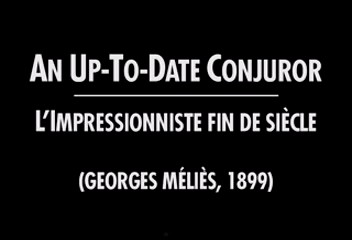
Although Georges Méliès’ The Conjuror (L’ Impressionniste fin de siècle) was was one of his earliest movies, it’s also an excellently realized example of Méliès’ basic style of cinematic magic.
The Conjuror revisits a scene that Méliès had explored before, and is basically a cinematic adaptation of the traditional magic trick “making the assistant disappear”. Méliès first presented this scene in his 1896 film The Vanishing Lady, which used simple camera stop-substitution to achieve the affect (no motion involved, and no in-camera dissolve). Méliès revisited the idea in his 1898 film The Magician, which made further use of the substitution effect, which by that time was only one of many effects that Méliès was using in his films.Read More »

This series was released by Madman Films in Australia last year with an Introduction by the excellent Adrian Martin and, more importantly, completely new subtitles.Read More »

Quote:
Agnes Varda and Jacques Demy, who together and separately had been making films for 30 years, began a new one in April, 1990. It was about his childhood memories. If you have seen Demy’s “The Umbrellas of Cherbourg,” a musical set in a garage and featuring singing mechanics, you may have guessed that Demy grew up as the son of an auto mechanic. “Umbrellas” won all the awards – the prize at Cannes, the foreign language Oscar – and Demy made such others as “Lola” and “Donkey Skin,” often centering around the songs he remembered from his youth.Read More »

After one of their sons gets caught filming himself masturbating in school, Claire, who never opened up the conversation of sex with her three children, decides to encourage them to explore their sexuality freely and openly.
Read More »

Before he turned to feature filmmaking in 1968 with Naked Childhood, Pialat worked on a series of short films, many of them financed by French television. TURKISH CHRONICLES is a compendium of four pieces shot in Turkey. Corne D’Or juxtaposes a poem by Nerval with a powerful study of Ottoman architecture; Istanbul takes into the crowded streets and back alleys of a fascinating city divided between continents. Byzance uses a text by Stefan Zweig to describe the Ottoman conquest of the city in 1453; Maitre Galip is another on Pialat’s perceptive studies of children that includes a poem by Turkish poet Nazim Hikmet.Read More »