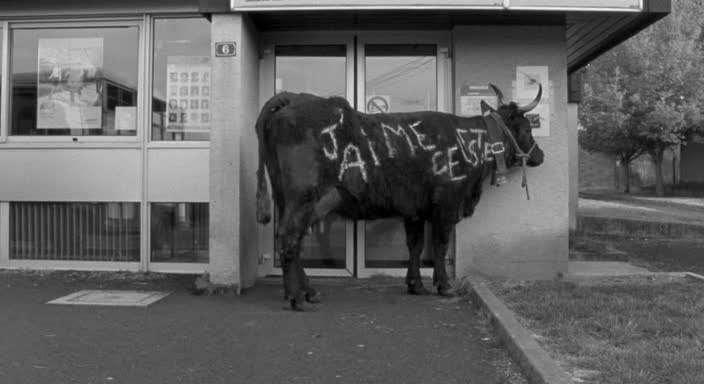
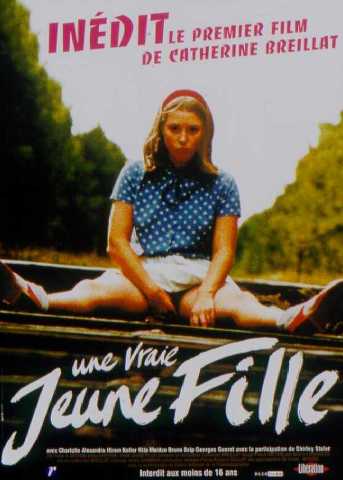
In the French countryside, Céleste loves a postman who leaves her just before she realizes she is pregnant by him. For nine months, the solitary woman tries to hide her pregnancy, awaiting her boyfriend’s return rather than the coming of the baby… (IMDb)Read More »
Based on a play by Charles Méré, the 1926 French production Le Vertige was released in the U.S. two years later as “The Living Image”, or “The Lady of Petrograd”. The film opens with the overthrow of the Czar during the 1917 Russian revolution. The family of General Count Svirsky (Roger Karl) cower in their home, certain that the mobs of angry peasants will tear them apart. But even in this moment of crisis, Svirsky can find time to murder the young officer who has been having an affair with Countess Svirska (Emmy Lynn). The Countess knows what has happened, but she loyally remains with her husband as they escape to the safety of the French Riviera. It is here that the Countess meets Henri de Cassel (Jaque Catelain), the “living image” of her dead lover. Once again, the General prepares to shoot the Countess’ paramour in cold blood — but this time, the outcome is quite different.From Hal EricksonRead More »
Synopsis from AMG:
In this episodic animated fantasy from France, an art teacher interprets a series of six fairy tales (each involving a prince or princess) with the help of two precocious students. Princes et Princesses was created using a special style of cutout animation, with black silhouetted characters performing the action against backlit backdrops in striking colors. Produced in 1989, Princes et Princesses was first released in Europe in 2000 and received its first screening in North America at the 2000 Toronto Film Festival. — Mark DemingRead More »
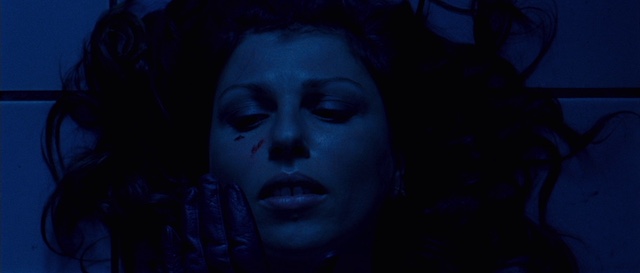
It’s been argued that this frightening and erotic piece of experimental montage from Belgian directors Hélène Cattet and Bruno Forzani is all form and no feeling. It’s easy to see why, since its most easy pleasures derive from a cool juxtaposition and stylisation of sound and imagery. But there’s more to it: the film also functions as a knowing, lightly feminist homage to Hitchcock and the chief exponents of the Giallo genre, Dario Argento and Mario Bava. As such, its ‘meanings’ may not be instantly traceable through a cosy linear storyline or densely wrought characterisations.
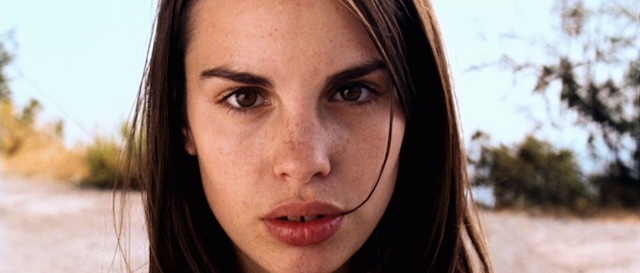
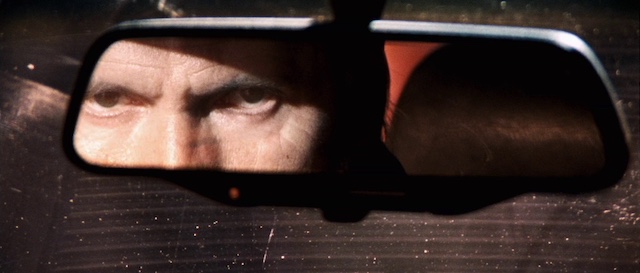
In immaculate detail and with barely any dialogue, the film depicts three symbolic events in the life of Ana: the first involves a family death and some mid-coitus voyeurism; another shows her first experience of male attraction; and the final, most impressive chapter (a wholesale updating of a key segment from Argento’s ‘Deep Red’) sees our heroine (played by Marie Bos, pictured above) sneaking around an eerie, European mansion, maybe stalked by a razor-wielding maniac.
Cattet and Forzani sculpt with pure mood. They deliver a vivid sense of Ana’s heightened sensitivity towards her surroundings via an array of bravura camera tricks and fine edits. The best way to describe it would be to imagine the shower scene in ‘Psycho’ played over feature length. A large part is shot in extreme close-up, mostly of Ana’s eyes or the silhouette of her crotch underneath a billowy cotton summer dress.
This technique imbues the film with a rich sense of texture, such as in an early scene where Ana runs her fingers over the cracking, mottled skin of (what appears to be) the corpse of an old man, or later when she’s riding in a taxi and the heat makes the leather trim too hot to touch. Some may find the film a mite academic in its glassy deconstruction of genre convention, and it’s perhaps asking a bit much to read it as anything more than a claustrophobic portrait of sexual danger, but it still fulfils that highly specific brief with blood-splashed gusto.
Amer.2009.1080p.BluRay.x264-HANDJOB.mkv

General
Container:  	Matroska
Runtime: 	1 h 30 min
Size: 	7.92 GiB
Video
Codec: 	x264
Resolution: 	1916x816
Aspect ratio:  	2.35:1
Frame rate: 	23.976 fps
Bit rate: 	11.9 Mb/s
BPP: 	0.317
Audio
#1:  	French 5.1ch AC-3 @ 640 kb/s
“Une Vraie Jeune Fille, Catherine Breillat’s first feature film, was shelved for 25 years, apparently because the moral/aesthetic disgust couldn’t be overcome at the time. It was released for the first time this year, and immediately re-ignited the scandal occasioned by Breillat’s last feature, Romance.”
– Kay Armatage, Toronto International Film Festival Catalogue
The story centres on Alice Bonnard, a young girl attending Saint-Sulvien Girl’s College, and takes place during a summer in the turbulent sixties. Alice comes homes to spend her holidays with her parents in the Landes region. They run a sawmill where they employ a young man, Jim. Business isn’t going well, although Mr. and Mrs. Bonnard are too proud to admit it and Jim’s nonchalant attitude about his job doesn’t help things. Alice is attracted to Jim, but she’s too scared to let him know it, believing that as far as he’s concerned she doesn’t exist. Her tumescent sexuality begins to obsess her. She becomes fascinated with the excretions, juices and smells of her own body as well as with the slimy oozings and putrid detritus of the natural world. The film gives few clues to distinguish the girl’s fantasies from the events of her life. This is fitting, as the entire film revolves around the girl and her own perceptions. The heightened realism of the direction and cinematography produces a text that refuses either to accuse or to exploit.
(from link)Read More »
Synopsis:
A loyal man is tempted both in real life and in cyberspace in this thriller from director Gilles Marchand. Gaspard and his girlfriend Marion head out to Marseilles for a few weeks of sunshine and relaxation, but after spending a few hours by the pool one day, he finds a lost cell phone in the locker room. Gaspard isn’t sure what he should do with the phone, and he’s all the more puzzled when the phone rings and he finds himself having to help Audrey, an attractive but disturbed woman threatening to kill herself. Gaspard and Marion help Audrey before she can take her own life, but while Gaspard is deeply in love with Marion, he’s powerfully intrigued by Audrey. Gaspard discovers Audrey is a serious fan of an on-line role playing game called Black Hole, and he begins playing too, creating a character that bears little resemblance to his own personality. The fictive Gaspard becomes all the more attracted to Audrey in the virtual environment, until he realizes she’s not as benign as he first thought. ~ AllmovieRead More »
Chicago Reader wrote:
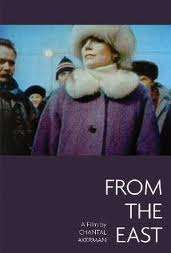
Chantal Akerman’s haunting 1993 masterpiece documents without commentary or dialogue her several-months-long trip from east Germany to Moscow–a tough and formally rigorous inventory of what the former Soviet bloc looks and feels like today. Akerman’s painterly penchant for finding Edward Hopper wherever she goes has never been more obvious; this travelogue seemingly offers vistas any alert tourist could find yet delivers a series of images and sounds that are impossible to shake later: the countless tracking shots, the sense of people forever waiting, the rare occurrence of a plaintive offscreen violin over an otherwise densely ambient sound track, static glimpses of roadside sites and domestic interiors, the periphery of an outdoor rock concert, a heavy Moscow snowfall, a crowded terminal where weary people and baggage are huddled together like so many dropped handkerchiefs. The only other film I know that imparts such a vivid sense of being somewhere is the Egyptian section of Straub-Huillet’s Too Early, Too Late. Everyone goes to movies in search of events, but the extraordinary events in Akerman’s sorrowful, intractable film are the shots themselves–the everyday recorded by a powerful artist with an acute eye and ear.Read More »
Quote: In 1961, Noël is a French soldier in the Algerian war. His comrades, formerly opposed to the war, now oppress civilians, kill and torture. To stay faithful to his pacifist values, he will do something radical.Read More »