Quote:
Jean-Claude Lauzon’s highly praised film tells the strange story of Léolo, a young boy from Montréal. Told from Léolo’s point-of-view, the film depicts his family of lunatics and Léolo’s attempts to deal with them. Not one individual in the boy’s life is well adjusted. His brother, after being beaten up, spends the film bulking up on growth protein. The grandfather hires half-naked girls to bite off his toenails and, in a brutal rage, almost kills Léolo. As he witnesses his family decay around him, Léolo retreats into himself and the fantasy world he has constructed. In response to the weirdness of his daily life, Léolo creates a little mental mayhem of his own which Lauzon renders in an amazing series of free-form, surreal images. Eventually, this precarious balance of reality and fantasy cracks and Léolo is hospitalized after attempting to murder his grandfather. The score by Tom Waits underscores the narrative arc of Léolo’s breakdown. On its release, the film won numerous awards including the International Fantasy Film Award for Best Director (1992) and a Genie Award for Best Original Screenplay (1992).Read More »
France
-
Jean-Claude Lauzon – Léolo (1992)
1991-2000DramaFranceJean-Claude Lauzon -
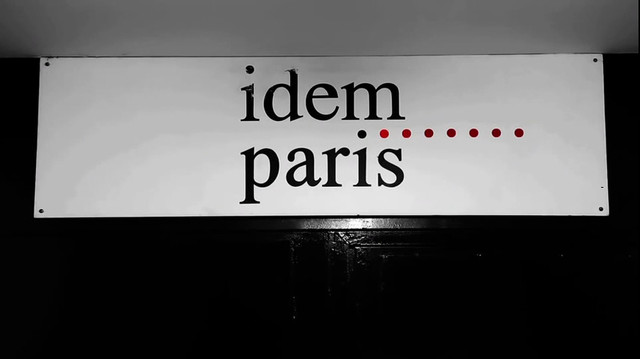
David Lynch – Idem Paris (2013)
2011-2020David LynchDocumentaryFranceShort FilmQuote:
Filmed at the eponymous Idem Paris, a fine art printing studio in Paris, France, and “virtually wordless”, the film documents the lithographic process. It was edited by Noriko Miyakawa and mixed by Dean Hurley.Idem Paris was shot on high definition digital video and presented in black-and-white. Critics drew comparisons between Idem Paris and Lynch’s debut feature film, 1977’s Eraserhead, noting that both had “high-contrast black and white images, the focus on specific machinery, and the clanking and hissing array of sounds.”
Describing the background of the film, Lynch said:Read More »
-
Jacques Rivette – Paris nous appartient aka Paris is Ours (1960)
1951-1960ArthouseDramaFranceJacques RivettePlot:
Anne, a student in Paris, becomes involved with a group of her brother’s arty friends and gets sucked into a mystery involving Philip, an expatriate American escaping McCarthyism; Terry, a self-destructive femme fatale; theatre director Gérard; and Juan, a Spanish activist who apparently committed suicide, but was he murdered? Philip warns Anne that the forces that killed Juan will soon do the same to Gérard, who is struggling to rehearse Shakespeare’s Pericles. Anne takes a part in the play in an attempt to help him and also discover why Juan died.Read More »
-
Guillaume Nicloux – L’enlèvement de Michel Houellebecq aka The Kidnapping of Michel Houellebecq (2014)
2011-2020ComedyCultFranceGuillaume NiclouxDIRECTOR‘S STATEMENT
September 16th 2011. The TV news networks, newspapers, blogs, websites and radio stations are all reporting on one story: Allegedly – star author Michel Houellebecq, winner of the prestigious Prix Goncourt in 2010, has been abducted. Some members of the media go so far as to suggest that Al-Qaeda may be involved.
For the next few days, the news ripples through literary circles and members of the press, feeding buzz and speculation. A brazen kidnapping? An identity crisis? A plan to escape abroad? A schizophrenic delirium?
Michel will never provide the media with any rational explanation for what happened to him.Michel Houellebecq. Who is he really? A good writer? A great author? Even more than that? The most widely read living French writer in the world? The most hated and the most respected one? Does he deserve to be classified among those celebrated enfants terribles of our national prose, right there next to Artaud, Céline, Genêt or Gracq?
Read More » -
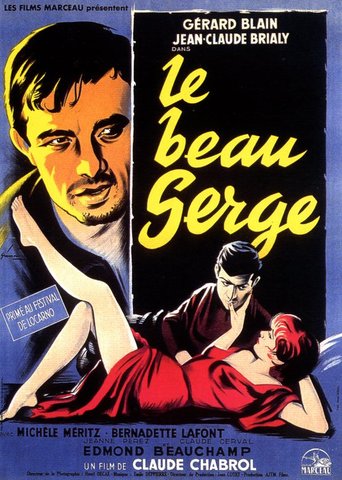
Claude Chabrol – Le beau Serge (1958) (HD)
1951-1960Claude ChabrolDramaFranceOf the hallowed group of Cahiers du cinéma critics turned filmmakers who transformed French film history, Claude Chabrol was the first to direct his own feature. His absorbing landmark debut, Le beau Serge, follows a successful yet sickly young man (Jean-Claude Brialy) who returns home to the small village where he grew up. There, he finds himself at odds with his former close friend (Gérard Blain)—now unhappily married and a wretched alcoholic—and the provincial life he represents. The remarkable and stark Le beau Serge heralded the arrival of a cinematic titan who would go on to craft provocative, entertaining films for five more decades. (-Criterion)Read More »
-
Louis Malle – Les amants AKA The Lovers [+extras] (1958)
1951-1960ArthouseDramaFranceLouis MalleSynopsis:
Louis Malle unveiled the natural beauty of Jeanne Moreau in his breakthrough, Elevator to the Gallows. With his follow-up, the scandalous smash The Lovers> (Les amants), he made her a star once and for all. A deeply felt and luxuriously filmed fairy tale for grown-ups, perched on the edge between classical and New Wave cinemas, The Lovers presents Moreau as a restless bourgeois wife whose eye wanders from both her husband and her lover to an attractive passing stranger (Jean-Marc Bory). Thanks to its frank sexuality, The Lovers caused quite a stir, being censored and attacked for obscenity around the world. If today its shock has worn off, its glistening sensuality and seductive storytelling haven’t aged a day.Read More »
-
Serge Avedikian – Chienne d’histoire (2010)
2001-2010AnimationFranceSerge AvedikianShort FilmPalme d’or short films CANNES 2010
Synopsis
Constantinople 1910. The streets are overrun with stray dogs.
The newly-established government, influenced by a model of Western society, uses European experts to choose a method of eradication before deciding, suddenly and alone, to massively deport the dogs to a deserted island away from the city.Read More »
-
Luis Buñuel – Belle de jour (1967)
1961-1970ArthouseDramaFranceLuis BuñuelCatherine Deneuve’s porcelain perfection hides a cracked interior in one of the actress’s most iconic roles: Séverine, a Paris housewife who begins secretly spending her afternoon hours working in a bordello. This surreal and erotic late-sixties daydream from provocateur for the ages Luis Buñuel is an examination of desire and fetishistic pleasure (its characters’ and its viewers’), as well as a gently absurdist take on contemporary social mores and class divisions. Fantasy and reality commingle in this burst of cinematic transgression, which was one of Buñuel’s biggest hits. (~Criterion)Read More »
-
Catherine Breillat – Tapage nocturne (1979)
1971-1980Catherine BreillatDramaFranceRomanceQuote:
Perhaps the film is more personal for Catherine Breillat. Is it a record of her working methods during this period? Her films have always dealt with sexuality and maybe the filmmaker was simply using the medium to express her own thoughts and experiences. I love that; a great deal of why I love the cinema is the auteur theory which states the director is the author of a film; that links in an artist’s work can be found from work to work. Breillat surely qualifies, and I can see how this film influenced her later work. For example, it seems to be a precursor or even a veiled prequel to Sex Is Comedy, an infinitely more insightful look at the filmmaking process and sexual manipulation, and there’s a series of shots showing 2 characters descending a spiral staircase that she would repeat 30 years later in Bluebeard. The problem with Nocturnal Uproar is that it isn’t insightful about the cinema, it isn’t insightful about relationships, and it isn’t even honest about sex. I don’t want to sound perverted but the sex scenes in this film almost all look fake, though it is obvious that actress Laffin is being touched between her legs. The film develops into a woman’s sexual obsession for a man who toys with her, someone who may or may not have alternate intentions with his amours. This is a great subject for a film but it is arrived at a little too late.
Read More »