France

  • Eric Rohmer – L’anglaise et le duc AKA The Lady and the Duke (2001)

    2001-2010ArthouseDramaEric RohmerFrance

    29f7c043f76a2bde437fd0d52a185152

    Storyline

    An episodic look at Grace Elliott (1760-1823) and Philippe, the Duke of Orleans, during the French Revolution. In 1790, they are friends, no longer lovers. He suggests she leave France, she warns him to quit the Revolution. In 1792, she must escape Paris on foot. Less than a month later, she returns on an errand of mercy and shows great courage saving the governor of Tuileries. The Duke in turn steps in to protect Grace. In early 1793, she demands a promise from the Duke that he vote to spare Louis’s life; he does not, and Grace is furious. In April, he warns her of a search; she is arrested and brought before the committee. Orleans, too, is suspect. The guillotine awaits. (From IMDb)Read More »
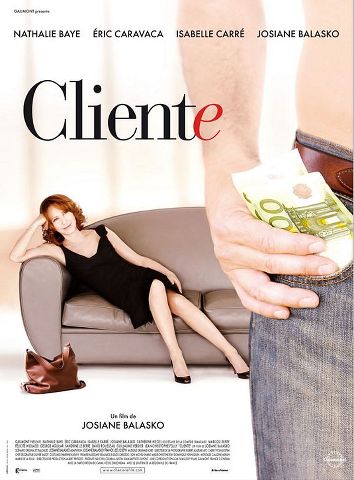
  • Josiane Balasko – Cliente AKA A French Gigolo AKA Client (2008)

    2001-2010DramaFranceJosiane BalaskoRomance

    29f7c043f76a2bde437fd0d52a185152

    AMG: Gallic actress-turned-director Josiane Balasko – a Euro cinema mainstay best known for her unconventional romantic lead in Bertrand Blier’s 1989 Trop belle pour toi – helms and co-stars in Cliente, a quirky and offbeat look at the bittersweet life of a male prostitute, which Balasko co-adapted from her 2005 novel with screenwriter Franck Lee Joseph. Eric Caravaca stars as Marco, a French hustler in his mid-30s whose path criss-crosses with that of infomercial actress Judith (Nathalie Baye) in a local park. A nascent divorcee, she’s in the mood for a quick fling, and follows suit with Marco, but this infuriates her sister, Irene (Balasko). Both sexual partners intend to enjoy the liaison as a one-time engagement; for better or worse, it soon repeats itself on multiple occasions and evolves into a deep-seated and very sticky relationship with lots of emotional strings. Significantly, this makes matters very complex and messy for Marco, who happens to be married to hairdresser Fanny (Isabelle Carre) and shares a residence with her, her mother (Catherine Hiegel) and her goth-decked sister (Marilou Berry, Balasko’s real-life daughter)). Fanny, it seems, harbors no knowledge of Marco’s real profession; when she discovers the truth, she systematically attempts to use her husband’s profession to her own selfish advantages in lieu of objecting passionately or leaving him.Read More »

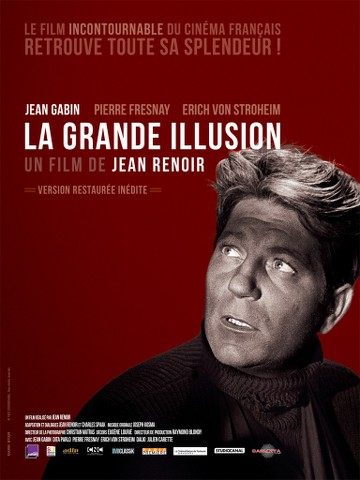
  • Jean Renoir – La grande illusion (1937)

    1931-1940ClassicsDramaFranceJean RenoirWorld War One

    29f7c043f76a2bde437fd0d52a185152

    One of the very first prison escape movies, Grand Illusion is hailed as one of the greatest films ever made. Jean Renoir’s antiwar masterpiece stars Jean Gabin and Pierre Fresnay as French soldiers held in a World War I German prison camp, and Erich von Stroheim as the unforgettable Captain von Rauffenstein.Read More »

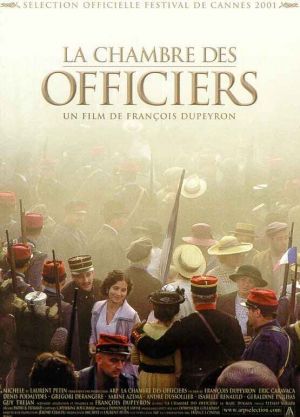
  • François Dupeyron – La Chambre des officiers AKA The Officers’ Ward (2001)

    2001-2010ArthouseDramaFranceFrançois-Dupeyron

    29f7c043f76a2bde437fd0d52a185152

    Quote:
    A man who thinks he’s found an easy ride through the Army during World War I has his world turned upside down when facial injuries render him unrecognizable in this wartime drama. In the summer of 1914, Adrien Fournier (Eric Caravaca) is an engineer conscripted into the French Army, where he is made a lieutenant and assigned to join a group of soldiers helping to design and build a bridge to move troops near the front lines. While scouting a suitable location for the bridge, Fournier and his fellows are caught in the middle of an attack, and a shell explodes in his face. Fournier survives the attack, but while his limbs and his body suffer only minimal damage, his face is torn to shreds — only landing in the mud prevents him from bleeding to death (the dried muck seals off a number of key blood vessels severed by the blast). It is some time before Fournier can be moved to an Army hospital, and he cannot talk through his ruined mouth, communicating with notes scratched onto a small chalkboard. Fournier finds himself in a special hospital wing for officers who’ve suffered severe injuries (a relatively comfortable area a good bit different from the crowded and spartan wards for common foot soldiers), and as a dedicated surgeon (Andre Dussollier) struggles to rebuild Fournier’s face with the primitive means available to him, the once-handsome engineer ponders an uncertain future. Commiserating with Fournier are Alain (Jean-Michel Portal), his best friend from college; Pierre (Gregori Derangere) and Henri (Denis Podalydes), a pair of fellow officers also suffering facial injuries; and Anais (Sabine Azema), a patient and warm-hearted nurse who brings hope to the hospital’s most severely injured men. La Chambre Des Officiers was screened in competition at the 2001 Cannes Film Festival.
    Read More »

  • Jean-Luc Godard – Éloge de l’amour AKA In Praise of Love (2001)

    2011-2020ArthouseDramaFranceJean-Luc Godard

    29f7c043f76a2bde437fd0d52a185152

    Quote:
    Having trodden the path towards ever-increasing obscurity in the 1990s, the eternal maverick of French cinema, Jean-Luc Godard made a surprising come-back with Éloge de l’amour, his first major theatrical release outside of France for well over a decade. More sophisticated and mature than Godard’s increasingly abstract and inward-looking works of the 1990s, it is a film which manages to capture the essence of Godard’s cinema (his political concerns, his love of character, his enthusiasm for cinema and literature, to say nothing of his near-pathological contempt for mainstream cinema). At the same time, it is a challenging work, packed with content whilst employing a minimalist approach reminiscent of Robert Bresson (another great director who is often referred to in the film).
    The film is divided in two contrasting parts. It begins with an author’s seemingly doomed attempts to realise a ‘project’ (perhaps a film, but we cannot be certain of this). This part of the film is shot beautifully in black-and-white, almost as a sombre elegy to monochrome cinema. This includes some stunning night shots of Paris, immediately evocative of the Nouvelle Vague cinema of the 1960s in which Godard played such a major part. Two thirds of the way into the film, the mood and style change suddenly, as if we have been propelled into a dream. Thanks to the marvels of the latest digital technology, the images suddenly take on an otherworldly form, with overly saturated colour and some occasional visual distortions.
    Read More »

  • Siegrid Alnoy – Elle est des nôtres AKA She’s One of Us (2003)

    2001-2010ArthouseDramaFranceSiegrid AlnoyThe Female Gaze

    29f7c043f76a2bde437fd0d52a185152

    Quote:
    While the official jury opted for a long German joke, the deliberation for the FIPRESCI award in Stockholm transpired in, literally, a matter of seconds; the choice was that clear. As our citation states, “Elle est des nôtres” is an ambitious and extremely promising debut, a moving symbosis between its director, Siegrid Alnoy, and her lead actor, Sasha Andrès. Titled after a populist French song (and thus poorly translated to English as “For She’s a Jolly Good Fellow”), “Elle et des nôtres” resonates with a cultish ring of unwanted belonging; she is one of us, she is one of us. In a way, Siegrid Alnoy’s first feature, which premiered at the Critics Week earlier this year at Cannes – and has proven to be one of that awful festival’s true discoveries – is about possibly the most banal yet damaging cult of them all: human society in the early 21st century. Her main character, Christine Blanc (musician Sasha Andrès, remarkable in her first feature film role) is appropriately named: she is a blank. Perpetually clothed in the same red business suit, Christine toils in limbo as a temp for bosses who don’t know her name, aspiring to full-time employment and social acceptance in her suburban Annecy environment, all indistinct malls, glass office walls and stifling sterility, approaching her daily interactions with the false veneer of politeness.Read More »

  • Orson Welles – Histoire immortelle (1968)

    1961-1970DramaFranceOrson Welles

    Soured on life, Mr. Clay decides to play games with the lives of others. He decides to make the “immortal” legend of a sailor seducing a rich man’s wife come true and even picks the sailor himself…Read More »

  • Laurent Cantet – L’emploi du temps AKA Timeout (2001)

    2001-2010ArthouseDramaFranceLaurent Cantet

    29f7c043f76a2bde437fd0d52a185152

    REVIEW

    Film festivals are by their nature notoriously cut off, isolated in such a manner they rarely function as the best place to fully appreciate or accurately evaluate the merit of new works. Laurent Cantet’s astonishing “L’emploi du temps” (“Time Out”) suffers from no such equivocation. It is a masterpiece, the best film shown in this strong festival.

    Cantet’s debut feature “Human Resources,” distributed in the U.S. through the Shooting Gallery Film Series, was a marvel of political urgency, social verisimilitude and human conflict. Outlined with some of the same Oedipal struggles of that film, “Time Out” is a perfectly made, emotionally piercing and artistically accomplished examination of the desperation and despair of an essentially good and caring man driven to craven, absurd acts of self-delusion. With echoes of Michelangelo Antonioni’s “The Passenger,” the movie presents a terrifying and gripping portrait of a man so alarmed at what he has become that he invents an idealized portrait to cover up his faults and limitations.Read More »

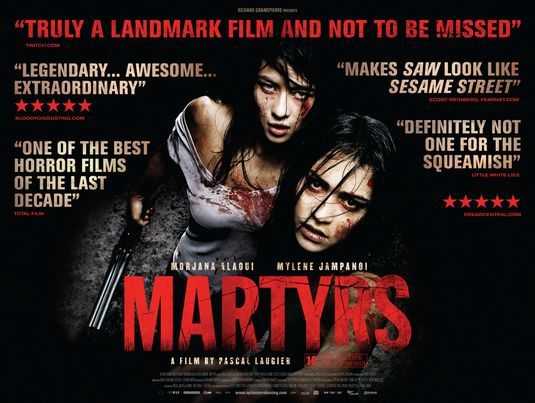
  • Pascal Laugier – Martyrs (2008)

    2001-2010FranceHorrorPascal LaugierThriller

    29f7c043f76a2bde437fd0d52a185152

    Reviewed by Tim Merrill
    To say that fans of modern genre cinema are a discerning lot is like saying Platinum Dunes puts out sub-par films. There’s no doubt that cinephiles in North America have been forced to look abroad to new directors and movies that provide that ever-elusive boot to the throat.

    You’d have to be hard pressed to ignore the transgressive wave of cinema that has come out of France in the last six years. With films like Marina De Van’s In My Skin, Gaspar Noe’s Irreversible, and last year’s gut punch Inside, the French have unapologetically set out to carve new boundaries in entertainment that will hold the timid at bay and scar those willing to bear witness. While many considered Inside to set new standards in extremities in French cinema, the release of Pascal Laugier’s Martyrs has just wiped the slate clean.

    Although Martyrs will undoubtedly be compared to Inside in terms of its intensity, the film is a bastard unto itself that manages to surpass its comparisons on all levels. Director Laugier has presented an experience that is both cinematically stunning, yet emotionally devastating, and with all the subtleties of a barbed wire enema.Read More »

Back to top button