France

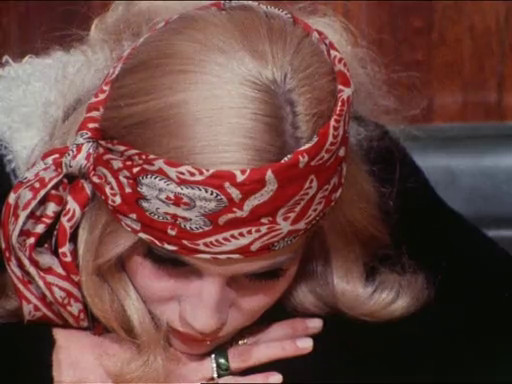
  • Jean-Pierre Lajournade – Les Souffrances du jeune Werther (1968)

    1961-1970ArthouseFranceJean-Pierre LajournadeTV

    29f7c043f76a2bde437fd0d52a185152

    Free adaptation of Goethe. 68’s spleen and rebellion with Garrel Brothers…

    Adaptation libre du roman épistolaire éponyme et premier roman de Goethe qui fut publié anonymement et parut en 1774. Il met en scène le suicide de son héros. Il est ici transposé à l’époque contemporaine et mêle interprétations et images d’archives (d’origine non identifiée), dans une narration qui bouscule les codes classique du genre. Ce téléfilm offre une relecture critique de l’oeuvre de Goethe à travers une remise en cause de la société bourgeoise. Le film montre la révolte hors de toute dimension spectaculaire. La présentation de Werther répond à un mouvement de libération ambiant et exprime une volonté de soulèvement, par tous les canaux que propose l’art, face à une morale vieillissante et un système pesant. Ce Werther fut réalisé en 1968, année de révolte.Read More »
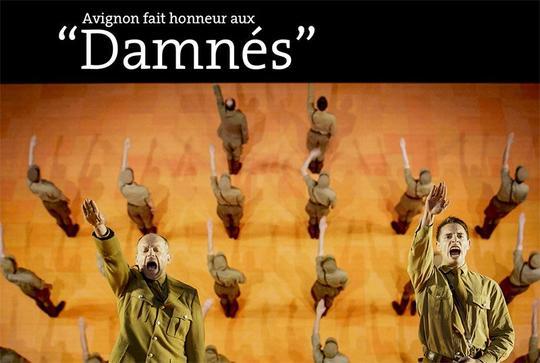
  • Ivo van Hove & La Comédie-Française – Les Damnés AKA The Damned (2016)

    2011-2020DramaFranceIvo van HoveLa Comédie-FrançaisePerformance

    Ivo van Hove’s first staging with the Troupe marks the entry into the repertoire of the scenario of The Damned. In two decades, the artistic director of the Toneelgroep in Amsterdam, whose field of exploration encompasses the world of theatre, film and opera, has explored a vast repertoire of works, from Sophocles and Shakespeare to Molière, Koltès, Cassavetes or Arthur Miller. The intention in this production is not to adapt the cult film, directed byVisconti, but “to return to the screenplay in order to stage it for theatre”. What Ivo van Hove retains from this sharply drawn chronicle of a family of industrialists during the Nazi seizure of power in 1933 in Germany is the ideological depravity of a company willing to makes the most poisonous alliances to benefit its own economic interests. “In my view, it is the celebration of evil”, says the director, whose work “always combines strong theatricality with the exploration of complex psychological zones and refined emotions”. Read More »

  • Raoul Ruiz – Colloque de chiens AKA Dog’s Dialogue (1977)

    1971-1980ExperimentalFranceRaoul RuizShort Film

    29f7c043f76a2bde437fd0d52a185152

    Synopsis:
    A charming tale of murder, perversity and narrative echoes told through shots of barking dogs and a La jetée-like series of stills.Read More »

  • Louis Feuillade – Pierrot, Pierrette (1924)

    1921-1930DramaFranceLouis FeuilladeSilent

    29f7c043f76a2bde437fd0d52a185152

    Pierrot et Pierrette, brother and sister, live in a caravan with their grandfather, the former ringmaster of a circus. To earn a living, they sing in the streets, and their lives are happy. But a charitable lady interferes, determined to put grandfather in an old folks’ home and the children in an orphanage. Pierrot and Pierrette run away, and fall into the hands of a travelling vendor who wants to use them for burglaries.Read More »

  • Jean Renoir – La chienne AKA The Bitch (1931)

    1931-1940DramaFranceJean Renoir

    29f7c043f76a2bde437fd0d52a185152

    Maurice (Michel Simon) is a married cashier who meets Lulu (Janie Marèze), a streetwalker. Their chance meeting results in Maurice falling in love with Lulu. She, however, is in love with her boyfriend-pimp, Dédé (Georges Flamant). Together, Dédé and Lulu plot ways to get Maurice to give cash to Lulu, mostly at the urging of Dédé.Read More »

  • France Culture – A History Of French Cinema (2000)

    1991-2000AudiobooksFranceFrance Culture

    Quote:
    5 Radio show (France Culture) discusses the history of French cinema over a century (1895-1995):

    DETAIL OF EMISSIONS: Track Listing
    ———————-
    1st Issue: Period 1895 to 1928 (1:55).
    2nd Issue: Period 1929 to 1939 (1:51).
    3 rd Issue: Period 1940 to 1957 (1:55).
    4 th Issue: Period 1957 to 1973 (1:54).
    5 th Issue: Period 1974 to 1995 (1:54).Read More »

  • Lucile Hadzihalilovic – Évolution aka Evolution (2015)

    2011-2020DramaFranceLucile HadzihalilovicMystery

    29f7c043f76a2bde437fd0d52a185152

    The only residents of young Nicholas’s seaside town are women and boys. When he sees a dead body in the ocean one day, he begins to question his existence and surroundings. Why must he, and all the other boys, be hospitalised?

    Nicolas is a boy living on a remote island set in the future, or another planet – or is it a dream? His village consists of white-painted houses located above the sea with a volcanic rock and black sand coastline, populated by young women and boys all of a similar age to Nicolas. Whilst swimming, Nicolas makes a discovery in the ocean, which is shrugged off my his mother, who, like all the women in the town has tied-back hair, is pale and wears a simple thin beige dress. Nicolas is curious, thinks that he is being lied to and starts to explore his environment, witnessing some unsettling scenes. He then finds himself taken to a hospital-like building where he along, with the others, undergoes a series of medical procedures by the women, dressed as nurses. He is befriended by one nurse, who becomes instrumental in the film’s denouement. The film is not easy to categorise; it is not only enigmatic but beautifully filmed with deeply poetic imagery. – IMDbRead More »

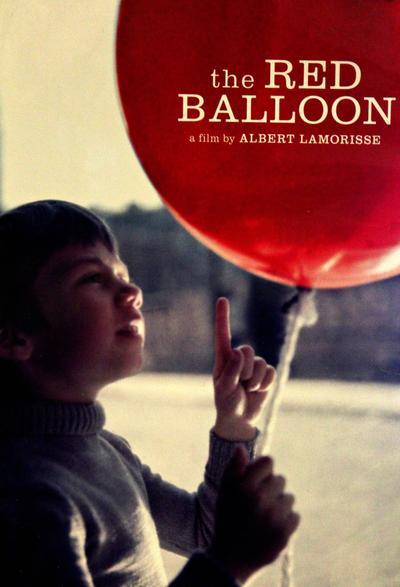
  • Albert Lamorisse – Le ballon rouge AKA The Red Balloon (1956)

    1951-1960Albert LamorisseDramaFranceShort Film

    29f7c043f76a2bde437fd0d52a185152

    Quote:
    The story of a boy and his toy, The Red Balloon is widely praised for its narrative and visual “purity,” but not enough is said about the movie’s delightful manipulation. A quasi-silent comedy with musical cues straight out of the Charlie Chaplin tradition, Albert Lamorisse’s film plays a game with its audience, just as the little boy (Pascal Lamorisse) and his glowing red orb cling to, fall away from, and chase each other throughout the 34-minute running time. With its many stairs and sloping alleyways, the blue-gray Ménilmontant neighborhood of Paris is like a maze, constantly threatening to come in between the boy and his new pal, but like a magnet or a dog starved for attention, the balloon always comes back to him. He lets go of it on his apartment balcony and watches it fall to him downstairs. He directs it to “wait here” while he buys a treat at the local bakery. A group of neighborhood bullies chase the balloon through a perilously narrow corridor, throwing rocks as it tries to escape. The honeymoon is short-lived, but Lamorisse suggests that kids are always keenly attuned to the objects of the world around them: After the boy loses his red friend, a montage of balloons across the city shows them flying to his side and, in the final shot, launching him into the sky. For Lamorisse, then, the pleasures of childhood are as fleeting as they are ecstatic.Read More »

  • Max Ophüls – Divine (1935)

    1931-1940ClassicsDramaFranceMax Ophüls

    29f7c043f76a2bde437fd0d52a185152

    Synopsis:
    Ludivine Jarisse is a young woman who lives a contented but unexciting life in the country. One day, she is visited by Roberte, an old friend who has made a career for herself as an actress at a Paris music hall, L’Empyrée. Roberte intends to take a break and invites her friend to take her place. Ludivine readily accepts, and soon becomes a musical hall diva under the name Divine, although she is at first reluctant to expose herself in the revealing costumes she is given. One of her colleagues attempts to take advantage of her naivety, but when she resists, he implicates her in a drugs trafficking affair. Divine remains untainted by all this vice and falls in love with an honest milkman, Antonin. He offers to marry her and she is finally able to leave the music hall to start a new life, back in the country.Read More »

Back to top button