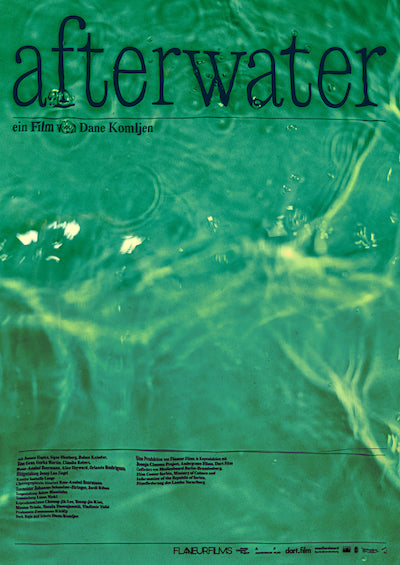
Afterwater is a three-part film spanning fiction, documentary and experimental film aiming to study and compare lakes across the world and their hidden treasures: submerged settlements, failed utopias and collective dreams, the remains of past eras and the seeds of a hopeful future.Read More »
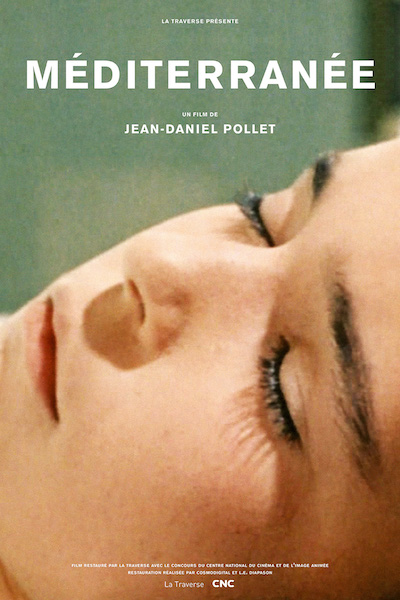
Méditerranée is a 1963 French experimental film directed by Jean-Daniel Pollet with assistance from Volker Schlöndorff. It was written by Philippe Sollers and produced by Barbet Schroeder, with music by Antione Duhamel. The 45 minute film is cited as one of Pollet’s most influential films, which according to Jonathan Rosenbaum directly influenced Jean-Luc Goddard’s Contempt, released later the same year.[1] Footage for the film was shot around the Mediterranean, including at a Greek temple, a Sicilian garden, the sea, and also features a fisherman, a bullfighter, and a girl on an operating table.Read More »
Film Description Visionary film about the M25. A road movie (literally) and a cinematic excursion into the difference between driving and walking, film and tape, time and memory, sound and image. Also a look at covert arms deals, Essex gangsters, drug dealing and Thatcher and Pinochet as vampire-lovers.
Iain Sinclair’s territory has long been the hidden geography and psycho-geography of Britain. He is adept at drawing out the character of place, and in 2001 he walked the perimeter of the M25 in an attempt to understand its true nature and influence. This resulted in his recently published book, London Orbital.Read More »
This is the new restoration of Yvonne Rainer’s Kristina Talking Pictures. Namechecking both Virginia Woolf and Jean-Luc Godard in the film’s opening segment, Rainer continues to experiment in her elegiac, hybrid third feature with unshackling narrative from conventional representation, using the paradoxical feminine figure of a lion tamer, Kristina (played by several women, including Rainer herself), and a disjunctive audiovisual syntax that pushes avant-garde film grammar into thrillingly novel, expressive realms. Kristina arrives from Budapest to 1970s New York City, harboring hopes of becoming a dance choreographer, as well as romantic affections for an elusive sailor named Raoul.Read More »
This is the new restoration of Yvonne Rainer’s Lives of Performers. Rainer’s debut feature film announced both her shift from the world of dance towards avant-garde cinema, and what would become a career-long interest in “women’s stories” and the teasing machinations of melodrama. The familiar tale of a man who can’t choose between two women and makes everyone suffer is reworked by Rainer as a jolting and radically austere, anti-illusionist spectacle, comprising dance rehearsals, photography, tableaux, and a flurry of fragments of text, both onscreen and not. Off-camera, multiple voices can be heard—including that of cinematographer Babette Mangolte, who was at the time just beginning work with a young Chantal Akerman.Read More »
The unfinished Julien Gracq text, the road 1970, a forest near the sea, the enigma of a trajectory, by this text in this lanscape and this landscape in this text, it’s diging, since a double echo to a same root, deep, invisible, an absolute presence, a stones fire, then, text and landscape are foliage of the same language.Read More »
Based on an English academic’s memoir on stalking and being stalked, Unrequited Love is a dazzling digital film essay on cinema and absence, on Hitchcock and Antonioni, on cinema and cities. It is a story of waiting, self-delusion, panic, fear of violence, and of modern technologies which define the urban stalker as they do the new terrorist. Their methods duplicate: both are irrational and targeted.Read More »
After an accident that leaves him bedridden for two months, the filmmaker retrieves discard images he’s been collecting for eight years on his computer’s hard drive. With them he develops an intimate and poetic film, consisting of portraits of friends, walks through Barcelona and a trip to his native country, Venezuela, where chaos imposes its aesthetic appeal. A complex and fragmented film that shows the world of the filmmaker that sometimes happens to be as absurd and miraculous as a painting by Hieronymus Bosch.Read More »
Reflecting on Mao’s famous saying “Let a hundred flowers blossom and a hundred schools of thought contend,” Trinh T. Minh-ha’s SHOOT FOR THE CONTENTS—a title that alludes to a Chinese guessing game—is a unique excursion into the maze of allegorical naming and storytelling in China. The film ponders questions of power and change, politics and culture, as refracted by the Tiananmen Square massacre. It offers at the same time an inquiry into the creative process of filmmaking, intricately layering Chinese popular songs and classical music, the sayings of Mao and Confucius, women’s voices, and the words of artists, philosophers, and other cultural workers. The result is a meditative documentary that captures major shifts of interpretation in modern Chinese culture and politics.Read More »