Experimental

  • Rüdiger Neumann – Rüdiger Neumann – Archiv der Blicke (1980-1993)

    1981-1990ExperimentalGermanyRüdiger Neumann

    Quote:
    Rüdiger Neumann is a filmmaker and professor at the Hochschule für bildende Künste in Hamburg whose teaching has influenced two generations of filmmakers, many of whom now play an active role in shaping German cinema today. In the 1980s and 1990s, the HfbK was the only experimental and political alternative to the film schools in Munich and Berlin. Rüdiger Neumann’s controversial Thursday seminars are legendary. These five keys films by Rüdiger Neumann are released for the first time on this DVD.Read More »

  • Frantisek Pilát & Otakar Vávra – Svetlo proniká tmou AKA The Light Penetrates the Dark (1931)

    1931-1940Czech RepublicExperimentalFrantisek PilátOtakar VávraShort Film

    Quote:
    Zdenek Pešánek created the first public kinetic sculpture, for the power station in Prague. This short experimental film focuses on a kinetic sculpture by Zdenek Pešánek. For a period of eight years it issued beams of light from the outside wall of a transformer station at Prague’s power utility before its destruction in 1939. Though genuine, these shots seem abstract to us. They are a rhythmically assembled ode to the light-creating devices and phenomena of electricity. Light arcs, coils, bulbs and various luminous elements support the alternation of positive and negative film images, creating an impressive universe of light and shade. In the 1920s, Pešánek had obtained financial support for his work with electric kinetic light art. In the 1930s, he was the first sculptor to use neon lights. He built several kinetic light pianos, and published a book titled “Kinetismus” in 1941.Read More »

  • Clément Courcier – 500 mg (2013)

    2011-2020Clément CourcierExperimentalFranceShort Film

    A story about pills …Read More »

  • Michael Snow – Back and Forth AKA <—> (1969)

    1961-1970CanadaExperimentalMichael Snow

    Quote:
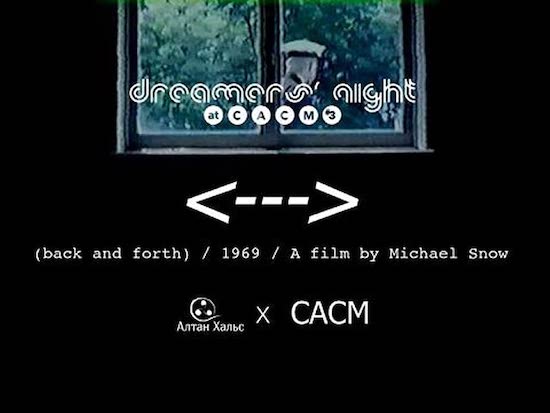
    “This neat, finely tuned, hypersensitive film examines the outside and inside of a banal prefab classroom, stares at an asymmetrical space so undistinguished that it’s hard to believe the whole movie is confined to it, and has this neck-jerking camera gimmick that hits a wooden stop arm at each end of its swing. Basically it’s a perpetual motion film that ingeniously builds a sculptural effect by insisting on time-motion to the point where the camera’s swinging arcs and white wall field assume the hardness, the dimensions of a concrete beam. “In such a hard, drilling work, the wooden clap sounds are a terrific invention, and, as much as any single element, create the sculpture. Seeming to thrust the image outward off the screen, these clap effects are timed like a metronome, sometimes occurring with torrential frequency.” – Manny Farber, Artforum, 1970Read More »

  • Michael Snow – Presents (1981)

    1981-1990CanadaExperimentalMichael Snow

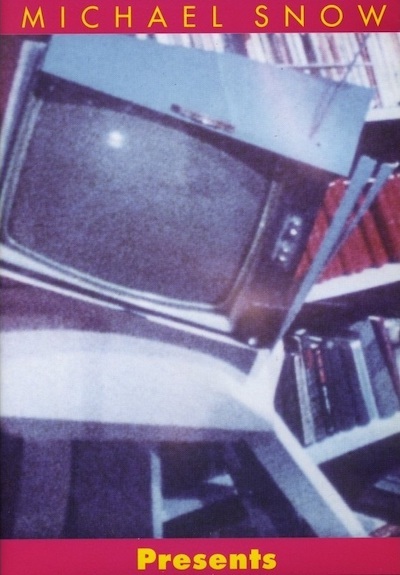
    The apparent vertical scratch in celluloid that opens Presents literally opens into a film within the film. When its figure awakens into a woman in a ‘real’ unreal set, the slapstick satire of structural film begins. It is not the camera that moves, but the whole set, in this first of three material ‘investigations’ of camera movement. In the second, the camera literally invades the set; a plexiglass sheet in front of the dolly crushes everything in its sight as it zooms through space. Finally, this monster of formalism pushes through the wall of the set and the film cuts to a series of rapidly edited shots as the camera zigzags over lines of force and moving fields of vision in an approximation of the eye in nature. Snow pushes us into acceptance of present moments of vision, but the single drum beat that coincides with each edit in this elegaic section announces each moment of life’s irreversible disappearance.Read More »

  • Toshio Matsumoto – Ecstasis (1969)

    1961-1970ExperimentalJapanShort FilmToshio Matsumoto

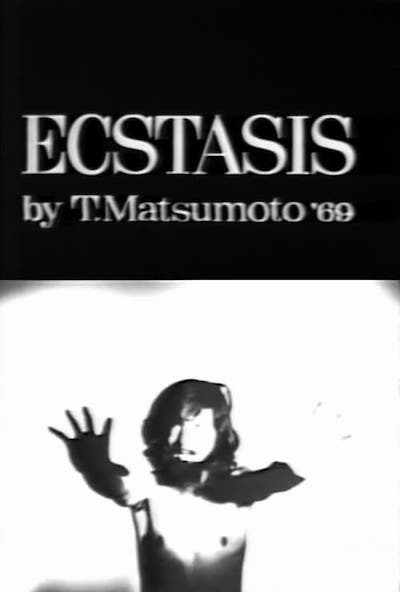
    Ecstatis is a short minimalist experimental film by Toshio Matsumoto that is partly featured in Funeral Parade of Roses.Read More »

  • Berwick Street Film Collective – The Nightcleaners (1974)

    1971-1980Berwick Street Film CollectiveExperimentalPoliticsUSA

    Nightcleaners Part 1 was a documentary made by members of the Berwick Street Collective (Marc Karlin , Mary Kelly, James Scott and Humphry Trevelyan ), about the campaign to unionize the women who cleaned office blocks at night and who were being victimized and underpaid. Intending at the outset to make a campaign film, the Collective was forced to turn to new forms in order to represent the forces at work between the cleaners, the Cleaner’s Action Group and the unions – and the complex nature of the campaign itself. The result was an intensely self-reflexive film, which implicated both the filmmakers and the audience in the processes of precarious, invisible labour . It is increasingly recognised as a key work of the 1970s and as an important precursor, in both subject matter and form, to current political art practice.Read More »

  • Arthur Lipsett – Very Nice, Very Nice (1961)

    1961-1970Arthur LipsettCanadaExperimentalShort Film

    Quote:
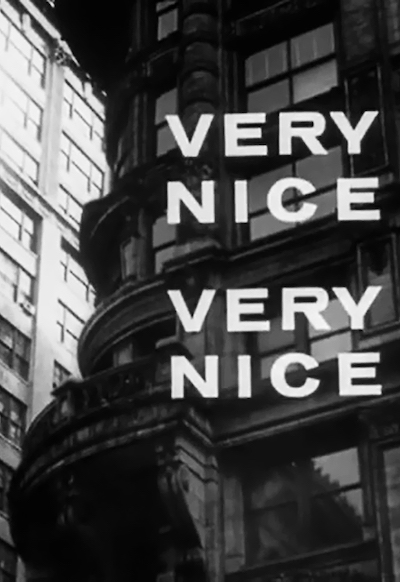
    Arthur Lipsett’s first film is an avant-garde blend of photography and sound. It looks behind the business-as-usual face we put on life and shows anxieties we want to forget. It is made of dozens of pictures that seem familiar, with fragments of speech heard in passing and, between times, a voice saying, “Very nice, very nice.” The film was nominated for an Oscar for Best Live Action Short Film.Read More »

  • Jeffrey Perkins – George: The Story of George Maciunas and Fluxus (2018)

    USA2011-2020DocumentaryExperimentalJeffrey Perkins

    In 1961 Lithuanian American artist and impresario George Maciunas established the avant-garde art movement Fluxus. George details the rise of Fluxus following a sensationalized tour of “concerts” in Europe in 1962, and continuing in New York for most of the 1960s and ’70s. During this time Maciunas was converting the dying industrial buildings of Soho into a network of artists’ lofts, creating one of the first official real estate co-ops of artist-owned buildings. Maciunas’s life and legacy—as recounted by artists of his generation, including Yoko Ono and Jonas Mekas—ignited debates that remain pivotal to artists working today.Read More »

Back to top button