A satire about the French small businessman: A naive, middle-aged and paternal managing director (Mondy), subject to takeover by a wily American conglomerate, becomes besotted with Darc, supposedly the PR man’s niece but actually a callgirl hired as an inducement for the night.Read More »
Effat tells Mahmoud her life story in order to convince him not to divorce his wife.
First steps toward realism.
I guess I watched “Reghabat dar Shahr” the censored version of this Ghaffari movie. So I already know that the happy ending is a hack and the purpose of this movie was a realistic portrayal of poverty and prostitution.
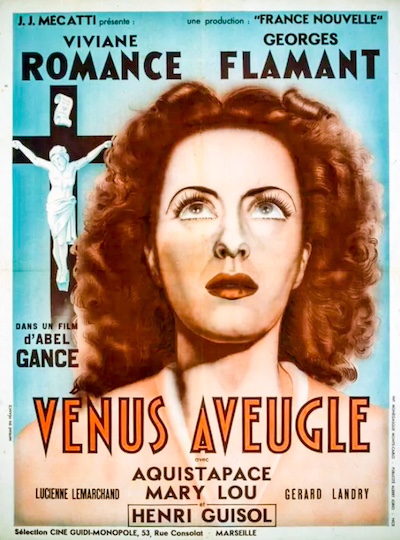
Synopsis: The beautiful Clarisse learns that she is going blind, and in order to prevent her lover Madére, a boatman, from sacrificing himself for her, she decides to break with him, pretending she no longer loves him. Madère angrily leaves, and Clarisse takes a job as a singer in a harbour bar to support herself and her crippled sister Mireille. When she discovers that she is pregnant, she wants to confess everything to Madère, but he has left on a year-long voyage with a new lover Giselle…Read More »
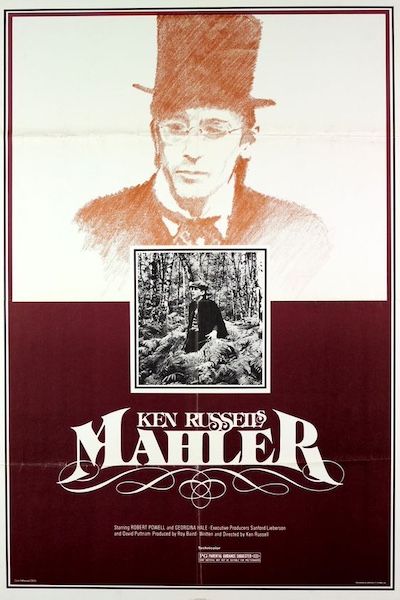
Both trifles and structure are tossed out the door by director Ken Russell in this film. Here, historical content matters not so much as metaphors, feelings, emotions, and interpretations, and pay close attention, as every word and frame is intended to be important. The film takes place on a single train ride, in which the sickly composer Gustav Mahler and his wife, Alma, confront the reasons behind their faltered marriage and dying love. Each word seems to evoke memories of past, and so the audience witnesses events of Mahler’s life that explain somewhat his present state. Included are his turbulent and dysfunctional family life as a child, his discovery of solace in the “natural” world, his brother’s suicide, his [unwanted] conversion from Judaism to Catholicism, his rocky marriage and the death of their young child. The movie weaves in and out of dreams, flashbacks, thoughts and reality as Russell poetically describes the man behind the music.Read More »
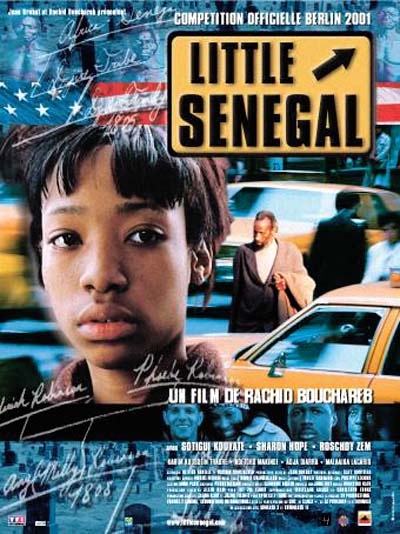
Description An aging museum curator named Alloune (Sotigui Kouyaté) conducts walking tours of a historical internment and transfer port in Goree Island used during the slave trade, a vocation that often makes him a first-hand witness to the tourists’ emotionally wrenching experience. Haunted by recurring dreams of his ancestors, he becomes convinced that at the root of his unsettled conscience is their invocation for him to reconnect with the descendants of his tribal elders who were once taken from the village and sold into slavery in South Carolina. Embarking on a transcontinental journey that traces the route of a family sold into the slave trade from Senegal through a network of South Carolina plantations and eventually to their emancipation, Alloune’s research brings him to Harlem and the shared apartment of his newly immigrated nephew, Hassan (Karim Traoré) and his roommate Karim (Roschdy Zem) in search of a tribal relative named Ida Robinson (Sharon Hope), the determined and fiercely independent owner of a newspaper and sundry store. Read More »
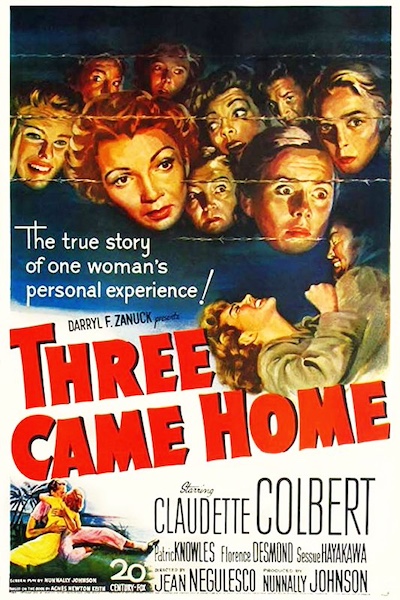
American-born Agnes Keith (Colbert) and her British husband (Patric Knowles) attempt to flee Borneo with their young son in the wake of the Japanese invasion. They are interned and then taken to separate prison camps, one for men, the other for women and children. Amid the brutality of the internment camp, the camp commander Lieutenant-Colonel Suga (played by Sessue Hayakawa who in 1958 was nominated for an Oscar for a similar role in The Bridge on the River Kwai) is respectful to Mrs Keith because he is familiar with her work, and is shown to be kind to the children even when his own family has been destroyed by the American atom bombs.Read More »
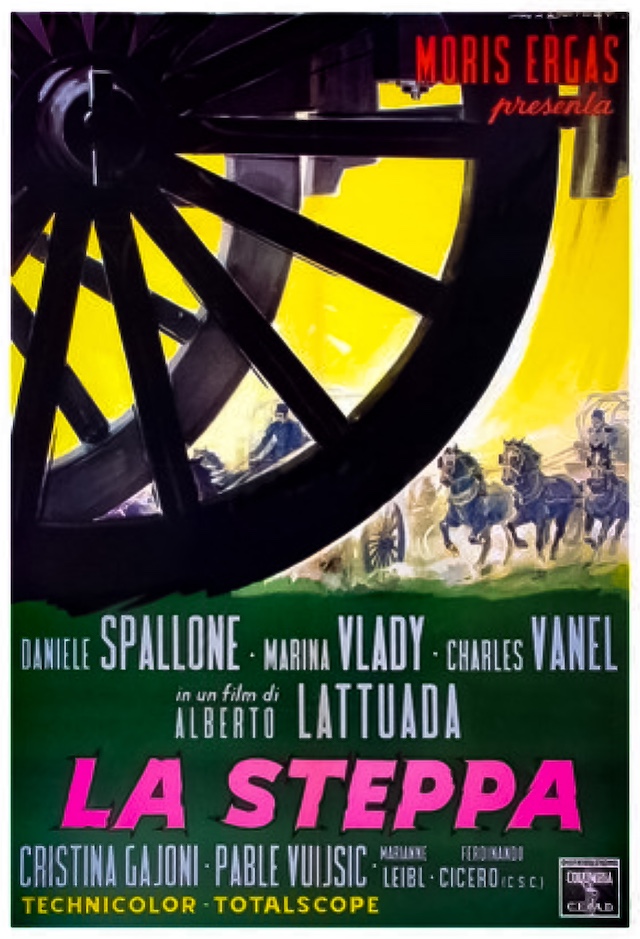
This is a lovely colorful adaptation of a novel by Anton Chekhov about the adventures of Jegoruska, an eight-year-old Russian boy, in a journey across the “steppe” or open plains of Russia on the en route from his home village to a market city where he is to go to school. It is in a way an allegorical trip which exposes him to some of the grimmest realities of life and some of its better ones. We get a social message as well, for example, the harsh conditions of the peasantry of 19th Century Russia. The director Alberto Lattuada often adapted Russian works or made films with Russian settings as in CUORE DI CANE, THE TEMPEST, and THE OVERCOAT. Most of the location scenes here were shot in Yugoslavia. The cast, which includes Charles Vanel as a priest and Marina Vlady as a countess, are uniformly good. Handsome young Daniele Spallone as the boy is marvelous.Read More »