Quote: Tombolo, paradiso nero is a 1947 film directed by Giorgio Ferroni. Inspired by an article by Indro Montanelli, the film depicts the undergrowth of smugglers, prostitutes and deserters from the post-war Pineta del Tombolo, when the US military was stationed in the area.Read More »
Synopsis: SAMNANG, 20, faces the demolition of his lifelong home in Phnom Penh and the pressures from family, friends, and neighbors which arise and intersect in this moment of sudden change.Read More »
Quote: Why would someone like Leyla go to a high school reunion dinner? And take an overnight train to get there. After all, she hasn’t been to a single one for the last 25 years – What is Canan, a student nurse, doing on the train? Reluctantly going to an interview for a nursing job when she would like to be an actress instead. And Yavuz? He spends all day lying by the window watching the passing hawkers, horse carriages and people. He is waiting for Canan, or maybe Leyla, or maybe a executioner and a poet who meet on a train one night.Read More »
Margaret is charged with a three-month restraining order for having hit her mother. But the 100 meters that now separate her from her home only exacerbate Margaret’s desire to come closer to her family.Read More »
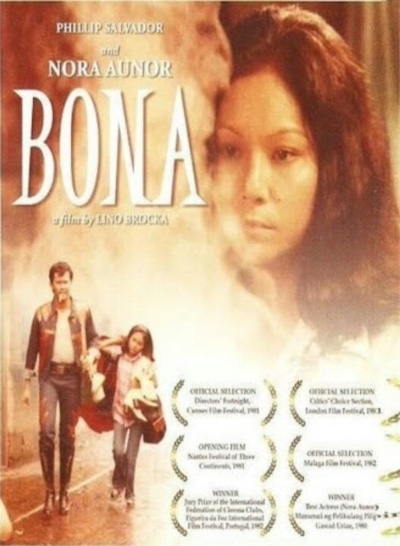
Quote: Bona, released in 1980, is perhaps his best–regarded work. The title character is a young, starstruck schoolgirl (played by Nora Aunor) who falls in love with an ageing actor (Phillip Salvador) and becomes his servant. She waits on him loyally in his decrepit shack, receiving nothing for her labors but the privilege of being his slave. When the actor decides he has had enough of her and attempts to toss her aside, Bona retaliates in a wholly unexpected, utterly justified fit of violent rage. As with many of his other independently made films, Bona reveals Brocka’s uncanny ability to join the personal and the political, to locate the overarching social statement in an intimate, deeply individualized gesture. Read More »
A Palestinian boy becomes entranced with a beautiful Gypsy girl and a fairy tale world she weaves amidst conflict in Gaza. The children explore nature, mysticism and what their future holds, while learning to live with the surrounding brutality c. 1990. Yusef’s family scrapes by in a seaside camp while his father’s in prison and his heavily-armed brother’s on the run, parrying with Israeli troops. Salah, Yusef’s schoolmate from a well-off Arab family strives faithfully to assist them, while Yusef helps an elderly, blind neighbor escape from his lonely abandonment into the North American dreamworld he’s waited so long for.Read More »
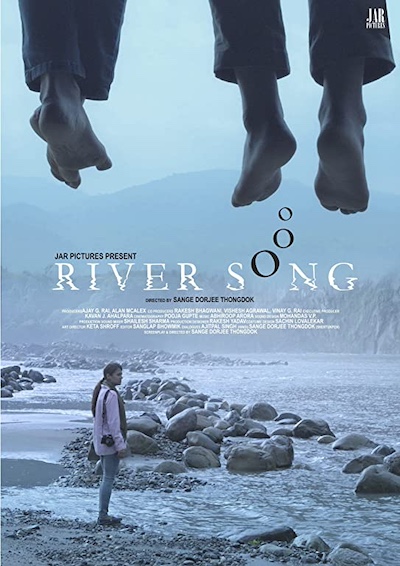
Quote: Tashi, a lonely single man stays by himself in a defunct fuel station on the edge of a small town that is slowly being inundated by water from a dam reservoir that is being constructed nearby. He is unwilling to leave the place in spite of the coming danger and the warnings from the authorities as it holds a lot of memories for him. He meets Eshna, who comes to town with her husband, who is overseeing the construction of the dam. Despite the differences in their culture and unable to understand each other’s language, Tashi and Eshna slowly begin to form a close bond finding companionship from their loneliness in each other. As the dam nears completion and the authorities clamp down on the people to leave town. Now, Eshna must decide between the two paths that lay ahead of her and Tashi must decide whether to stay back and fight for his land and his world.Read More »
Sokurov’s first full-length feature film, filmed in 1978 and restored in 1987 at Lenfilm. The plot is based on the motives of Andrey Platonov’s works “The Potudan River” and “The Origin of the Master”. The picture has become today a film classics, but in 1978 Sokurov was not allowed to defend his diploma at VGIK. Moreover, the film was sentenced to destruction by the cinematographic authorities. The authors miraculously managed to save the negative. In this picture, Sokurov formed an alliance with screenwriter Yuri Arabov and cameraman Sergei Yurizditsky.Read More »