Shannon Kelley wrote:
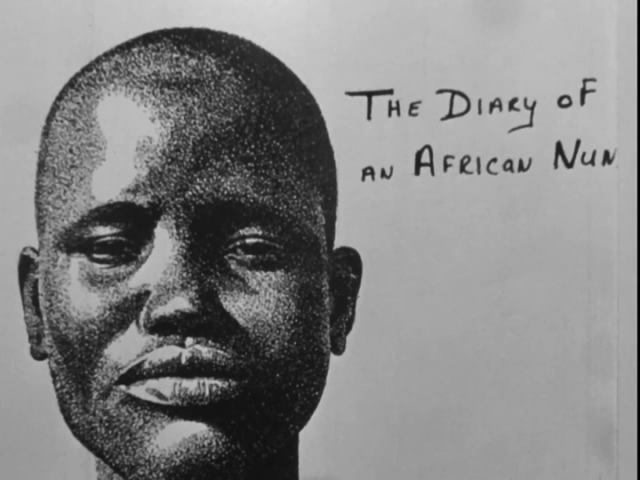
A nun in Uganda weighs the emptiness she finds in her supposed union with Christ. Adapted from a short story by Alice Walker, the film was a deliberate first move by its director toward narrative filmmaking, though its graphic simplicity and pantomimed performance by Barbara O. Jones give it an intensity that anticipates Julie Dash’s work on Daughters of the Dust.Read More »
Drama
-
Julie Dash – The Diary of an African Nun (1977)
1971-1980DramaJulie DashShort FilmUSA -
Valeria Sarmiento – Linhas de Wellington AKA Wellington Lines [Theatrical Cut] (2012)
2011-2020DramaPortugalValeria SarmientoWarSynopsis
On September 27, 1810, the French troops commanded by Marshal Massena, were defeated in the Serra do Buçaco by the Anglo-Portuguese army of general Wellington.Despite the victory, Portuguese and British are forced to retreat from the enemy, numerically superior, in order to attract them to Torres Vedras, where Wellington had built fortified lines hardly surmountable.
Simultaneously, the Anglo-Portuguese command organizes the evacuation of the entire territory between the battlefield and the lines of Torres Vedras, a gigantic burned land operation, which prevents the French from collecting supplies.
This is the setting for the adventures of a multitude of characters from all social backgrounds – soldiers and civilians, men, women and children, young and old – to the daily routine torn by war and dragged through hills and valleys, between ruined villages, charred forests and devastated crops.Read More »
-
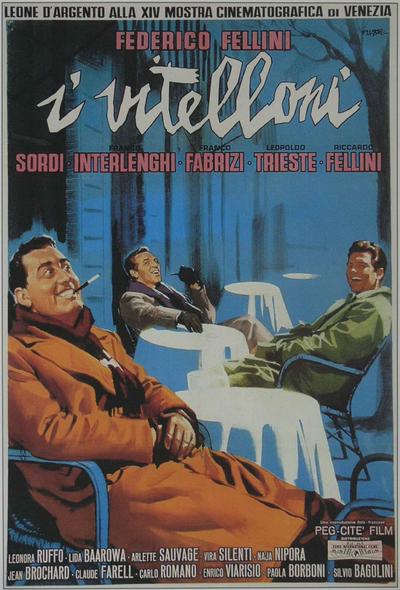
Federico Fellini – I vitelloni (1953)
1951-1960ComedyDramaFederico FelliniItalian Neo-RealismItalyQuote:
Five men walk arm-in-arm through a sleepy Adriatic town, their lockstep a gentle echo of Italy’s Fascistic past. Such posses are quite common in Italy, where close male friendships, equal parts sensuality and ritual, are second only to the family in importance. I Vitelloni (the best sense of it is “the idlers”), Fellini’s third film, includes some of his most subtle filmmaking and most personal material. Loosely structured and oddly narrated, I Vitelloni is like a sketch for both La Dolce Vita and Amarcord. Paradoxically, I Vitelloni is also an insightful and accurate representation of Italy in the immediate postwar period, full of references to the massive social changes underway. Fifty years after its release, I Vitelloni can finally be seen as a seminal film in Italian cinema, one of the first to detail the effects of technology, celebrity, and mobility on Italian life.Read More » -
Zülfü Livaneli – Sis AKA Le Brouillard AKA Mist (1993)
2001-2010ArthouseDramaTurkeyZülfü LivaneliMist is uncertainty.
A mist which cannot be held with the hand, or even seen with the eye.
A mist which can comprehend our happiness, our pain, our fears, our contrainment and which encompasses human relationships.
A mist hanging over a family, a society and an era.
As stated by Victor Hugo “similar to the volcano’s discharge of stones, the discharge of people” in an era of uncertainty.
A mist which has taken the lives of 5 000 people within four years.
The effort of this film is to remember and understand something which is lost and gone in our country’s existence and in our own lives.
(Zülfü Livaneli)
Read More » -
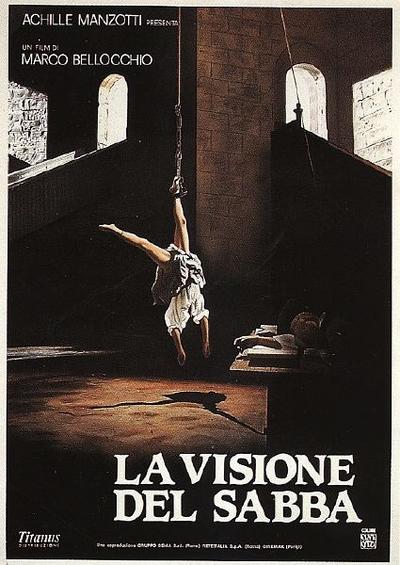
Marco Bellocchio – La Visione del Sabba AKA The Witches’ Sabbath (1988)
Drama1981-1990ItalyMarco BellocchioPlot: The freshly graduated psychiatrist David shall deliver an opinion about young Maddalena, who’s on trial for murdering a hunter. She claims she’s a witch and acted on behalf of the devil. The public health officer tells David, he’s got reason to believe her, that she’d been searching for a man who suits her needs for 300 years. Already after his first meeting with Maddalena, David begins to change: He ignores his beautiful young wife Cristina and loses himself in daydreams and hallucinations in which he participates in Inquisition questioning and erotic witches’ circles.Read More »
-
Kurt Meisel – Tragödie einer Leidenschaft (1949)
1941-1950DramaGermanyKurt MeiselRomanceWhen she was a little girl, Liuba came to town with her widowed mother to live in the block of flats owned by her aunt Anna Iwanowna. The wealthy and cold-hearted Anna Iwanowna barely accepted them as tenants. And no sooner did Liuba’s mother die than she wanted to send her niece to the orphanage. Fortunately, Pawlin, Anna Iwanowna’s janitor, decided to adopt her and he brought her up with affection. When she grew up, the beautiful Liuba fell in love with her aunt’s son, Dodja, a good-looking but profligate army officer. Wishing nothing more than an affair with Liuba, Dodja did not hesitate to play the comedy of love to her. When she realized what Dodja was really after, Liuba was devastated and in desperation accepted to marry Pawlin, her benefactor, who had been infatuated with her for years. Alas, in the middle of the wedding party Dodja danced with Liuba and eloped with her. Written by Guy Bellinger Read More »
-
Robert Wiene – I.N.R.I. AKA Crown of Thorns (1923)
1921-1930DramaGermanyRobert WieneSilentWeimar Republic cinemaBy the director of Cabinet of Dr.Caligari, this is the Passion embedded in a contemporary story. An anarchist jailed for an attempted assassination is told the Passion story by the prison chaplain, who seeks to convince him that it is better to sacrifice ones own life than take the life of ones enemy. The framing story, taken from a novel, is believed to have been intended to give the Biblical story an anti-Bolshevist propaganda function. In any case, it was added without the knowledge of the actors in the Passion story, who included some of the major stars of the period Asta Nielsen as Mary Magdalene, Henny Porten as Mary, Grigori Chmara as Jesus, and Werner Krauss as Pontius Pilate -bampfa.berkeley.eduRead More »
-
Dharmasena Pathiraja – Bambaru Avith AKA The Wasps Are Here (1977)
Drama1971-1980AsianDharmasena PathirajaSri LankaSet in a fishing village named Kalpitiya, explores tradition and exploitation because of capitalism in this small village.Read More »
-
Friedrich Ermler – Parizhskii sapozhnik AKA The Parisian Cobbler AKA Paris Shoemaker (1927)
1921-1930DramaFriedrich ErmlerSilentUSSRFriedrich Ermler (1898-1967) remains one of the shadowy figures of the early Soviet cinema, known if at all for his psychological parable Fragment of an Empire. But he was a major force among the Leningrad filmmakers of the 1920s and ’30s, whose sympathies lay closer to youth and realism than to the monumental frescoes of the Moscow ‘masters.’ The Parisian Cobbler is impossible to hide from inquisitive looks and gossips in a small provincial town. Film tackled a controversial theme head-on: the sexual exploitation of women by party activists in the name of ‘free love.’ Hapermill worker, Young Communist Leaguer Katya and Andrei are not hiding their love. All of a sudden Katya’s radiant hopes break to pieces: Andrei is indignant to hear the news that Katya is expecting a baby. He does not want “to change diapers”, this “trivial life” will interfere with his plans to “build bright future”. Katya is befriended by a cobbler who, as a mute, knows what it is to be a social outcast. Ermler’s spare and uncompromising style reveals the extent to which realism was already on the agenda before it became a repressive slogan in the mid-thirties. As usual with Ermler, the film is not only about a problem, but is also about everyday life.Read More »