Drama

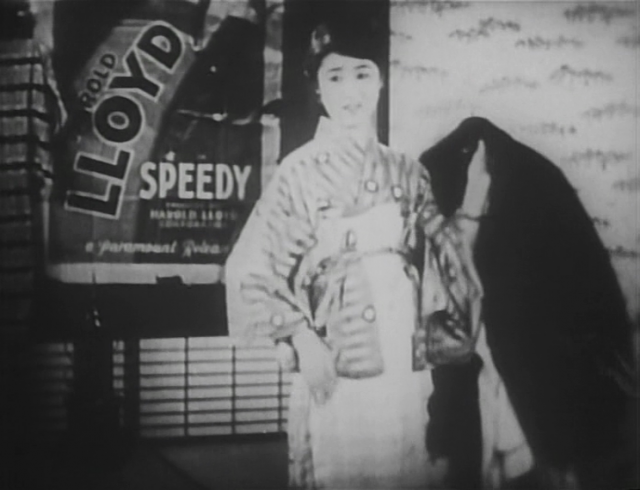
  • Yasujirô Ozu – Daigaku wa detakeredo aka I graduated but… (1929)

    1921-1930DramaJapanYasujiro Ozu

    29f7c043f76a2bde437fd0d52a185152

    大学は出たけれど

    Yasujirô Ozu wrote:
    I cast Takada Minoru and Tanaka Kinuyo for the first time in this film. I had made a good number of student films, but when it came to filming young actors, it was hard to go beyond the old themes of salarymen or college life. However, in those days, the images of white-collar types were limited. As for students, they were of course a different breed from the ones nowadays, who get into fights with the police. They were all very carefree, and comparatively easy fodder for jokes in nonsense comedies. Shimizu Hiroshi originally wanted to direct this film, but somehow, the script fell into my lap. I thought, if I was determined to be a director, then I must get to grips with any genre and make every film as well as I could. It’s all very well for the so-called film auteur to have artistic ideas but one also needs the professional flair for handling all the different aspects of filmmaking. Admittedly, excessive professionalism could spell trouble, but I was nonetheless extremely grateful for the chance to develop my professionalism through making these kinds of films.Read More »

  • Mohsen Makhmalbaf – Sokout AKA The Silence (1998)

    Drama1991-2000IranMohsen MakhmalbafMusical

    29f7c043f76a2bde437fd0d52a185152

    Quote:
    The Silence (Sokhout), a startlingly fresh and elegant work, is about a ten-year-old boy, Khorshid, who is blind. Khorshid’s father, in Russia, has abandoned him and his mother, who in order to sustain their existence fishes in the river on which the rural dwelling that includes their threadbare apartment is situated. This woman has no other choice but to rely on Khorshid’s meager income for rent. It is not enough, however, and in a few days’ time they will be evicted by the landlord, a greedy, powerful presence whom we never see except for, once, as a hand knocking at the door. A strange, elliptical film of haunting, limpid visual beauty, The Silence ends with two events: the eviction, as the mother, who is calling for her son, and her one great possession, a wall mirror, symbolic for art and inspiration, that is, humanity’s spirit, are rowed across the river, the mirror’s reflection in the water symbolically linking human spirituality and Nature; and the boy, as usual off on his own, passing forever into a life of the imagination in which he is able to orchestrate sounds in his environment—to which his blindness has made him acutely sensitive and receptive—into a finished piece, one in fact familiar to us as the opening movement of Beethoven’s Fifth Symphony. Only a fool could miss the social and political implications of such a film, and the government, not at all fooled in this regard, responded brusquely. The Silence was banned in Iran.Read More »

  • John Ford – Men Without Women (1930)

    1921-1930ActionDramaJohn FordUSA

    Synopsis:
    Aboard the U.S. submarine S13 in the China seas, Chief Torpedoman Burke goes about his duties. In actuality, he is Quartermaine, the infamous former commander of the British ship Royal Scot, which was sunk by Germans with a Field Marshal aboard. Quartermaine had told his sweetheart that the Field Marshal would be aboard, not knowing that she was an informant for the enemy. When the S13 sinks, Burke takes charge when the commander, Ensign Price, is unable to command. Burke must keep his mates alive long enough on the bottom of the sea for rescuers to arrive.Read More »

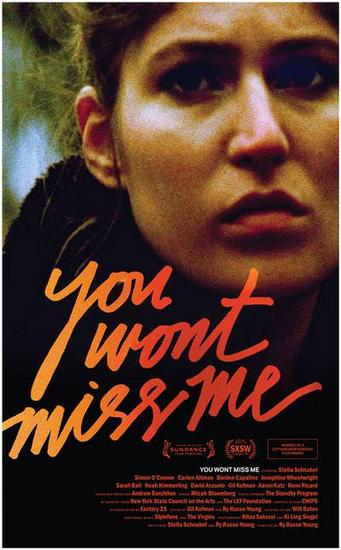
  • Ry Russo-Young – You Won’t Miss Me (2009)

    2001-2010ArthouseDramaMumblecoreRy Russo-YoungUSA

    29f7c043f76a2bde437fd0d52a185152

    Synopsis
    A woman struggling with a number of emotional demons tries to make sense of her life in this independent drama from writer and director Ry Russo-Young. Shelly Brown (Stella Schnabel) is the 23-year-old daughter of a woman with a long history of mental illness. Shelly has unfortunately inherited some of her mother’s instability, and the narrative follows her after she’s released from a brief stay in a mental hospital. Shelly dreams of a career as an actress, but at auditions she delivers readings that are intense enough to scare off most casting directors. Shelly wants to bond with other young women in the arts, but her paranoia and multiple insecurities make her a difficult friend at best and few of her peers are willing to bother. And while Shelly thinks she’s ready for a relationship, the manner in which she approaches men tends to result in rejections or one-night stands.Read More »

  • Ki-duk Kim – Geumul AKA The Net (2016)

    Drama2011-2020Ki-duk KimSouth Korea

    29f7c043f76a2bde437fd0d52a185152

    Namchulwoo is a poor fisherman living a simple but happy life with his wife and daughter on the north side of a river that divide s the two Korea’s. Every day he goes fishing on the river, where the check point soldiers know him well and trust him not to cross the invisible border in the water. But one day his fishing net gets caught in the boat engine, and Nam cannot stop himself from drifting to the south. Read More »

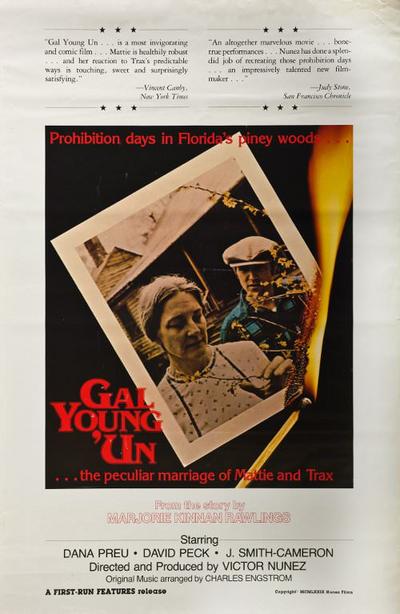
  • Victor Nunez – Gal Young ‘Un (1979)

    1971-1980DramaUSAVictor Nunez

    29f7c043f76a2bde437fd0d52a185152

    Quote:
    An obvious labor of love for producer/ director/ writer/ photographer Victor Nunez, Gal Young ‘Un was blessed with almost unanimous critical praise, and as such received a much wider distribution than might otherwise have been possible. The film, set in Florida in the 1930s, involves an independent woman (Dana Preu) who marries a charming but wastrelly man (David Peck) much younger than herself. She tries to maintain equilibrium in the relationship despite her husband’s obvious preoccupation with the “gal young’un” (J. Smith) who works as their housekeeper. Director Nunez brilliantly conveys the isolation and loneliness inherent in the story with his evocative use of genuine backwater Florida locations. This was based on a story by Marjorie Kinnan Rawlings.Read More »

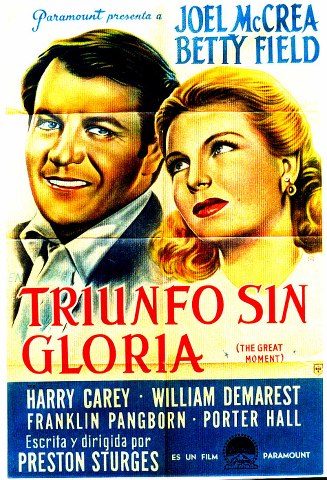
  • Preston Sturges – The Great Moment (1944)

    1941-1950ComedyDramaPreston SturgesUSA

    29f7c043f76a2bde437fd0d52a185152

    In the winter of 1868, Eben Frost (William Demarest) goes to a Boston pawnshop and redeems a silver medal, inscribed to “Dr. W.T.G. Morton, the Benefactor of Mankind, with the Gratitude of Humanity.” Frost drives to a country farmhouse and gives the medal to Morton’s widow, Elizabeth Morton (Betty Field) who explains to her daughter, Betty (Donivee Lee), that Frost was the first person given anesthesia by her father, Boston dentist Dr. W.T.G. Morton (Joel McCrea.)Read More »

  • W.S. Van Dyke – Night Court (1932)

    Drama1931-1940CrimeUSAW.S. Van Dyke

    Quote:
    Judge Moffett is as crooked as they come and the Board of Judicial Corruption is after him. So he hides out in the poor part of town. While there, she drops the bankbook that Moffett has listing his accounts and Mary returns it to him. But Moffett thinks Mary saw the book and he puts her away for six months on a trumped up charge. Mike is overcome with grief and when he comes to his senses, he talks to Mary who tells him about the book. This gets Mike beat up and put on a boat to South America, but he jumps ship and plots his revenge.Read More »

  • Júlio Bressane – Matou a Família e Foi ao Cinema (1969)

    1961-1970BrazilDramaJúlio Bressane

    29f7c043f76a2bde437fd0d52a185152

    Carlos Adriano wrote:
    This film caused controversy in 1969, not just for its content, but above all for its daring and sparse approach to that content. Today, it is regarded as a classic of Brazilian cinema. The title of the film was inspired by the headlines of the ‘gutter’ or yellow press. Right from the start the title is literal: a young, lower middle class man kills his father and mother and goes to the movies… to see Lost in Love. From then on the film-within-a-film takes over. Fiction and fact blend into each other and it is no longer clear on what level of ‘reality’ – or of the imaginary – we are existing. The film gets rid of the usual parameters of representation and the stories overflow their boundaries, that usually circumscribe action. In Lost in Love two upper-middle-class girls hide away in a mansion in the hills. But there is also an affair between two poor girls, there are two tormented young men of different social standing, there are references to the political context of the time. To make matters more uncertain, the same actors play different characters. The actions of social violence correspond to acts of violence against the syntax of the film itself: the discontinued and fragmented development, the daring ellipses, the juxtaposition of disconnected elements, the rupture of the sound space. Bressane works on his dialectics of discomfort. Projected onto the screen is a true ‘impression of reality’ and a ‘suspension of disbelief’ in the cinema.Read More »

Back to top button