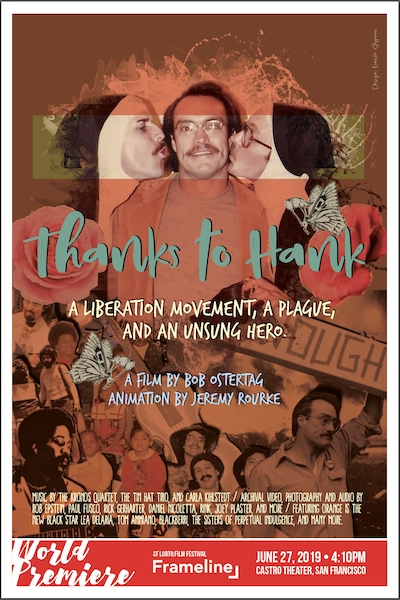
Brought to life with archival footage, animation, and interviews with collaborators and friends, this sweeping documentary uncovers the impacts of Hank Wilson’s efforts in AIDS service and queer youth organizations, cultural outlets, and San Francisco politics.Read More »
Quote: Melilla, a Spanish enclave in Morocco, is a land border between the African continent and Europe. A buffer zone where European migration policies, their challenges and their consequences are read and shown. A place towards which converge the migrants of the Maghreb. They are “those who burn”. They have nothing else to lose except wanting to live to the end.Read More »
Released in three parts, Patricio Guzman’s epic documentary The Battle of Chile (1975-’79) captured such critical events as the bombing of the presidential palace during the 1973 military coup, but it wasn’t screened in Chile until the 1990s. That belated premiere inspired Guzman to make this 1997 documentary, in which clips from the earlier film are threaded among interviews and powerful sequences showing the reactions of Chilean viewers. Whereas The Battle of Chile uses voice-over narration to summarize its on-the-spot footage, manipulated only minimally by editing, Chile, Obstinate Memory is more expansive. Without ignoring or hyperbolizing the way politics affects our sense of the past, it presents many galvanizing moments; at one point a viewer who was a child during the coup shamefacedly recalls his pleasure at being allowed to stay home from school.Read More »
THE BATTLE OF CHILE (3): The Power of the People (1978) deals with the creation by ordinary workers and peasants of thousands of local groups of “popular power” to distribute food, occupy, guard and run factories and farms, oppose black market profiteering, and link together neighborhood social service organizations. First these local groups of “popular power” acted as a defense against strikes and lock-outs by factory owners, tradesmen and professional bodies opposed to the Allende government, then increasingly as Soviet-type bodies demanding more resolute action by the government against the right.Read More »
THE BATTLE OF CHILE (2): The Coup d’Etat (1976) opens with the attempted military coup of June, 1973 which is put down by troops loyal to the government. It serves as a useful dry run, however, for the final showdown, that everyone now realizes is coming. The film shows a left divided over strategy, while the right methodically lays the groundwork for the military seizure of power. The film’s dramatic concluding sequence documents the coup d’etat, including Allende’s last radio messages to the people of Chile, footage of the military assault on the presidential palace, and that evening’s televised presentation of the new military junta.Read More »
THE BATTLE OF CHILE: The Insurrection of the Bourgeoisie (1975) examines the escalation of rightist opposition following the left’s unexpected victory in Congressional elections held in March, 1973. Finding that democracy would not stop Allende’s socialist policies, the right-wing shifted its tactics from the polls to the streets. The film follows months of activity as a variety of increasingly violent tactics are used by the right to weaken the government and provoke a crisis.Read More »
An early documentary to portray the experiences of disabled people with compassion and complexity, Kazuo Hara’s searing debut is also one of the most unflinching films ever made about what it means to be an outsider. Produced in collaboration with the Green Lawn—a group of activists with cerebral palsy who work to raise awareness of the condition—GOODBYE CP blends jagged, shot-on-the-fly footage of the members’ seemingly Sisyphean struggle to take their message to the streets with raw, sometimes confrontational interviews in which they reveal the torment of living in a society cruelly indifferent to their existence. In making his subjects active participants in the film’s creation—a practice he would continue throughout his career—Hara powerfully asserts the humanity and agency of those who have long been denied both.Read More »
Synopsis Featuring stunning footage from seven winters in the Arctic, People of a Feather takes you through time into the world of the Inuit on the Belcher Islands in Canada’s Hudson Bay. Connecting past, present and future is a unique relationship with the eider duck. Eider down, the warmest feather in the world, allows both Inuit and bird to survive harsh Arctic winters. Traditional life is juxtaposed with modern challenges as both Inuit and eiders confront changing sea ice and ocean currents disrupted by the massive hydroelectric dams powering New York and eastern North America. Inspired by Inuit ingenuity and the technology of a simple feather, the film is a call to action to implement energy solutions that work with nature.—First Run FeaturesRead More »