The story of a famous fashion model who, unable to cope with the fantasies and pressures her beauty induces in others, disappears. The film is a profile of her emotional life and contrasts the fantasies she creates in other people’s minds with the strains of her real emotional life as revealed in her diaries.Read More »
MANOEUVRE follows a U.S. infantry tank company through NATO’s annual fall manoeuvres in Western Europe. One purpose of these war games is to test how quickly and effectively U.S. reinforcements can come to the aid of NATO forces stationed in Europe. The various stages of the training exercise, including defensive and offensive tactics, and hypothetical wins and losses are seen from the point of view of a company fighting a simulated, conventional, non-nuclear ground and air war.Read More »
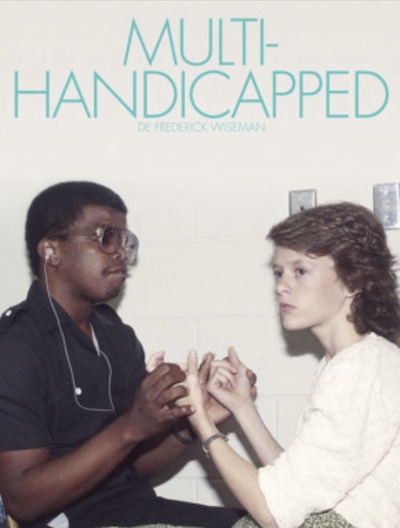
This film shows the day to day activities of multi-handicapped and sensory impaired students and their teachers, dormitory parents, and counselors at the Helen Keller School. The primary mission of the school is to meet the total and living needs of deaf and/or blind children, some of whom also have other disabilities. The film presents situations involving personal hygiene, mobility training, concepts of time and money, self help and independent living, dormitory life, recreation, sports, vocational training, and psychological counseling.Read More »
The first part of this film takes place at the E.H. Gentry Technical Facility which provides evaluation and personal adjustment services to sensory impaired adults and also functions as a vocational training center offering technical instruction in 15 career areas such as business, printing, home economics, food services, and computer sciences. Sequences show the adjustment services for adults in personal and work situations as they learn to adjust to their impairments. The film goes on to show work at the Alabama Industries for the Blind, the second largest employer of blind people in the U.S. which provides employment and training to more than 300 blind, deaf and other handicapped persons. Sequences include routine work and manufacturing of a variety of household and military products.Read More »
Quote:
The School for the Deaf at the Alabama Institute is organized around a theory of total communication i.e. the use of signs and finger spelling in conjunction with speech, hearing aids, lip reading, gestures and the written word. The film shows sequences dealing with various aspects of this comprehensive training such as teaching students and parents to sign; speech therapy; psychological counseling; regular academic courses; vocational training; disciplinary problems; parents visits; sports and recreational activity; training in living and working independently; and developing skills in home and money management.Read More »
Documentary master Frederick Wiseman’s 38th film in a career that has spanned more than that number of years, turns his attention to one of the world’s greatest ballet companies, the Paris Opera Ballet. John Davey’s camera roams the vast Palais Garnier, an opulent 19th century pile of a building: from its crystal chandelier-laden corridors to its labyrinthine underground chambers, from its light-filled rehearsal studios to its luxurious theater replete with 2,200 scarlet velvet seats and Marc Chagall ceiling. LA DANSE devotes most of its time to watching impossibly beautiful young men and women — among them Nicolas Le Riche, Marie-Agnès Gillot, and Agnès Letestu — rehearsing the choreography of Mats Ek, Wayne McGregor, Rudolf Nureyev and Pina Bausch. For balletomanes and the curious alike, LA DANSE serves up a scrumptious meal of delectable moments, one more glorious than the next, made even more precious by their ephemeral nature.Read More »
Synopsis:
RACETRACK is about the Belmont Race Track, one of the world’s leading race tracks for thoroughbred racing. The film highlights the training, maintaining and racing of thoroughbred horses. Everyday occurrences are shown: in the backstretch — the grooming, feeding, shoeing, and caring for horses and the preparation for races; at the practice track the various aspects of training, exercising, and timing the horses; at the paddock — the pre-race presentation of the horses; and in the grandstand — betting and watching the races. The film also has sequences showing the variety of work done by trainers, jockeys, jockey agents, grooms, hot walkers, stable hands, and veterinarians.Read More »
Synopsis:
Sinai Field Mission shows the routine activities of the diplomats and electronics technicians who operate the U.S. Sinai Field Mission, the early warning system established in 1976 to help facilitate the disengagement between Egypt and Israel after the 1973 war. The major purpose of the Mission is to monitor the approaches to strategic passes and to verify the operations of the Egyptian and Israeli surveillance stations in the Sinai Buffer Zone.Read More »
Synopsis:
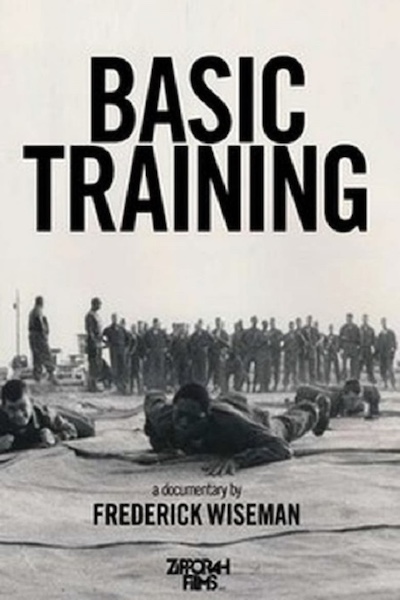
BASIC TRAINING follows a company of draftees and enlisted men through the nine weeks of the basic training cycle. The varieties of training techniques used by the army in converting civilians to soldiers are illustrated in scenes of drills, M-16 and bayonet use, a gas chamber, mines, night crawls, an infiltration course and the many forms of ideological training familiar to millions of men and women who have served in the armed forces.Read More »