Classics

  • Mikhail Kalatozov – Soy Cuba aka I am Cuba [+Extras] (1964)

    1961-1970ArthouseClassicsMikhail KalatozovUSSR

    29f7c043f76a2bde437fd0d52a185152

    Synopsis (From IMDB)
    Four vignettes in Batista’s Cuba dramatize the need for revolution; long, mobile shots tell almost wordless stories. In Havana, Maria faces shame when a man who fancies her discovers how she earns her living. Pedro, an aging peasant, is summarily told that the land he farms has been sold to United Fruit. A university student faces down a crowd of swaggering U.S. sailors and then watches friends shot by police when they try to distribute a pro-Castro leaflet. The war arrives on the doorstep of peasants Mariano, Amelia, and their four children when Batista’s forces bomb the hills. Mariano wants peace, so he seeks out the guerrillas to join the fight.Read More »
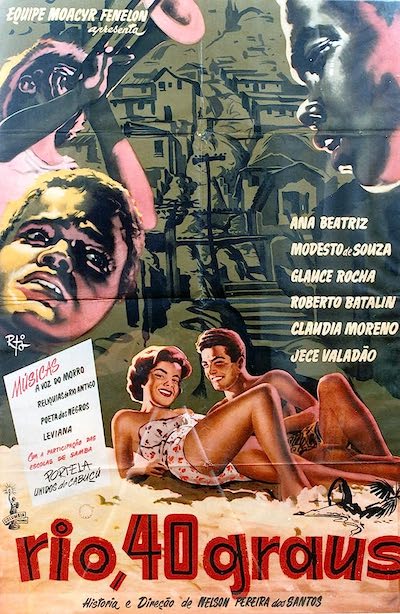
  • Nelson Pereira dos Santos – Rio Quarenta Graus aka Rio 40ºC (1955)

    Drama1951-1960BrazilClassicsNelson Pereira dos Santos

    Banned by Brazil’s Federal Department of Public Safety, “Rio, 40 Grau”s is a landmark film that ushered in the wave of Neorealist cinema in Brazil – Cinema Novo. The film chronicles a day in the life of five peanut vendors from the favelas (shanty towns) of Rio de Janeiro. Other subplots involving characters they meet along the way are interspersed. This was one of the first Brazilian films to address the issues of race, poverty, and class. These themes would continue to be examined by dos Santos throughout his career.Read More »

  • Stanley Kramer – Judgment at Nuremberg (1961)

    1961-1970ClassicsDramaStanley KramerUSA


    29f7c043f76a2bde437fd0d52a185152

    This movie is a fictionalized account of the war crimes trial of judges and prosecutors who served the Nazis.
    “Judgment at Nuremberg” depicts a watershed event: the first trials, based on principles of justice and international law, of the leaders of a country that waged aggressive war and committed crimes against humanity. The film is a gripping, searching and provocative look at the moral issues surrounding both the actions of the accused and the process of bringing them to justice. The film also explores the issue of whether ordinary Germans bore responsibility for the Holocaust.Read More »

  • Jean Renoir – La Règle du jeu AKA Rules of the Game [+Extras] (1939)

    1931-1940Amos Vogel: Film as a Subversive ArtClassicsDramaFranceJean Renoir

    29f7c043f76a2bde437fd0d52a185152

    Synopsis
    Widely regarded as one of the greatest films ever made, Jean Renoir’s masterpiece The Rules of the Game is a scathing critique of corrupt French society cloaked in a comedy of manners. At a weekend hunting party, amorous escapades abound among the aristocratic guests and are mirrored by the activities of the servants downstairs. The refusal of one of the guests to play by society’s rules sets off a chain of events that ends in tragedy. Poorly received upon its release in 1939, the film was severely re-edited, and the original negative was destroyed during World War II. Only in 1959 was the film fully reconstructed and embraced by audiences and critics who now see the film as a timeless representation of a vanishing way of life.Read More »

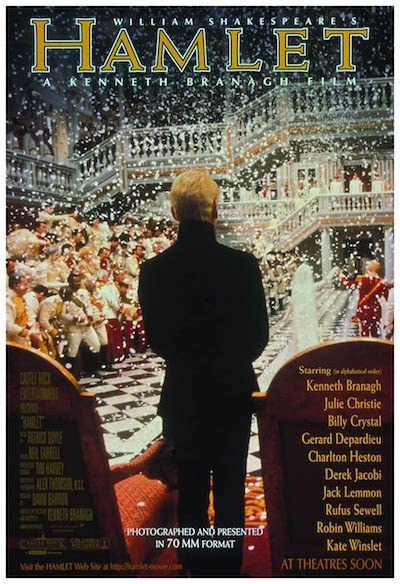
  • Kenneth Branagh – Hamlet (1996)

    Drama1991-2000ClassicsKenneth BranaghUnited KingdomWilliam Shakespeare

    I could be bounded in a nutshell and call myself a king of infinite space, were it not that I have bad dreams…

    Quote:
    Hamlet is a 1996 film version of William Shakespeare’s play Hamlet, adapted for the screen and directed by Kenneth Branagh, who also stars in the titular role as Prince Hamlet. The film also features Derek Jacobi as King Claudius, Julie Christie as Queen Gertrude, Kate Winslet as Ophelia, Michael Maloney as Laertes, Richard Briers as Polonius, and Nicholas Farrell as Horatio. Other notable appearances include Robin Williams, Gérard Depardieu, Jack Lemmon, Billy Crystal, Rufus Sewell, Charlton Heston, Richard Attenborough, Judi Dench, John Gielgud and Ken Dodd.Read More »

  • Jules Dassin – Celui qui doit mourir AKA He Who Must Die (1957)

    1951-1960ClassicsDramaItalyJules Dassin

    29f7c043f76a2bde437fd0d52a185152

    Plot Synopsis by Hal Erickson

    Celu Qui Doit Mourir (He Who Must Die) represented director Jules Dassin’s first professional collaboration with his future wife, Greek actress Melina Mercouri. Filmed on the island of Crete, the story concerns the efforts by the townspeople to stage their annual Passion Play. The priest in charge of the play, anxious not to rock the boat with the occupying Turks, refuses aid and comfort to a rebellious priest from a battle-scarred village. But three townspeople do their best to help the visiting cleric, an act that splits the town right down the middle and forces the previously benevolent Turkish overlord to take decisive action. Melina Mercouri offers a dry run of her Never on Sunday character as the town trollop.Read More »

  • Aldo Fabrizi – La famiglia Passaguai AKA The Passaguai Family (1951)

    Comedy1951-1960Aldo FabriziClassicsItaly

    PLOT SYNOPSIS:
    From the comedy “Cabin 27”, by Anton Germano Rossi.
    One Sunday at the beach of Ostia of cavalier Peppe Passaguai with his wife and three children.
    A machine of Roman comicality that has its ascendency in the repertory of dialectal theater, of variety show, and in the humor of the Weekly Travaso of the ’30s, enriched by more cinematic gags and costume notations on the small bourgeoisie. Especially in the first half, there is no lack of good gags and colorful caricatures.
    (Morandini)Read More »

  • Rouben Mamoulian – Dr. Jekyll and Mr. Hyde [+Commentary] (1931)

    1931-1940ClassicsHorrorRouben MamoulianUSA

    29f7c043f76a2bde437fd0d52a185152

    The film, made prior to the full enforcement of the Hays code, is remembered today for its strong sexual content, embodied mostly in the character of the prostitute, Ivy, played by Miriam Hopkins.

    The secret of the astonishing transformation scenes was not revealed until decades later (Mamoulian himself revealed it in a volume of interviews with Hollywood directors published under the title The Celluloid Muse).
    Hyde enjoys the rain.
    Hyde enjoys the rain.

    A series of rotating filters matching the make-up was used on the lenses, enabling the make-up to be gradually exposed or made invisible, depending upon the scene.

    Wally Westmore’s make-up for Hyde, simian and hairy with tusks influenced greatly the popular image of Hyde in media and comic books (the American Classics Illustrated edition of Jekyll and Hyde clearly based its design of Hyde on the Fredric March movie, although it is more toned down); in part this reflected the novella’s implication of Hyde as embodying repressed evil and hence being semi-evolved or simian in appearance.Read More »

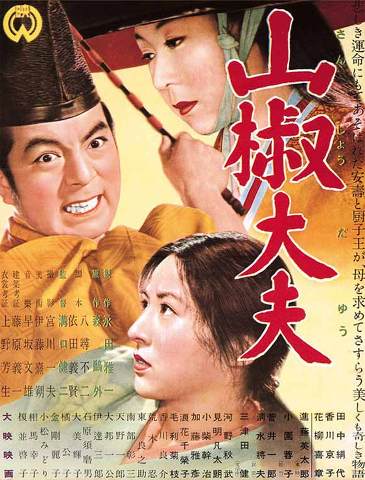
  • Kenji Mizoguchi – Sanshô dayû AKA Sansho the Bailiff (1954) (HD)

    1951-1960ClassicsDramaJapanKenji Mizoguchi

    29f7c043f76a2bde437fd0d52a185152

    Sansho Dayu… is the triumphant summation of Mizoguchi’s style and themes, as well as the most compassionate response imaginable to those atrocities which had been committed in then very recent years, in Japan and all over the world. It is the most humanist of films, but it asserts that humanism is powerless without politics, just as politics is purposeless without humanism. The last sequence is the most perfect ending in cinema, so broad in implication, so exquisite in form. The reunion of mother and son – the revelation of human love – is at once the most important thing in the world, and an event insignificant against the panorama of human suffering. The double perspective – never to see things in isolation, always in context – is assured by Mizoguchi’s style, and defines his art. Sansho Dayu is, in Gilbert Adair’s words, “one of those films for whose sake the cinema exists”.
    Alexander Jacoby, Senses Of Cinema.comRead More »

Back to top button