Synopsis:
Tanya, a Russian refugee, is hiding in Rangoon, Burma under the protection of her lover, Tony Evans, a gunrunner working for a weathly underworld leader named Nick. Nick wants to add Tanya to his stable of women in a decadent Rangoon club and intimidates Tony into turning her over to settle a debt. At first the abandoned Tanya refuses to cooperate with Nick, but eventually decides to beat him at his own game and uses sex to gain power. She becomes notorious for her affairs, is re-named “Spot White,” and by blackmailing a British officer, gets passage money out of Rangoon. On the boat to Mandalay, she meets formerly prestigious surgeon Gergory Burton who is now exiled in Burma because of his alcoholism, and they fall in love. Unfortunately, Tony has followed her, and in an attempt to escape the authorities, he frames her for what appears to be his murder. She is arrested, but before the boat docks, Tony comes to Tanya’s cabin and proposes that they open a club like Nick’s, with Tanya as “hostess.” Tanya, desperate to sever her past, poisons Tony, who falls overboard to his death. When they dock in Mandalay, the captain reports that stowaways saw Tony in the hold and it is presumed he escaped in a small boat. Tanya is freed, she confesses her crime to Gregory, and they pledge to start a new life togetherRead More »
Classics
-
Michael Curtiz – Mandalay (1934)
1931-1940ClassicsDramaMichael CurtizUSA -
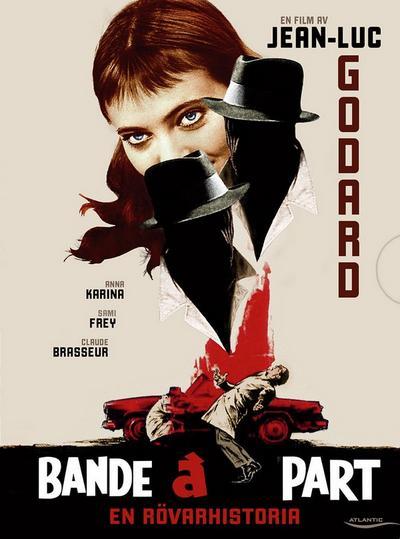
Jean-Luc Godard – Bande à part aka Band of Outsiders (1964)
1961-1970ClassicsDramaFranceJean-Luc GodardJonathan Rosenbaum wrote:
To gauge the historical significance of Jean-Luc Godard’s Band of Outsiders (1964) — getting a week’s run in a lovely new print at the Music Box — it helps to know that it was made four years after François Truffaut’s Shoot the Piano Player and three years before Arthur Penn’s Bonnie and Clyde. Both Band of Outsiders and Shoot the Piano Player are low-budget black-and-white French thrillers adapted from American crime novels translated into French for the celebrated Serie Noire collection, and they were abject box-office flops on both sides of the Atlantic — though today they embody the glories of the French New Wave in a good many people’s minds. By contrast, Bonnie and Clyde, a Hollywood movie in color that was profoundly influenced by these two films, was a huge success, and its lyrical depictions of violence changed the direction of American cinema.Read More » -
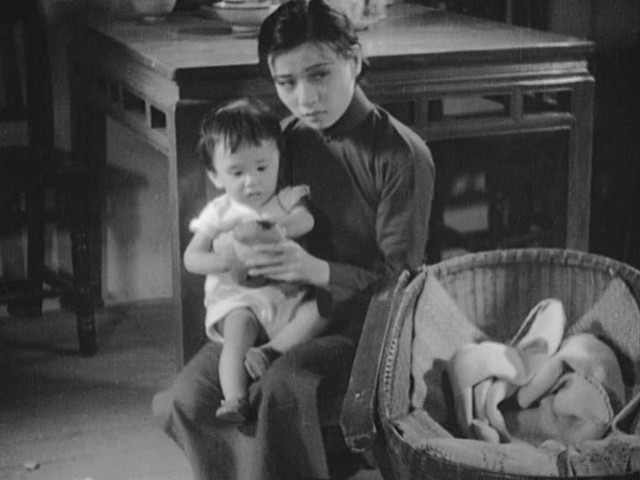
Yonggang Wu – Shen nu AKA The Goddess (1934)
1931-1940ChinaClassicsDramaYonggang WuQuote:
Ruan Lingyu, one of the most famous stars of early Chinese cinema, gives a devastating performance as an unnamed goddess an ironic euphemism for a prostitute in this profoundly moving but rarely seen classic of world cinema. A tragic tale of shame and maternal sacrifice, Ruan stars as a mother desperate to provide for her young son and forced to take brutal vengeance on her pimp. It is a profoundly moving drama, all the poignant by the fact that its star committed suicide at the age of 24, a year after the film’s release.Read More » -
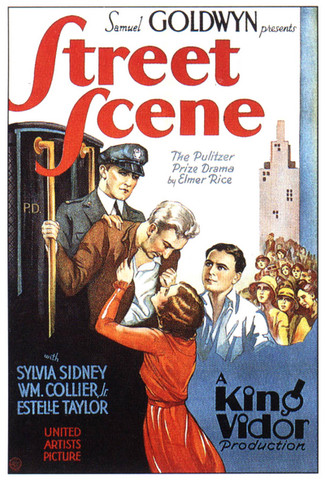
King Vidor – Street Scene (1931)
1931-1940ClassicsDramaKing VidorUSABased on the Pulitzer prize winning Broadway play, Street Scene is a study in the daily lives of people who communicate in a street and reside in the surrounding apartment complexes. Mrs. Murrant is dealing with issues of infidelity, Rose, her daughter is conflicted with her advancement in life and leaving the neighborhood, Rose’s father, a hard-working man who is never around, Sam Kaplan as a caring and concerned neighbor; and the rest of the idlers and gossipers that make up the rest of the street and the focus of their daily existence.Read More »
-
Frank Borzage – No Greater Glory (1934)
1931-1940ClassicsDramaFrank BorzageUSASynopsis:
Adapted from The Paul Street Boys, an autobiographical novel by Ferenc Molnar, GLORY is an unusually sensitive evocation of the pain of youth and the senselessness of war. Frail Nemecsek, a lonely boy who yearns to belong, worships Boka, the self-sufficent, charismatic leader of a well-organized gang, decked out in uniforms and sporting their own flag. The perennial outsider sees his chance to win a respected place in Butler’s army when their flag is stolen and war breaks out with another gang.Read More » -
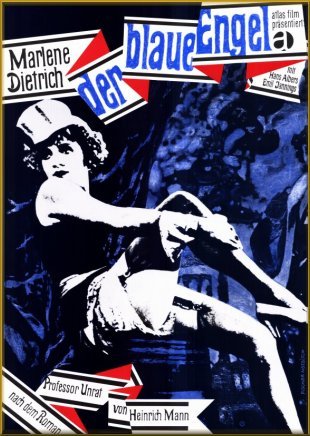
Josef von Sternberg – Der blaue Engel aka The Blue Angel (1930)
1921-1930ClassicsDramaGermanyJosef von SternbergArticle: from ~ by James Steffen
Immanuel Rath is a stuffy, disciplinarian professor who is shocked to discover his students passing around a postcard of Lola-Lola, a singer at The Blue Angel cabaret. Hoping to catch his students there, Professor Rath visits the nightclub and witnesses Lola-Lola’s performance. Entranced by her dissolute charms, he gets drunk on champagne and spends the night with her. The ensuing scandal causes him to lose control of his students and he is terminated from his position. Returning to Lola, he agrees to marry her and joins the troupe. His humiliation at having to play a clown onstage is compounded by Lola’s attraction to the strongman Mazeppa. To make matters worse, the troupe returns to the professor’s hometown, forcing him to acknowledge how far he has fallen.Read More » -
Mario Mattoli – Un turco napoletano AKA Neapolitan Turk [+Extra] (1953)
Comedy1951-1960ClassicsItalyMario MattoliBased on a stage play by Eduardo Scarpetta, Il Turco Napoletano is retooled into a vehicle for Italian comedian Toto. The star plays a girl-happy dolt who assumes the identity of a missing Turkish gentleman. With stolen identification papers, the oafish impostor enters the home of a wealthy man who’d hired the Turk to protect his wife and daughter. What our hero doesn’t know–but everybody else does–is that the real Turk is a eunuch. To avoid the scissors of the censors, Il Turco Napoletano is presented as a play-within-a-play, so it isn’t really happening after all. The film was lensed by Oscar-winning Hollywood cinematographer Karl Struss. ~ Hal Erickson, All Movie GuideRead More »
-
Anthony Mann – T-Men (1947)
1941-1950Anthony MannClassicsFilm NoirUSASynopsis wrote:
Two U.S. Treasury (“T-men”) agents go undercover in Detroit, and then Los Angeles, in an attempt to break a U.S. currency counterfeiting ring.Read More » -
Robert Bresson – Au hasard Balthazar (1966)
1961-1970ClassicsDramaFranceRobert BressonJim Ridley wrote:
With exquisite, heartrending calm, Bresson’s 1966 masterpiece Au Hasard Balthazar lays out the life of a donkey, from first brays to final rest. Baptized Balthazar, the donkey goes through passages of life parallel to his early owner, a farmer’s daughter named Marie (played as an adult by Anne Wiazemsky).
Together and separately, they experience the full spectrum of man’s failings: Balthazar is kicked by passing thugs, beaten by an owner, and eventually used for theft, while Marie is seduced, abandoned and ultimately assaulted. Yet while Bresson’s vision is harsh, it’s also redemptive, even merciful. It ends on a note of quiet transcendence, as if to say all suffering, no matter how grave, cannot last.Read More »