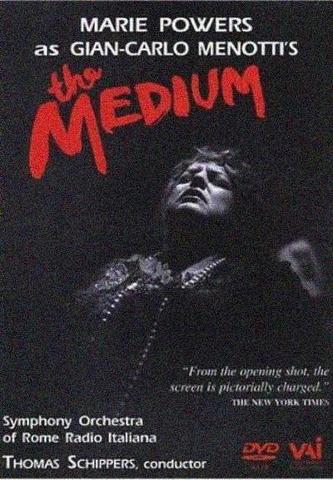

This is the 1951 film of Menotti’s opera about a fake medium who starts to feel real supernatural presences. Beautifully filmed and sung (in English)Read More »
This is the 1951 film of Menotti’s opera about a fake medium who starts to feel real supernatural presences. Beautifully filmed and sung (in English)Read More »

Quote:
The film was originally to have starred Gene Kelly, but Kelly was injured just prior to production and Astaire, who had announced his retirement from film, was coaxed back to replace him. (Astaire would “retire” several more times over the next decade, but he would also go on to make a number of additional classic musicals in between retirements.) This film marked the major MGM debut of tap-dancer Ann Miller (who had previously been under contract to RKO), replacing Cyd Charisse, who also had to bow out of the production.Read More »
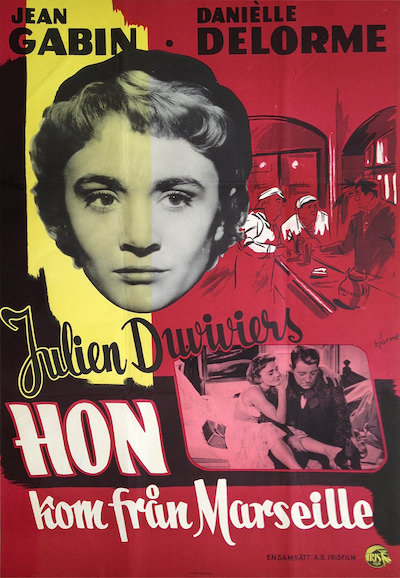
André Chatelin is a restaurant owner in Les Halles in Paris. One morning, a girl named Catherine asks to see him. She happens to be the daughter of his estranged wife, Gabrielle, that André left more than twenty years before. As Gabrielle has just died, André accepts to accommodate Catherine first, then gives her a job in his restaurant before finally marrying her. But the angel-faced young lady might well be a devil in disguise.Read More »
Quote:
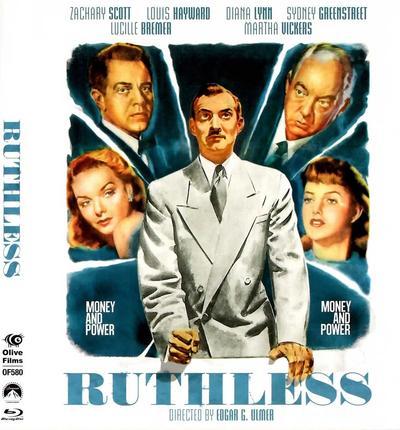
Multi-millionaire Horace Woodruff Vendig (Zachary Scott) shows himself to the world as an ambitious philanthropist, but that’s far from the case. Even as a young man he starts to exhibit an obsessive and selfish urge to make more and more money, loving and leaving women at will to further this end. Vendig steps on and rolls over anyone who stands in his way, including his lifelong friend Vic Lambdin (Louis Hayward), utilities executive Buck Mansfield (Sydney Greenstreet) and various women, among them his first and only love, Martha Burnside (Diana Lynn), socialite Susan Duane (Martha Vickers) and Buck’s wife, Christa Mansfield (Lucille Bremer). It is a tribute to the acting skills of Scott that he makes his despicable character somehow likeable and sympathetic. The stellar cast includes Raymond Burr, Edith Barrett, Dennis Hoey and Joyce Arling. One of the few big-budgeted projects helmed by cult director Edgar G. Ulmer (Detour).Read More »
Quote:
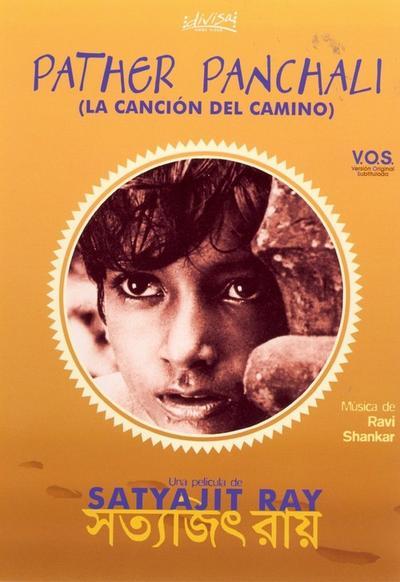
A boy named Apu is born to a poor but proud Brahmin family. His loving older sister, Durga, is a sweet girl, but has formed the bad habit of stealing fruit from an aunt’s orchard, much to her mother’s dismay. Their father Harihar, a poet and lay priest, finds a treasury job that will bring the family steady income for the first time in a while. For a brief period afterwards, their mother Sarbajaya manages to make ends meet, and the children are left to their own devices and run freely. But when Harihar loses his position, he leaves his family with depleted resources to search elsewhere for work. In his absence, their condition deteriorates. Months later, Harihar returns to face the tragedy that forces them to leave their ancestral home. This acclaimed debut by Satyajit Ray is the first part of a trilogy of poetic, lyrical works.Read More »
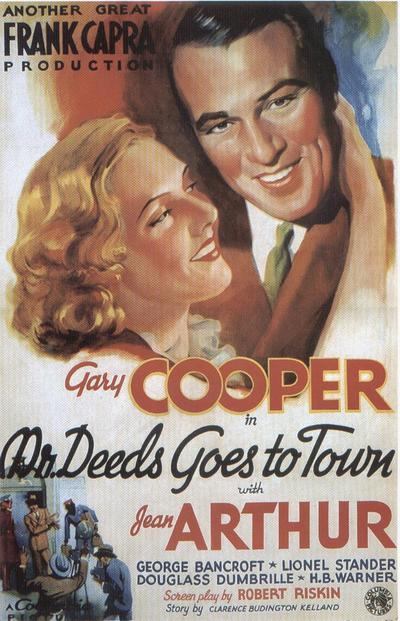
Mr. Deeds Goes to Town is a 1936 American screwball comedy film directed by Frank Capra, starring Gary Cooper and Jean Arthur in her first featured role. Based on the 1935 short story “Opera Hat” by Clarence Budington Kelland, which appeared in serial form in the Saturday Evening Post, the screenplay was written by Robert Riskin in his fifth collaboration with Frank Capra.
Read More »

Quote:
The modern heist movie was invented in Paris in 1954 by Jules Dassin, with “Rififi,” and Jean-Pierre Melville, with “Bob le Flambeur.” Dassin built his film around a 28-minute safe-cracking sequence that is the father of all later movies in which thieves carry out complicated robberies. Working across Paris at the same time, Melville’s film, which translates as “Bob the High Roller,” perfected the plot in which a veteran criminal gathers a group of specialists to make a big score. The Melville picture was remade twice as “Ocean’s Eleven,” and echoes of the Dassin can be found from Kubrick’s “The Killing” to Tarantino’s “Reservoir Dogs.” They both owe something to John Huston’s “The Asphalt Jungle” (1950), which has the general idea but not the attention to detail.Read More »

Synopsis:
Muichkine, a young Russian prince, returns home to St. Petersburg from a mental institution, determined to spread decency and kindness in the harsh and cruel world. He becomes betrothed to an innocent young girl while trying to save a less-innocent woman from her own travail, but jealousy and his own naivete conjoin to bring about unimaginable tragedy.Read More »

Richard III
by William Shakespeare
Direction: Thomas Ostermeier
Translation and version by Marius von Mayenburg
Richard is hideous. Born prematurely, he is a deformed, hobbling, hunchbacked cripple who, on the battlefields of the Wars of the Roses – which flared up after the death of Henry V – served his family and above all his brother, Edward, well. Now Edward is king, thanks to a number of murders carried out on his crippled brother’s own initiative. But the end of war brings Richard no peace. His hatred for the rest of the world, to which he will never belong, lies too deep. And so he does what he does best and kills some more, clearing away every obstacle that lies in his path to becoming king. If fate prevents him from being part of a society of those blessed by good fortune, he will at least lord over them. He plays off his rivals against each other with political cunning, unscrupulously exploits the ambitions of others for his own ends and strides spotless through an immense bloodbath until there is no one left above him and the crown is his.Read More »