Classics

  • Tadashi Imai – Mata au hi made AKA Till We Meet Again (1950)

    1941-1950ClassicsDramaJapanTadashi Imai

    29f7c043f76a2bde437fd0d52a185152

    Saburo and Keiko fall in love with each other but the tide of the war separates them.

    Review:
    It’s a scene that would be cherished and preserved in the cinema’s pantheon of moments were it known; a simple scene – a young man saying goodbye to his girl at her home. They are trying to come to terms with the fact that the fates don’t seem to want to be together. He leaves, and she goes back to the living room and moves to the window to watch him go. Snow is falling steadily. She waits for him to look back, which he does about 10 yards or so away. He starts to come back and stops in front of the window. He’s positioned lower down than her, but after longingly staring at each other, and the camera showing us each of their anguished faces in turn, he stands on tip toe to pucker up his lips to the glass. She in turn motions her head down to meet his lips.Read More »

  • F.W. Murnau – Sunrise: A Song of Two Humans (1927)

    1921-1930ClassicsF.W. MurnauSilentUSA

    Free Image Hosting at www.ImageShack.us

    29f7c043f76a2bde437fd0d52a185152

    Roger Ebert wrote:
    The camera’s freedom to move is taken for granted in these days of the Steadicam, the lightweight digital camera, and even special effects that reproduce camera movement. A single unbroken shot can seem to begin with an entire city and end with a detail inside a window — consider the opening of “Moulin Rouge!” (2001). But the camera did not move so easily in the early days.Read More »

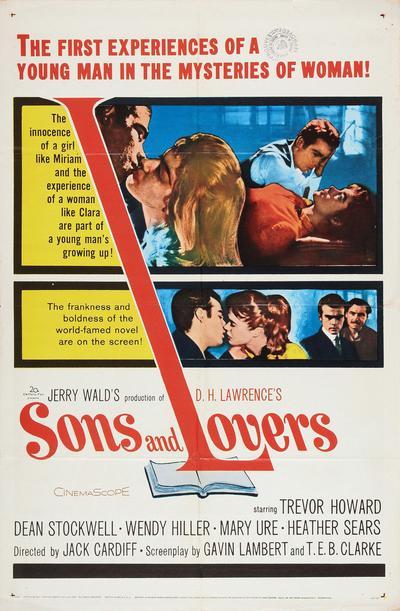
  • Jack Cardiff – Sons and Lovers (1960)

    1951-1960ClassicsDramaJack CardiffUnited Kingdom

    29f7c043f76a2bde437fd0d52a185152

    Sons and Lovers
    At the Brattle through Saturday
    By William A. Nitze, March 26, 1962
    0

    Sons and Lovers does not lend itself easily to a movie script, but Jack Cardiff has transformed Lawrence’s novel into a superb film. The reader must follow a slow and agonizing series of conflicting passions presented in a style which is often deceptively complex. Through a skillful rearrangement of plot elements and dialogue Cardiff has condensed the novel into an hour and 45 minutes without sacrificing its subtlety and force.

    The film opens halfway through the story: Paul Morel is in his early twenties. Within the first ten minutes one grasps all of the important relationships of the drama: the abandonment of Walter Morel by his wife and sons, who detest him because of his weakness and cruelty; Paul’s desperate attachment to his mother, and his frustrated love for Miriam. The film then concentrates on the final failure of Miriam to break through Mrs. Morel’s hold on her son, Paul’s unsuccessful affair with Clara Dawes and his final liberation through his mother’s death.Read More »

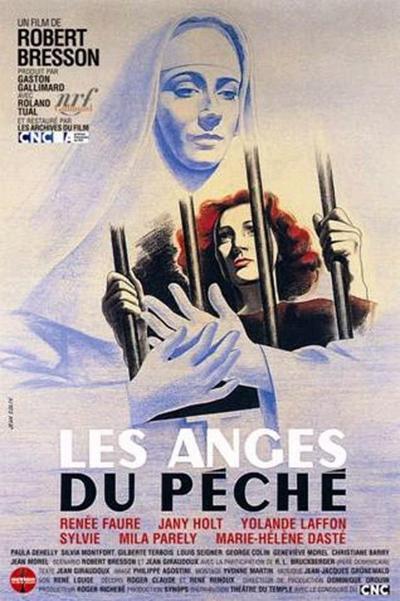
  • Robert Bresson – Les anges du péché AKA Angels of Sin (1943)

    1941-1950ClassicsDramaFranceRobert Bresson

    29f7c043f76a2bde437fd0d52a185152

    Synopsis wrote:
    A well-off young woman decides to become a nun, joining a convent that rehabilitates female prisoners. Through their program, she meets a woman named Thérèse who refuses any help because she says she was innocent of the crime she was convicted for. After being released from prison, Thérèse murders the actual perpetrator of the crime and comes to seek sanctuary in the convent.Read More »

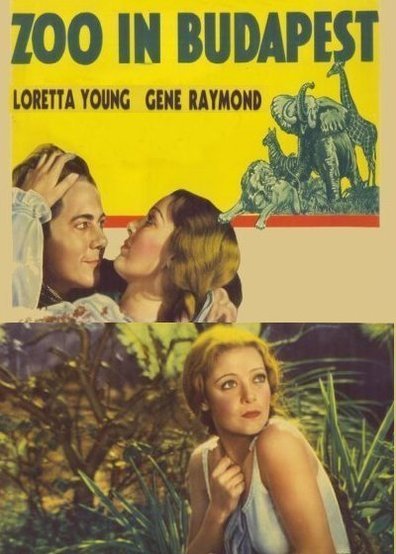
  • Rowland V. Lee – Zoo in Budapest (1933)

    1931-1940ClassicsRomanceRowland V. LeeUSA

    29f7c043f76a2bde437fd0d52a185152

    Brief Synopsis from TCM:
    Zani is an unusual young man who has spent his entire life in a zoo in Budapest. His only true friends are the zoo’s animals. When Zani meets Eve, a young orphan girl, they fall in love. To be together Eve must somehow escape from her strict orphan school. When she does she and Zani must hide overnight in the zoo – where everyone is looking to find them. Read More »

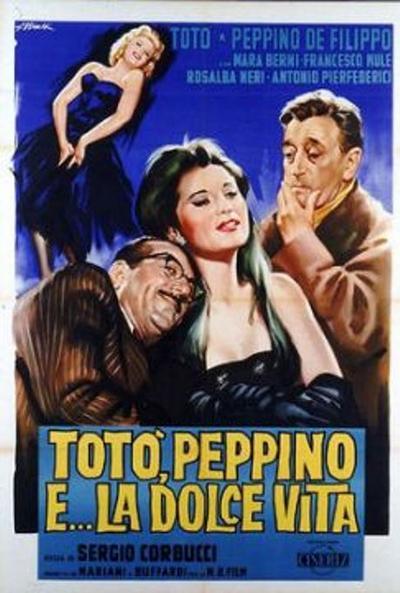
  • Sergio Corbucci – Totò, Peppino e la dolce vita (1961)

    1961-1970ClassicsComedyItalySergio Corbucci

    29f7c043f76a2bde437fd0d52a185152

    Plot (Babelfish translation):
    Antonio goes to Rome, the great city center of the ” dolce vita”, with the money collected from the fellow countrymen, in order to spend them on a project: To construct a freeway for the home town. But the countrymen do not have more news and they send Peppino to search for him. But when Peppino meet Antonio he is also dragged into metropolian habits and the sweet roman life, between beautiful actresses, cocaine exchanged for borotalco (?) and orgies. The town folks impatiently await news… Read More »

  • Marlen Khutsiyev – Mne dvadtsat let AKA I Am Twenty [+Extras] (1965)

    1961-1970ClassicsDramaMarlen KhutsiyevUSSR

    29f7c043f76a2bde437fd0d52a185152

    Synopsis:
    I am Twenty is notable for its often dramatic camera movements, handheld camerawork and heavy use of location shooting, often incorporating non-actors (including a group of foreign exchange students from Ghana and the poet Yevgeny Yevtushenko) and centering scenes around non-staged events (a May Day parade, a building demolition, a poetry reading). Filmmakers Andrei Tarkovsky and Andrei Konchalovsky both play small roles in the film. The dialogue often overlaps and there are stylized flourishes that echo the early French New Wave, especially François Truffaut’s black and white films. The screenplay, co-written by Gennadi Shpalikov, originally called for a film running only 90 minutes, but the full version of the film runs for three hours.Read More »

  • Marcel Carné – Les visiteurs du soir AKA The Devil’s Envoys (1942)

    1941-1950ClassicsFantasyFranceMarcel Carné

    Quote:
    A work of poetry and dark humor, Les visiteurs du soir is a lyrical medieval fantasy from the great French director Marcel Carné. Two strangers dressed as minstrels (Arletty and Alain Cuny) arrive at a castle in advance of court festivities—and are revealed to be emissaries of the devil, dispatched to spread heartbreak and suffering. Their plans, however, are thwarted by an unexpected intrusion: human love. Often interpreted as an allegory for the Nazi occupation of France, during which it was made, Les visiteurs du soir—wittily written by Jacques Prévert and Pierre Laroche, and elegantly designed by Alexandre Trauner and shot by Roger Hubert—is a moving tale of love conquering all.Read More »

  • Marcel Carné – Les enfants du paradis aka Children Of Paradise [+Commentary] (1945)

    1941-1950ClassicsDramaFranceMarcel Carné

    29f7c043f76a2bde437fd0d52a185152

    Synopsis
    ©Hal Erickson
    Even in 1945, Marcel Carné’s Children of Paradise was regarded as an old-fashioned film. Set in the Parisian theatrical world of the 1840s, Jacques Prévert’s screenplay concerns four men in love with the mysterious Garance (Arletty). Each loves Garance in his own fashion, but only the intentions of sensitive mime-actor Deburau (Jean-Louis Barrault) are entirely honorable; as a result, it is he who suffers most, hurdling one obstacle after another in pursuit of an evidently unattainable goal. In the stylized fashion of 19th-century French drama, many grand passions are spent during the film’s totally absorbing 195 minutes. Amazingly, the film was produced over a two-year period in virtual secrecy, without the knowledge of the Nazis then occupying France, who would surely have arrested several of the cast and production staff members (including Prévert) for their activities in the Resistance. Children of Paradise has gone on to become one of the great romantic classics of international cinema.Read More »

Back to top button