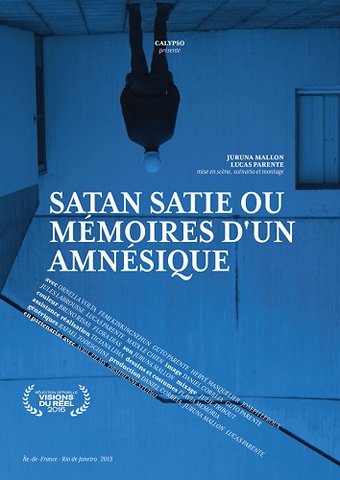
Erik Satie’s work is at the heart of modern music. However, who was Satie? An elusive genius or a visionary misanthrope? The film tries to sketch an identikit of the musician through his notes and the places he lived in. Musicologists mostly agree in describing Satie’s music as inhabited by voids and holes. The long pauses between one musical passage and the other are musical structures unto themselves; therefore, the filmmakers create a dissonant Satie-like universe in which empty spaces are adjacent to eloquent passages. Like a mysterious flower visible only to the eye that is willing to dance with its charm, the film unfolds little by little through mental associations and creative juxtapositions. There are no answers in the universe inhabited by the ghosts of Satie’s creations. Architectural forms and recollections from desires and acts of creative hubris compete to create a new world, which ultimately is the image of a new and more seductive pleasure principle. Satan Satie is a film that pushes against the boundaries of cinema.Read More »
Brazil
-
Juruna Mallon & Lucas Parente – Satan Satie (2016)
2011-2020BrazilDocumentaryJuruna Mallon and Lucas Parente -
Roberto Gervitz – Jogo Subterraneo aka Underground Game (2005)
2001-2010BrazilDramaRoberto GervitzRomancefrom IMDB: In São Paulo, the weird and romantic piano player Martin (Felipe Camargo) believes in serendipity and invents a game to find the woman of his dreams. He previously selects a route in the subway, and in the wagon, he chases a woman to see if her destiny is the same as his. Following his procedures, he meets Tania (Daniela Escobar), the mother of an autistic girl; the blind writer Laura (Júlia Lemmertz); and the mysterious Ana (Maria Luisa Mendonça), a woman with a secret past, and he falls in love for Ana.Read More »
-
Various – Mundo Invisível (2012)
Drama2011-2020BrazilVariousAn anthology film following different stories around the theme of invisibility in the modern world.Read More »
-
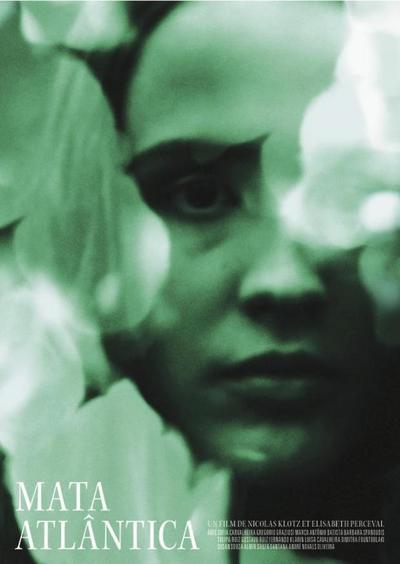
Nicolas Klotz & Elisabeth Perceval – Mata Atlantica (2016)
2011-2020BrazilDocumentaryDramaElisabeth PercevalNicolas Klotz -
Mario Peixoto – Limite AKA Limit (1931)
1931-1940BrazilDramaMario PeixotoSilentQuote:
An astonishing creation, Limite is the only feature by the Brazilian director and author Mário Peixoto, made when he was just twenty-two years old. Inspired by a haunting André Kertész photograph on the cover of a French magazine, this avant-garde silent masterpiece centers on a man and two women lost at sea, their pasts unfolding through flashbacks propelled by the music of Erik Satie, Claude Debussy, Igor Stravinsky, and others. An early work of independent Latin American filmmaking, Limite was famously difficult to see for most of the twentieth century. It is a pioneering achievement that continues to captivate with its timeless visual poetry.Read More » -
Jorge Mautner – O Demiurgo AKA The Demiurge (1972)
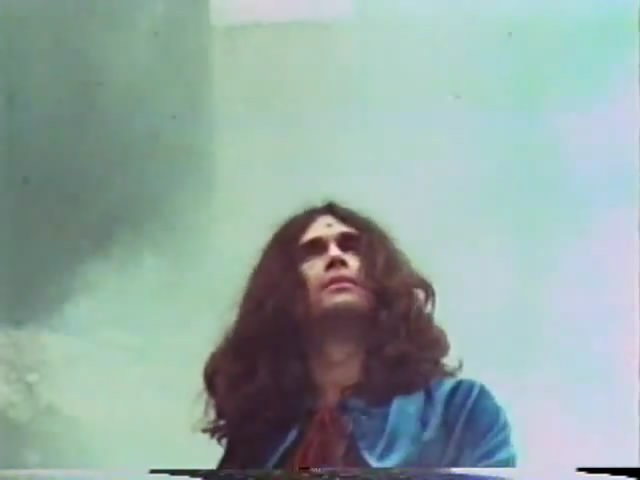
1971-1980ArthouseBrazilCultJorge MautnerO Demiurgo (1972)
A colorful feature film that mixes exile with the figure of the poet Rimbaud and the feminist revolution. “It’s super-intellectual. A fable-musical-philosophical-chanchada”, Mautner says. He also affirms that the work focuses a lot on the longing for Brazil, on the will that the exiled had to return to their homeland. The idea came from conversations between the musician and his old father, “always talking about the pre-Socratics”, he recalls. Glauber Rocha states that “The Demiurge” is the best film “of” and “about” exile.Read More » -
Eryk Rocha – Cinema Novo (2016)
2011-2020ArthouseBrazilDocumentaryEryk Rocha

Synopsis:
Cinema Novo is a movie-essay that investigates poetically the most important movement of Latin America cinema, through the thoughts of its main auteurs: Nelson Pereira dos Santos, Glauber Rocha, Leon Hirszman, Joaquim Pedro de Andrade, Ruy Guerra, Walter Lima Jr., Paulo César Saraceni, among others.Read More » -
Júlio Bressane – Garoto (2015)
2011-2020ArthouseBrazilJúlio BressaneRomanceA girl, a boy, a murder, some great landscapes, the sound of wind. Like a young couple on the lam film shot by Straub/Huillet. It achieves a beauty few films can.
Quote:
Boy meets girl at the end of the world. Once again, Julio Bressane stages the beginning of life itself as a stylized and dysfunctional yet mysteriously minnellian dance. O Garoto, element of the collective project Telha brilhadora, that comprises also O prefeito by Bruno Safadi, O espelho by Rodrigo Lima and Origem do mundo by Moa Batsow, is a film that has at its core a mischievous insurgent sexual energy that bristles and sparks relentlessly poetic hybris. Those who are not familiar with Bressane’s work may be puzzled by the minimalistic approach and its reiterative patterns, but it is obvious that O Garoto (The Kid) is just a different kind of educaçao sentimentalRead More » -
Anna Muylaert – Mãe Só Há Uma AKA Don’t Call Me Son (2016)
2011-2020Anna MuylaertBrazilDramaQueer Cinema(s)Quote:
Most films—especially taut, lower-budgeted indies—choose one theme or dramatic premise and run with it. Others cross-wire two potent and ostensibly unrelated ideas and bask in the sparks they generate.The terrifically assured and engrossing Brazilian film “Don’t Call Me Son” is a great example of the latter breed. On the one hand, writer/director Anna Muylaert invites us to contemplate the fluidity of adolescent gender identity via the story of teenage boy who’s testing boundaries by drifting provocatively between male and female appearances. (If this sounds like a topic for a Gender Studies class, fear not: the film is a drama, not a lecture.) On the other hand, Muylaert also probes how much of who we are comes from family, since, additionally, her tale concerns kids who were removed from their biological parents at birth.Read More »