In Moroccan Chronicles, set in the ancient city of Fez, a working class mother, abandoned by her husband who has emigrated to Europe, tells three tales to her just-circumcised ten-year-old son. In the first, Smihi re-stages the Marrakech market scene from Hitchcock’s The Man Who Knew Too Much, in which a monkey trainer makes children dance for tourists. In the second, two lovers meet on the ramparts of Orson Welles’s Essaouira locations for Othello and speak of their own forbidden love. And in the third, set in Smihi’s home town of Tangier, an old sailor dreams of vanquishing a sea monster: the Gibraltar ferry that connects Europe to Africa.Read More »
Arthouse
-
Moumen Smihi – Chroniques marocaines AKA Moroccan Chronicles (1999)
1991-2000African CinemaArthouseFantasyMoroccoMoumen Smihi -
Jean-Paul Civeyrac – Fantômes AKA Spirits (2001)
2001-2010ArthouseDramaFranceJean-Paul CiveyracQuote:
On the surface, Jean-Paul Civeyrac’s Fantômes unfolds with a sense of haunted, supernatural disequilibrium that similarly infuses Kiyoshi Kurosawa’s atmospheric, tonal cinema. In the film’s opening sequence, a young acting student, Mouche (Dina Ferreira) stares out the window of an empty room and wistfully implores her absent lover, Bruno (Olivier Boreel) to return. Alone with her grief, she retreats into the silence of her intimate memories, briefly interrupted by what appears to be an anonymously placed, prank telephone call (in a premise that coincidentally evokes Kurosawa’s Pulse, made in the same year), before being brought back to the mundane reality of rehearsing text in Russian for an upcoming drama class during a subsequent telephone conversation with her professor, Andreï (Jean-Claude Montheil). However, Mouche’s desolation does not lie in the vestiges of a failed love affair, but rather, in the tragic loss of a new lover from a motorcycle accident. The image of the sad-eyed Mouche invoking the name of her dead lover is reflected in the dorsal shot of another distracted acting student, Antoine (Guillaume Verdier) as he stares out the window of a country house while rehearsing his lines, avoiding the gaze of his first love (Emilie Lelouch) before finally resolving to break up with her.Read More » -
Pedro Costa – Cavalo Dinheiro AKA Horse Money (2014)
2011-2020ArthousePedro CostaPortugalQuote:
A phantasmagorical vision of psychological purgatory, Horse Money (Cavalo dinheiro) will enrapture some while leaving others dangling in frustrated limbo. Only the sixth fictional feature from Portuguese writer-director Pedro Costa in the quarter-century since his 1989 debut Blood, its austere opacity will convert few to the Costa cause. But it will undoubtedly confirm his exalted status among cinephiles and cineastes as an inspirationally uncompromising and uncompromised auteur.Winner of Best Director at Locarno and confirmed for North American festival play at Toronto and New York, this tenebrous meander around one man’s troubled psyche will likely emulate its predecessor Colossal Youth (2006) by scoring limited theatrical exposure in receptive territories off the back of what is, by this stage regarding Costa, near-automatic critical adulation.Read More »
-
Ulrich Seidl – Import/Export (2007)
2001-2010ArthouseAustriaDramaUlrich SeidlQuote:
The case of Josef Fritzl, an outwardly respectable man from Amstetten in Austria who imprisoned and raped his daughter for 24 years in a specially built cellar dungeon, resulted this summer in urgent new critical attention being paid to Austria’s cultural figures warning of a terrible malaise lying beneath their country’s prosperous surface, and that of western Europe generally. In the London Review of Books, Nicholas Spice wrote about Fritzl in relation to Gier, or Greed, the latest novel from Austrian Nobel laureate Elfriede Jelinek about the murder of a teenage girl by a police officer. Jelinek had written on her website: “Austria is a small world in which the big world holds its rehearsal. The performance takes place in the very much smaller cellar dungeon in Amstetten.”Read More » -
Jean-Paul Civeyrac – Le doux amour des hommes AKA Men’s Gentle Love (2002)
2001-2010ArthouseDramaFranceJean-Paul CiveyracQuote:
Raoul flits from woman to woman, searching for seemingly unattainable love, until he meets Jeanne, who is fated to live freely and tragically.Read More » -
Manoel de Oliveira – A Caça AKA The Hunt (1964)
1961-1970ArthouseCultManoel de OliveiraPortugalQuote:
“A caça” is one Oliveira’s most distressing and mysterious films. Two boys, Roberto and José, enter a hunting ground, flooded with marshes. José falls into a quagmire and Roberto runs to the village looking for help. The locals form a human chain to save the victim…“I conceived ‘A caça’ after reading in a newspaper that a boy was sucked down into a pit of quicksand and the other, due to fear, fled without helping him. The movie is based on this event.” In this laconic way, Oliveira summarizes his purpose. His first intention was to make a feature film about such an anguishing event.Read More »
-
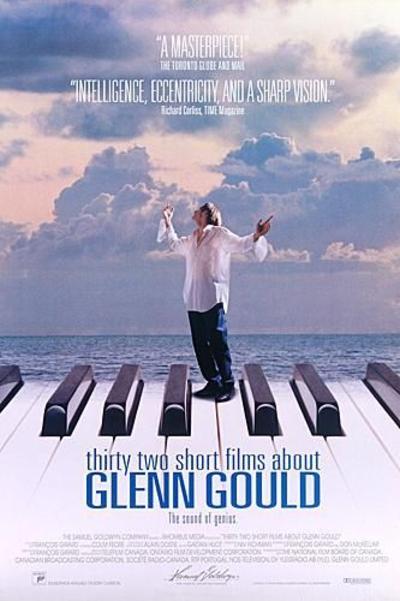
François Girard – Thirty Two Short Films About Glenn Gould (1993)
1991-2000ArthouseCanadaFrançois GirardMusicalSynopsis:
As the title suggests, this dramatised documentary about the eccentric Canadian pianist Glenn Gould is broken up into thirty-two short films (mirroring the thirty-two part structure of Bach’s ‘Goldberg Variations’, the recording that Gould made famous), each giving us an insight into some aspect of Gould’s life and career. Out of respect for the music lead actor Colm Feore is never seen playing the piano, merely reacting to Gould’s own recordings, which are extensively featuredRead More » -
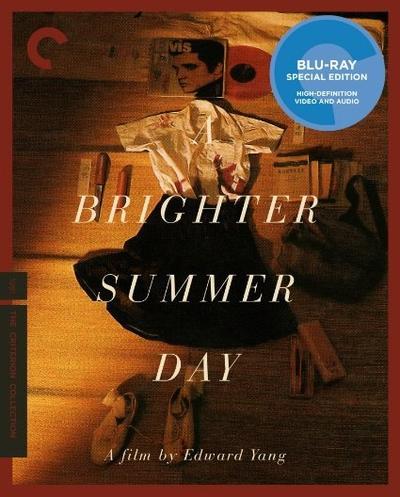
Edward Yang – Gu ling jie shao nian sha ren shi jian AKA A Brighter Summer Day (1991)
1991-2000ArthouseDramaEdward YangTaiwanQuote:
It’s only natural that Edward Yang’s A Brighter Summer Day begins with a shot of a barely-lit light bulb. On the set of a movie, a director reprimands an actress for harping on the color of her dress. “This is a black and white film,” he says, one of many references to the symbolic darkness that overshadows the milieu of the film. A Brighter Summer Day is itself in color, but it may as well be monochrome. Much of the film’s action takes place at night or inside dimly lit interiors, and it’s not unusual for the characters to be confronted by light and its almost political implications. Some of the best images in the film (young boys staring at a rehearsal from a theater’s rooftop; a basketball bouncing out of a darkened alleyway) pit light against dark—a fascinating dialectic meant to symbolize a distinctly Taiwanese struggle between past and present. From weapons to watches, objects similarly speak to the present. Like the light, these objects are constant reminders that the past can’t be ignored and must be used to negotiate the present.Read More » -
Fred Kelemen – Verhängnis AKA Fate (1994)
1991-2000ArthouseFred KelemenGermany“The paths of people from various countries cross during the course of one night. They speak different languages, but they are fatefully bound together by the solitary quest for happiness and deliverance. Sloping paths are all that’s left for them in an age of lost perspectives, lost refuges and lost homelands. They sink deeper with every movement that should be liberating them. Every gesture of love becomes a gesture of humiliation. The desperate dance of their life has become a passionate dance of death.
In the centre of this centrifuge at the end of the millennium the Russian emigrant Valery and his lover Ljuba are turning around each other in a nocturnal round dance of desire and pain, hope and violence and the indestructible will to survive.”Read More »