Arthouse

  • Andrei Stefanescu – #Beings (2015)

    2011-2020Andrei StefanescuArthouseDramaGermany

    29f7c043f76a2bde437fd0d52a185152

    Beings is the second feature film of Stefanescu Andrei, after Sleep Awake in 2012, is also a micro-budget film, this time shot in Berlin with a small magical crew in the autumn of 2014.
    It is a contemplative film about Eva a girl that leaves everything behind, a deep friendship with her friend Anna and her betrayed love for Teo, to lose herself into light. To get away from her skin and become perfect so that she will be loved by Teo.
    The story begins with Eva having a epileptic fit and being kicked out by Teo instead of being helped. This starts the crisis of Eva and her desperate return to Teo and then the failed night of love. Everything brakes loose. Not only her, but also Teo who out of guilt begins his descent into madness together with Anna, Eva’s best friend that also loves Teo irrational and against any moral or law.
    Eva’s trip has no goal but in her journey each step is like a magic moment like a step outside reality until she becomes one with the sky forgetting everything she is and starting new.Read More »

  • Carlos Saura – El jardín de las delicias AKA The Garden of Delights (1970)

    Drama1961-1970ArthouseCarlos SauraSpain

    29f7c043f76a2bde437fd0d52a185152

    Review Summary
    Jose Luis Lopez Vasquez stars as a millionaire industrialist who is involved in an auto accident. When he comes to, Vasquez has completely forgotten who he is and how much money he has. His greedy relatives would love to put Vasquez away and claim his fortune. But there’s a fly in the ointment: the money is in a secret Swiss bank account, and the only one who knows (or who knew) the account number is the amnesiac Vasquez. Those familiar with the work of Spanish director Carlos Saura know for darn sure that he’s not about to go the expected route with this surefire material: Garden of Delights, is just that, a bountiful garden of the surreal, the symbolic, the illusory, and at times the hilarious. ~ Hal Erickson, All Movie GuideRead More »

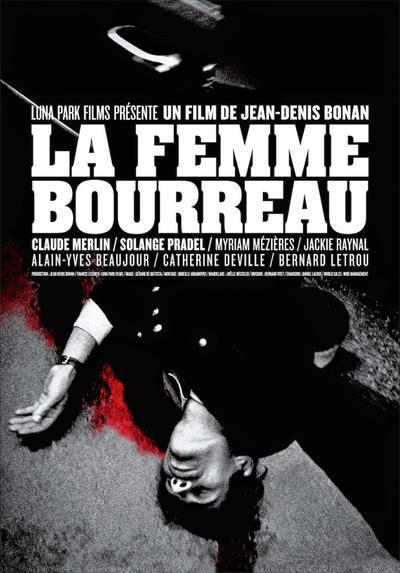
  • Jean-Denis Bonan – La femme bourreau AKA A Woman Kills (1968)

    1961-1970ArthouseDramaFranceJean-Denis Bonan

    29f7c043f76a2bde437fd0d52a185152

    Synopsis:
    ‘Paris, in the 1960s. A series of crimes troubles the public tranquility. On March, 22, 1968, Hélène Picard, a prostitute sentenced to death two years before for several murders, is killed by executioner Louis Guilbeau. Immediately, the violent crimes, similar to Hélène’s ones, go on again. In parallel, Louis is having an affair with the police woman in charge of the investigation… What are the obscure relations hidden behind the executioner and the mysterious killer? Who is this dark man in reality?’
    – UniFranceRead More »

  • Alain Tanner – Jonas et Lila, à demain (1999)

    1991-2000Alain TannerArthouseDramaSwitzerland

    29f7c043f76a2bde437fd0d52a185152

    Jonas et Lila: A Demain
    by Paul Kalina March 2000 Senses of Cinema

    So far at least, new millennium events appear to have produced little of lasting value, apart from early retirement packages for those well placed in the IT sector.

    But there has been one legacy cinephiles are likely to relish. With great foresight, Swiss director Alain Tanner commemorated the new millennium and the 25th birthday of his fictional character Jonas, born of course during Tanner’s 1976 film Jonas qui aura 25 en l’an 2000 (Jonas Who Will Be 25 In The Year 2000), with a follow-up film, Jonas et Lila: A Demain (1999).Read More »

  • Wojciech Has – Osobisty pamietnik grzesznika przez niego samego spisany AKA Memoirs Of A Sinner (1986)

    1981-1990ArthouseDramaPolandWojciech Has

    Quote:
    In the 18th century, a recently deceased young man is exhumed by a gravedigger, suddenly revives, and then launches into the story of his highly eventful life. Brought up in a puritanical household, Robert is seduced by a mysterious stranger into killing his wine-, woman- and song-loving brother. What follows is a descent into a hallucinatory hell, where reality and illusion merge, as Robert’s evil doppelganger sins with terrible abandon–and Robert stands accused.Read More »

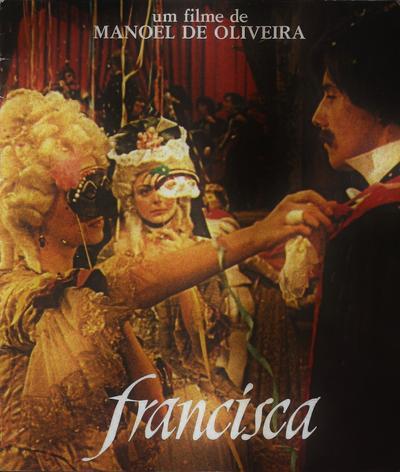
  • Manoel de Oliveira – Francisca (1981)

    1981-1990ArthouseCultManoel de OliveiraPortugal

    29f7c043f76a2bde437fd0d52a185152

    Quote:
    Portuguese director Manoel de Oliveira made this amazing film in 1981, at the age of 72; as powerful as it is stark, it suggests a blending of the modernist, minimalist techniques of Jean-Marie Straub with the elusive spiritual subject matter of Max Ophuls. In 19th-century Portugal, a rising young novelist falls in love with the daughter of an English army officer, provoking the obscure envy of an aristocratic friend, who resolves to marry the girl himself and make her suffer for her betrayal. The baroque plot is presented in a series of single-take tableaux, which do not attempt to embody the drama as much as allude to it, leaving the dense and passionate feelings to take shape entirely in the spectator’s mind. Oliveira limits himself to showing only what can truly be shown: not the story but a representation of the story, not the emotions but their material manifestations as they have crossed the decades. A masterpiece of the modern cinema, difficult but extremely rewarding.

    Review by Dave Kehr of the Chicago Reader:Read More »

  • Jean-Pierre Lajournade – Les Souffrances du jeune Werther (1968)

    1961-1970ArthouseFranceJean-Pierre LajournadeTV

    29f7c043f76a2bde437fd0d52a185152

    Free adaptation of Goethe. 68’s spleen and rebellion with Garrel Brothers…

    Adaptation libre du roman épistolaire éponyme et premier roman de Goethe qui fut publié anonymement et parut en 1774. Il met en scène le suicide de son héros. Il est ici transposé à l’époque contemporaine et mêle interprétations et images d’archives (d’origine non identifiée), dans une narration qui bouscule les codes classique du genre. Ce téléfilm offre une relecture critique de l’oeuvre de Goethe à travers une remise en cause de la société bourgeoise. Le film montre la révolte hors de toute dimension spectaculaire. La présentation de Werther répond à un mouvement de libération ambiant et exprime une volonté de soulèvement, par tous les canaux que propose l’art, face à une morale vieillissante et un système pesant. Ce Werther fut réalisé en 1968, année de révolte.Read More »

  • Govindan Aravindan – Kummatty AKA The Bogeyman (1979)

    1971-1980ArthouseFantasyGovindan AravindanIndia

    Kummatty is adapted from a Central Kerala folk tale about a partly mythic and partly real magician called Kummatty. Kummatty travels from place to place and entertain children with dancing, singing and performing magic. At one such performance at a village, Kummatty turns a group of children into animals. But one boy, who was changed into a dog, is chased away and misses the moment Kummatty changed the children back to their human form. The dog-boy has to wait a year until Kummatty returns to the village to get back his human form. Aravindan claimed Kummatty to be his personal favourite film. Kummatty won the State award for best children’s film.Read More »

  • Ingmar Bergman – Vargtimmen AKA Hour of the Wolf [+Extras] (1968)

    1961-1970ArthouseHorrorIngmar BergmanSweden

    29f7c043f76a2bde437fd0d52a185152

    Quote:
    Madness and demonism, present in many of Bergman’s films, are made the explicit themes of Hour of the Wolf. Here they are associated with artistic creativity. Alma (Liv Ullmann) tells of her life with her artist husband, who disappeared, leaving only his diary. “The first of three films featuring Max von Sydow as Bergman’s alter ego, the artist in retreat to an island (Fårö, the director’s own home) where all his demons and imagined monsters can come out to play, threatening to possess their creator and ‘disappear’ him into the darkness behind the brain. A strikingly Gothic tale of horror, Hour of the Wolf owes much to Bram Stoker’s Dracula in its evocation of the artist’s admirers and tormentors as vampires, flocks of flesh-eating birds and insects.” –Kathleen Murphy, Film Society of Lincoln CenterRead More »

Back to top button