Arthouse

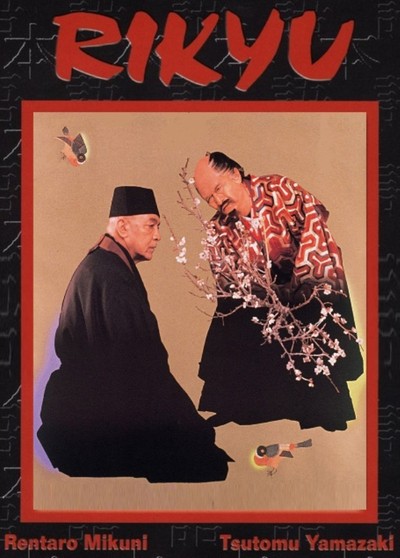
  • Hiroshi Teshigahara – Rikyu (1989)

    1981-1990ArthouseDramaHiroshi Teshigahara

    29f7c043f76a2bde437fd0d52a185152

    Acclaimed director and headmaster of the Sogestsu school of flower arranging Hiroshi Teshigahara helms this elegant historical drama about tea master Sen no Rikyu. A Buddhist priest who talks of the beauty of a single flower or the shape of a hand holding a teacup, Rikyu (played by Rentaro Mikuni) not only perfected the art of the tea ceremony, but he was one of the primary arbiters of taste during his age. That era was a bloody one, culminating in the uniting of Japan’s disparate kingdoms by a series of strong leaders. The most ambitious and the most extravagant was Toyotomi Hideyoshi (Tsutomu Yamazaki), who favored flashy displays of wealth as much as he did violent conquest. Hideyoshi thought of the tea ceremony not as an art but as a show of refinement and power. In 1587 he held a ten-day tea-drinking orgy in Kyoto and Osaka. Hideyoshi chose Rikyu to oversee it and soon the buffoonish, violent leader and the reserved master were engaged in a thinly veiled clash of wills. Rikyu eventually does teach Hideyoshi that beauty is found in the minute. Yet when Hideyoshi receives both guns and a globe from Portuguese missionaries, he is overwhelmed with Napoleonic visions. When Rikyu expresses his reservations about Hideyoshi’s impending invasion of Korea and China, the potentate demands an apology. — Jonathan Crow allmovie.comRead More »

  • Stephen Dunn – Closet Monster (2015)

    2011-2020ArthouseCanadaDramaStephen Dunn

    Quote:
    A creative and driven teenager is desperate to escape his hometown and the haunting memories of his turbulent childhood.Read More »

  • Jerzy Skolimowski – Walkower AKA Walkover (1965)

    1961-1970ArthouseDramaJerzy SkolimowskiPoland

    29f7c043f76a2bde437fd0d52a185152

    Quote:
    Jerzy Skolimowski’s second feature (and first full-length narrative) cemented his status as a one-man Polish New Wave, with the rhythms of his films influenced as much by jazz and (his own) poetry as by more conventional storytelling. Skolimowski himself plays a dropout-turned-amateur boxer who’s distracted from his bouts when Teresa (Aleksandra Zawieruszanka), an old university friend, re-enters his life.Read More »

  • Krzysztof Zanussi – Iluminacja AKA Illumination (1973)

    1971-1980ArthouseDramaKrzysztof ZanussiPoland

    29f7c043f76a2bde437fd0d52a185152

    Quote:
    Unanimous winner of all three main prizes at the 1973 Locarno International Film Festival, Zanussi’s landmark film is a dazzling kaleidoscope of ideas and images. Illumination explores the life of a selfabsorbed young physicist trying to understand his place in the universe. He thinks science will provide the answers, but ultimately learns far more about himself through experiencing love, betrayal, loss, and facing his own mortality. As much a philosophical essay as a narrative feature, Illumination is a cinematic mosaic combining art and science, intellect and emotion. Innovatively structured, this unflinching examination of one man’s life became an iconic cultural marker for a whole generation.Read More »

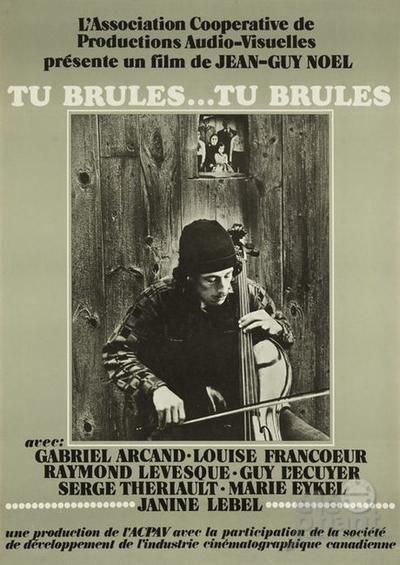
  • Jean-Guy Noël – Tu brûles… tu brûles… AKA You’re Hot… You’re Hot… (1973)

    1971-1980ArthouseCanadaDocumentaryJean-Guy Noël

    A dropout gets the margins of society and resists his father’s pressure to return to the bosom of the village. The film transcends anecdote by diving into a wacky and unusual universe, full of fantasy, imagination, and visual and sound gags.Read More »

  • Jean-Luc Godard & Jean-Pierre Gorin – Tout va bien AKA Everything’s All Right [+extras] (1972)

    Arthouse1971-1980FranceJean-Luc GodardJean-Pierre GorinPoliticsThe Films of May '68

    The film centers on a strike at a sausage factory which is witnessed by an American reporter and her French husband, who is a director of TV commercials. The film has a strong political message which outlines the logic of the class struggle in France in the wake of the May 1968 civil unrest. It also examines the social destruction caused by capitalism. The performers in Tout va bien employ the Brechtian technique of distancing themselves from the audience. By delivering an opaque performance, the actors draw the audience away from the film’s diegesis and towards broader inferences about the film’s meaning.Read More »

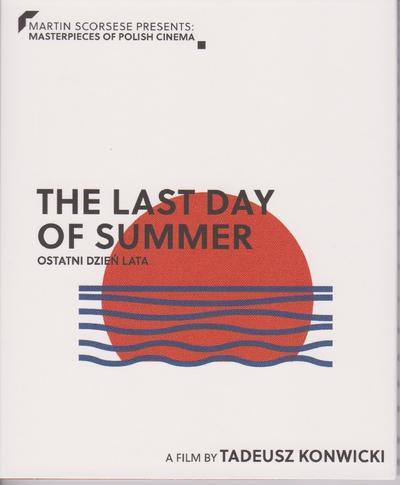
  • Tadeusz Konwicki – Ostatni dzien lata AKA The Last Day of Summer (1958)

    1951-1960ArthouseDramaPolandTadeusz Konwicki

    29f7c043f76a2bde437fd0d52a185152

    Quote:
    There is something vaguely mythical to the manner in which Konwicki introduces his characters, both to us and to each other, lapped as much by the ethereal eeriness of the score as by the seaside winds that send their hair aflutter. When they tend to speak to each other in whispers, it seems almost out of respect for the otherworldly aura of their locale, as though it is to their eyes as improbably beautiful as Konwicki’s camera renders it to us. They—referred to in the credits only as “He” and “She”, mysterious and mythical in themselves—do not whisper much; there’s a clear silent heritage at work here, conferring meaning to the motion of faces and the movement of the camera along this spectral shore.Read More »

  • João Nicolau – John From (2015)

    2011-2020ArthouseFantasyJoão NicolauPortugal

    29f7c043f76a2bde437fd0d52a185152

    Quote:
    Rita has it all. She is 15 years old and the summer is ahead of her. She floods the balcony floor and splashes about while soaking up the mighty sun. She has an ex-future boyfriend and an ever-present best friend. She braids her hair and goes to parties.
    Naturally, from Portugal to the South Pacific, this whole fortress gently falls apart when Rita visits the exhibition put on by a new neighbour in the local community center.Read More »

  • Jerzy Kawalerowicz – Austeria AKA The Inn (1982)

    1981-1990ArthouseDramaJerzy KawalerowiczPoland

    29f7c043f76a2bde437fd0d52a185152

    Quote:
    Austeria takes place during the opening days of World War I, in the Austro-Hungarian province of Galicia. Tag (Franciszek Pieczka) is a Jewish innkeeper whose inn (austeria means inn in the local Polish dialect) is located near the border with Russia. War has broken out and local civilians are fleeing the advancing Russian Army, and several groups of refugees have taken shelter in Tag’s inn for the night. A group of Hassidic jews from the neighboring village arrive, followed by an Austrian baroness on and a Hungarian hussar cut off from his unit…Read More »

Back to top button