Nesrin, an urban upper-middle class woman, goes back to her parents’ old village in Anatolia to finish a novel and live out her dream of being a writer. When her conservative mother turns up uninvited and refuses to leave, Nesrin’s writing stalls and her fantasies of village life turn bitter. The two woman are forced to confront the darker corners of each other’s inner worlds.
– Written by Adam Isenberg Read More »
Arthouse
-
Senem Tüzen – Ana Yurdu (2015)
2011-2020ArthouseDramaSenem TüzenTurkey -
Kidlat Tahimik – Mababangong bangungot aka Perfumed Nightmare (1977)
1971-1980ArthouseExperimentalKidlat TahimikPhilippinesQuote:
Upon first glance, Perfumed Nightmare looks amateurish and raw. It is, too, I suppose, but this works to the film’s advantage. This is the semiautobiographical story of a young Filipino man (played by writer/director Kidlat Tahimik) who worships everything about America. He is especially caught up in the space program: he wants to visit Cape Canaveral, and he is the president and founder of his small (300 people) village’s Werner Von Braun fan club. This might just be the only fan club in the world that worships the Bavarian expatriate who is regarded as the father of rocketry. He and his club members have ice cream sales to fund their activities, which include sponsoring the Miss Philippenes pageant.Read More » -
Béla Tarr – A Torinói ló AKA The Turin Horse (2011) (HD)
2011-2020ArthouseBéla TarrDramaHungarySYNOPSIS:
1889.
German philosopher Friedrich Nietzsche witnessed the whipping of a horse while travelling in Turin, Italy. He tossed his arms around the horse’s neck to protect it then collapsed to the ground. In less than one month, Nietzsche would be diagnosed with a serious mental illness that would make him bed-ridden and speechless for the next eleven years until his death. But whatever did happen to the horse? This film, which is Tarr’s last, follows up this question in a fictionalized story of what occurred. The man who whipped the horse is a rural farmer who makes his living taking on carting jobs into the city with his horse-drawn cart. The horse is old and in very poor health, but does its best to obey its master’s commands. The farmer and his daughter must come to the understanding that it will be unable to go on sustaining their livelihoods. The dying of the horse is the foundation of this tragic tale.Read More » -
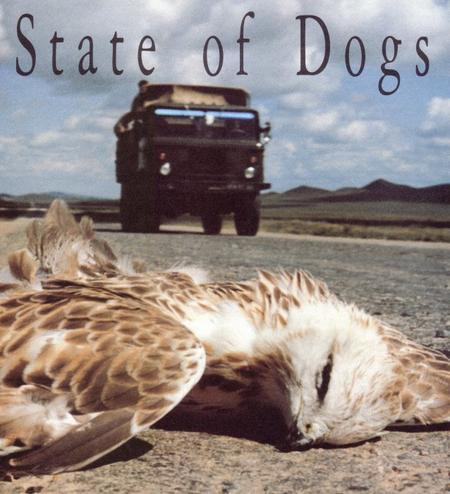
Peter Brosens & Dorjkhandyn Turmunkh – State of Dogs (1998)
1991-2000ArthouseBelgiumDocumentaryPeter Brosens and Dorjkhandyn TurmunkhA cinematic poem based on the Mongolian belief that when dogs die, they are reborn as humans. At least, that’s what humans say. What do dogs think? The film introduces us to Baasar, a stray dog, before and after his death… Documentary or fiction? The pictures and sound are derived from reality, so surely it must be a documentary, but a particularly philosophical and poetic one. Not only does this film offer a lively, inspired commentary on the issue of stray animals in the urban environment, it invites us to contemplate the mystery of life and the complexity of reality. A universal parable on destiny, illustrated by Mongolian folklore.Read More »
-
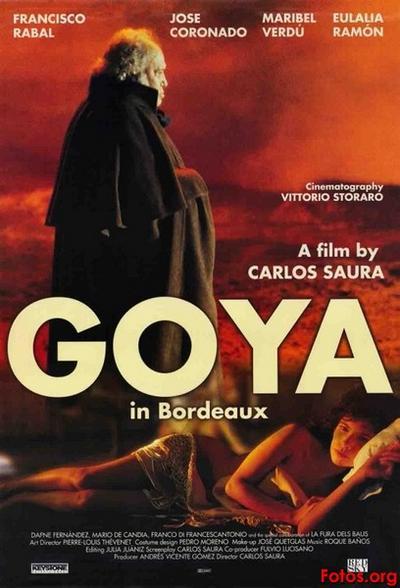
Carlos Saura – Goya en Burdeos AKA Goya in Bordeaux (1999)
1991-2000ArthouseCarlos SauraDramaSpainPlot:
Francisco Goya (1746-1828), deaf and ill, lives the last years of his life in voluntary exile in Bordeaux, a Liberal protesting the oppressive rule of Ferdinand VII. He’s living with his much younger wife Leocadia and their daughter Rosario. He continues to paint at night, and in flashbacks stirred by conversations with his daughter, by awful headaches, and by the befuddlement of age, he relives key times in his life, particularly his relationship with the Duchess of Alba, his discovery of how he wanted to paint (insight provided by Velázquez’s work), and his lifelong celebration of the imagination. Throughout, his reveries become tableaux of his paintings.Read More » -
Raoul Ruiz – Ce jour-là AKA That Day (2003)
2001-2010ArthouseFranceRaoul RuizThrillerQuote:
Auspiciously set in the nebulous and indeterminate milieu of “Switzerland, in the near future”, Raoul Ruiz’s eccentric, surreal fable opens to the shot of an abstracted and dotty young woman named Livia (Elsa Zylberstein) sitting on a park bench overlooking a fog obscured dirt road that is curiously located near the entrance of the San Michelle mental health institution. While jotting down a series of random, fleeting thoughts into her journal, she meets a cyclist who is abruptly thrown from his bicycle and, convinced that he is an angel (since, as her idiosyncratic theory goes, all angels on earth have fallen), proceeds to explain that tomorrow is destined to be the best day of her life, or rather – as she corrects herself – the most important day, which she comes to realize is not the same thing. Soon after the encounter, Livia is whisked away by her faithful and devoted servant Treffle (Jean-François Balmer) and brought home to the family’s country estate where a crowd of snide and unscrupulously calculating relatives amass near the front steps awaiting her father, Harald’s (Michel Piccoli) return home to celebrate his birthday.Read More » -
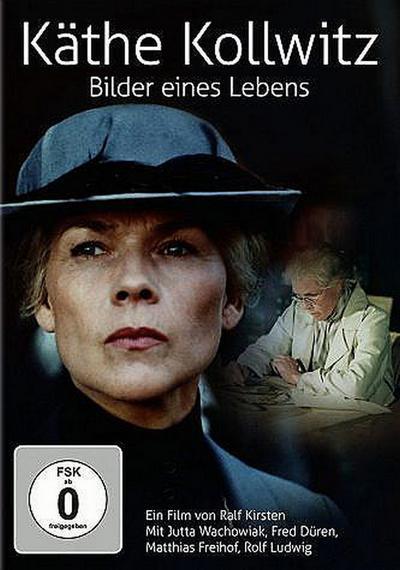
Ralf Kirsten – Käthe Kollwitz (1986)
1981-1990ArthouseDramaGermanyRalf KirstenOne dramatic event marked the life of the great German artist in particular. At the beginning of the First World War she was already world famous for her etchings, lithographs, carvings and drawings. To her horror, her youngest son, Peter, volunteered to go to war. Within a few weeks she received the dreadful news Peter fell in Flanders. Käthe Kollwitz, who had always sided with the common people, became a committed pacifist and even a socialist. She lived with her husband, a doctor to the poor, in the Berlin working-class quarter of Prenzlauer Berg, where a central square is now named after her. The bloody end of the November Revolution destroyed her hope for swift improvements in living conditions, but strengthened her convictions. The excellently cast DEFA film shows impressive images from the life of a woman who was later to be a vehement foe of National Socialism and whose work still impresses the world today.Read More »
-
Jennifer Montgomery – Art for Teachers of Children (1995)
1991-2000ArthouseDramaJennifer MontgomeryUSASynopsis:
Jennifer, an intelligent but insecure 14-year-old student at a boarding school, seduces her married dormitory counselor, a photographer who has offered to teach her about his art and winds up shooting her in the nude. She is naive, and he manipulates her into an affair that eventually is discovered. Years later, as the photographer is being investigated by the FBI, the adult woman remembers her first love as a case of herself watching the artist who watched her.Read More » -
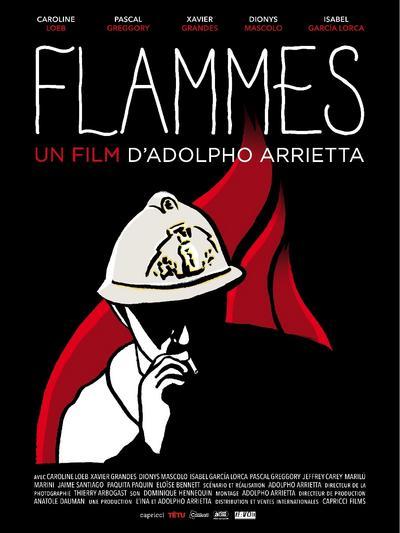
Adolfo Arrieta – Flammes (1978)
1971-1980Adolfo ArrietaArthouseComedyFranceQuote:
Synopsis: A girl’s obsession with firemen causes her to start a fire at her own home in order to trap a fireman in her room. The film features the last onscreen performance by Dionys Mascolo (writer, political activist, known for his voiceover in India Song and for his love affair with Marguerite Duras) and one of the earliest appearances of Pascal Greggory.Read More »