Arthouse

  • Parviz Kimiavi – Mogholha AKA The mongols (coloured version) (1973)

    1971-1980ArthouseIranParviz Kimiavi

    29f7c043f76a2bde437fd0d52a185152

    From IMDB:
    A director of a television series on the history of cinema, who has been grappling with the screenplay of his first feature film, receives an assignment to oversee the installation of a television relay station in a remote region of Zahedan province, near the Afghanistan border. He has already hired Turkoman tribespeople for his film and selected his filming location. Meanwhile his wife, who is working on her Ph.D. dissertation about the Mongol invasion of Iran, attempts to dissuade him from accepting the assignment. One night, while working on his history of the cinema series, the director fantasizes a diagetic world that consists of clever juxtapositions of his different worlds: the history of cinema, the history of the mongol invasion, his own film idea and his imminent assignment to the desert.Read More »

  • Adrian Sitaru – Ilegitim AKA Illegitimate (2016)

    2011-2020Adrian SitaruArthouseDramaRomania

    29f7c043f76a2bde437fd0d52a185152

    Synopsis
    Two siblings and an illegitimate love. A father who’s a doctor and several accusations. A family in which no one ever drew a line between what’s moral and what’s legal. Not even when it comes to abortion.
    IMDb.comRead More »

  • Rainer Werner Fassbinder – Fontane Effi Briest (1974)

    1971-1980ArthouseDramaGermanyRainer Werner Fassbinder

    29f7c043f76a2bde437fd0d52a185152

    Quote:
    It’s a non-traditional black and white film based on the 1894 novel by Theodor Fontane. It’s for an audience that is more aware and welcomes something addressed to the intellect, rather than the way the average casual moviegoer sees a film expecting a story handed to him on a silver platter with a beginning, a middle and an end (usually a happy ending). This is not a film for the casual moviegoer or the critic chasing down blockbusters. Director-writer Rainer Werner Fassbinder has said “It’s a film that really only works in the German language.” What makes the film so difficult for an outsider, is that much of Fontane is nuanced only for the German and therefore someone unfamiliar with the finer cultural points or historical facts will have a tough time of it. Fassbinder based the film on the parts of the novel by Theodor Fontane he agreed with (discarding the parts of the book he disagreed with) and did not make it into a topic about a woman as the title would suggest (a debate grew between the film’s star Hanna Schygulla, who wanted to play it as a story about the titular character; thankfully she couldn’t budge Fassbinder off his intended aim to keep it as a societal moral play and as a result we have a film that is full of conviction and as faithful to a book as you can possibly be).Read More »

  • Sergei Parajanov – Tini Zabutykh Predkiv AKA Shadows of Forgotten Ancestors (1965)

    Drama1981-1990ArthouseSergei ParajanovUSSR

    29f7c043f76a2bde437fd0d52a185152

    Quote:
    Shadows of Forgotten Ancestors has often been described as a Carpathian Romeo and Juliet – that is, if Romeo had the tenacity to live after his beloved’s death. Sergei Paradjanov prefaces the tragic tale set in the Carpathian mountains as the land “forgotten by God and men”, and from the austerity of the environment, it is evident that survival comes at a high price. In essence, the story is incidental to the observations of daily peasant life: the Orthodox order of mass, the rites of spring, the rhythm of the sickle cutting the fields. A young man, Ivan (Ivan Nikolaichuk), falls in love with Marichka (Larisa Kadochnikova), the daughter of the man who killed his father. As his mother’s only surviving child, he leaves the village to work as a hired laborer to provide for her. However, before he can return to Marichka, she falls to her death in an attempt to rescue an errant lamb. The story then follows Ivan through his descent into despair, marriage to the sensual Palagna (Tatyana Bestayeva), and Palagna’s inevitable betrayal.Read More »

  • Roberto Rossellini – Viaggio in Italia AKA Journey to Italy [+ Extras] (1954)

    1951-1960ArthouseDramaItalian Neo-RealismItalyRoberto Rossellini

    29f7c043f76a2bde437fd0d52a185152

    Quote:
    Among the most influential films of the postwar era, Roberto Rossellini’s Journey to Italy (Viaggio in Italia) charts the declining marriage of a couple from England (Ingrid Bergman and George Sanders) on a trip in the countryside near Naples. More than just the anatomy of a relationship, Rossellini’s masterpiece is a heartrending work of emotion and spirituality. Considered a predecessor to the existentialist works of Michelangelo Antonioni and hailed as a groundbreaking modernist work by the legendary film journal Cahiers du cinéma, Journey to Italy is a breathtaking cinematic benchmark.Read More »

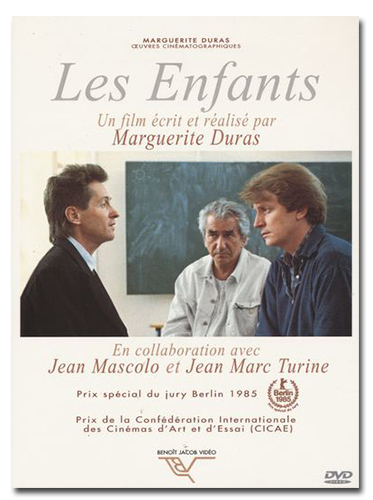
  • Marguerite Duras – Les Enfants aka The Children (1984)

    1981-1990ArthouseComedyFranceMarguerite Duras

    29f7c043f76a2bde437fd0d52a185152

    A sort of philosophical comedy written and directed by Marguerite Duras (with Jean Mascolo and Jean-Marc Turine), starring Axel Bogousslavsky, Daniel Gélin, Tatiana Moukhine, Martine Chevallier, André Dussollier and Pierre Arditi.Read More »

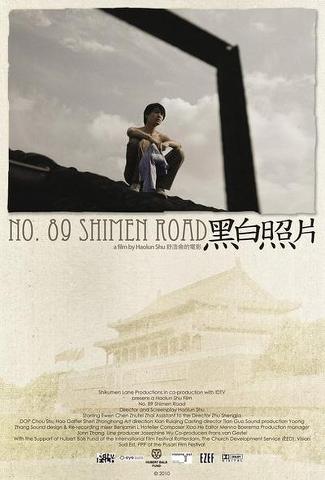
  • Haolun Shu – No. 89 Shimen Road [+Extra] (2010)

    2001-2010ArthouseChinaDramaHaolun Shu

    29f7c043f76a2bde437fd0d52a185152

    Quote:
    In the late 1980’s Shanghai, a 16 year-old boy, Xiaoli, comes of age surrounded by his neighbors and grandfather. His best friend is a girl named Lanmi, a couple years older than him. But Lanmi slowly drifts away from him, lured by the new opportunities which come as China opens up to foreign goods and businessmen. At the same time, the 1989 events force Xiaoli to grow up and to let go of his teenage dreams. A film that poignantly depicts the struggle of a country confronted with a new order. It is also a personal and touching view of a world that no longer exist.Read More »

  • Miklós Jancsó – Szörnyek évadja AKA Season of Monsters (1987)

    1981-1990ArthouseDramaHungaryMiklós Jancsó

    29f7c043f76a2bde437fd0d52a185152

    Zoltai (Andras Balint) is a Hungarian professor who returns home after a visit to the United States. Following a television interview, he commits suicide and leaves a note for his longtime friend Dr. Bardocz (Gyorgy Cserhalmi).The doctor and Zoltai’s colleague Komindi (Jozsef Madaras) join the police in investigating what drove the man to suicide in this surrealistic drama.Read More »

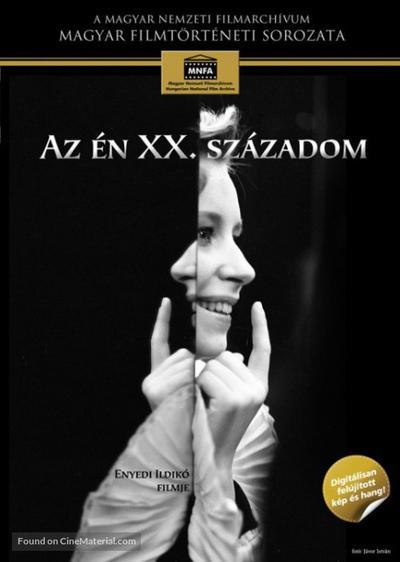
  • Ildikó Enyedi – Az én XX. századom AKA My Twentieth Century [+extra] (1989)

    1981-1990ArthouseDramaHungaryIldikó Enyedi

    29f7c043f76a2bde437fd0d52a185152

    Synopsis:
    Dorothy Segda essays three roles in the Hungarian-made My 20th Century. The film begins with the birth of twin girls to a Budapest mother (Dorothy Segda) in 1880. Orphaned early on, the girls are forced to sell matches on the streets until both are adopted by two separate families. Flash forward to 1900: Having lost track of one another, the grown-up twins take separate compartments on the Orient Express. One of the girls (Segda again) has become the pampered mistress of a wealthy man; the other (Segda yet again) is a bomb-wielding anarchist. Director Ildiko Enyedi evidently intended My 20th Century as an allegorical statement concerning the status of women in the modern mechanical age. The experiences of the twins are interspersed with shots of Thomas Edison (Peter Andorai), whom we see at the beginning of the film perfecting his incandescent light bulb on the very day that the sisters are born. The more technological advances made by Edison, the more confused the twins become in establishing their own roles in an advancing civilization. Adroitly avoiding cut-and-dried symbolism, Ildiko Enyedi keeps the audience wondering what she’s up to by including such surrealistic vignettes as a caged chimpanzee recounting the day of his capture!Read More »

Back to top button