Directors Sergei Paradzhanov and Dodo Abashidze resurrected an old Soviet Georgian folktale as the basis for their film The Legend of Suram Fortress. The fortress in question is forever under construction, and forever collapsing before the last brick can be laid. The advice of a fortuneteller is sought out; the young fellow sent out to seek this advice happens to be the son of a man who years earlier had jilted the fortuneteller. Out of pique, she tells him that he must be walled up in the fortress’ wall, else the structure will continue to tumble. So many ancient legends are based upon self-sacrifice that one would think that Legend of Suram Fortress would have nothing new to offer–and one would be quite unfair to this well-crafted film to think along those lines. Never as brilliant as the critics made it out to be, Suram Fortress is still an immensely satisfying work from a gifted filmmaking team. ~ Hal Erickson, RoviRead More »
Arthouse
-
Sergei Parajanov & Dodo Abashidze – Ambavi Suramis tsikhitsa AKA The Legend of the Suram Fortress (1985)
1981-1990ArthouseFantasySergei ParajanovSergei Parajanov and Dodo AbashidzeUSSR -
Daniel Pommereulle – Vite (1969)
1961-1970ArthouseDaniel PommereulleExperimentalFranceThe Films of May '68In 1969, the painter-sculptor Daniel Pommereulle made his third film, this one financed by Sylvina Boissonnas. Although only a short, Vite was one of the most costly of all the Zanzibar productions. It features, for instance, shots of the moon taken by a state-of-the-art telescope, the Questar, that Pommereulle first saw while visiting Marlon Brando in southern California in 1968. In Rohmer’s La Collectionneuse, Pommereulle and his friend Adrien philosophize on how best to achieve le vide (emptiness) during their summer holidays. Three years later, Pommereulle would transform the word “vide” to “vite” (quickly), signifying his profound disenchantment with the aftermath of the revolution of May ’68. —Harvard Film ArchiveRead More »
-
Serge Bard – Détruisez-vous AKA Destroy Yourselves (1969)
1961-1970ArthouseExperimentalFranceSerge BardThe Films of May '68Synopsis:
The first Zanzibar film, Détruisez-vous takes its title from an oft-repeated ’68 slogan (“Aidez-nous, détruisez-vous”) and its lead from Godard’s La Chinoise, Warhol’s Factory, and the French Revolution. A drop-out from Nanterre University, Serge Bard returned to the school to shoot his film in April ’68, just a month before the student protests erupted. Incidentally, Anne Wiazemsky, who stars in La Chinoise, was also a student at Nanterre at that time. Bard’s muse, the English fashion model Caroline de Bendern, plays a confused member of an agit-prop cell led by Alain Jouffroy, cast as a professor proselytizing revolution to a near empty classroom. Juliet Berto, who also appears in La Chinoise, is another member of the cadre but offers no sisterly love to de Bendern, who grows increasingly uncertain and fragile in light of all the militancy. Read More » -
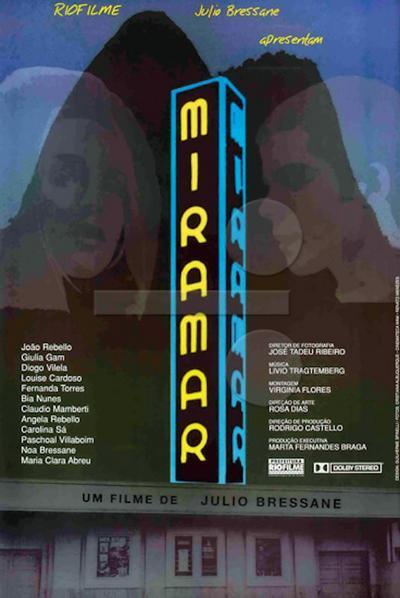
Júlio Bressane – Miramar (1997)
1991-2000ArthouseBrazilJúlio BressaneMusicalqUOTE:
Story with some autobiographical touches taken from director’s life. Miramar is a teenager raised by his parents to be an artist. But a tragedy occurs in his life: both his parents commit suicide. He then discovers the movies, and dreams of being a director.Read More » -
Dalibor Matanic – 100 minuta slave AKA 100 Minutes of Glory (2004)
2001-2010ArthouseCroatiaDalibor MatanicDramaQuote:
The tragic life of Slava Raškaj, a turn-of-the-century painter born deaf and mute who is viewed as a kind of Croatian Frida Kahlo, is sketched in “100 Minutes of Glory.” Young helmer Dalibor Matanić (“Fine Dead Girls”) adopts a suitably avant-garde, quasi-surrealist style that injects a large amount of visual interest in this tale of a rebellious-but-doomed woman, while Raškaj’s affair with fellow artist Bela Čikoš structures the narrative nicely. Last half hour, however, spins off in superfluous threads about Čikoš that leave the feeling the film is far too long and cripple things for general audiences.Read More » -
Gábor Bódy – Amerikai anzix AKA American Torso (1975)
1971-1980ArthouseExperimentalGábor BódyHungaryThe experimental film takes place in North-Caroline. In the last days of the American civil war three characteristic figures of the 1849 Hungarian emigration fight: the geographer artillery officer Fiala János, the rational scientist, Vereczky Ádám, the heroic fatalist and the attendant of Fiala: the emotional Boldogh, who struggles with homesickness. The fate of all the “”slowed down”” revolutionaries is hopeless. The boasting Vereczky dies a meaningless death on a huge swing which he was able to survey with the theodolite. Boldogh longs for home, maybe to die, while there is only one possibility for Fiala: he can participate in the construction works of the Pacific railway.Read More »
-
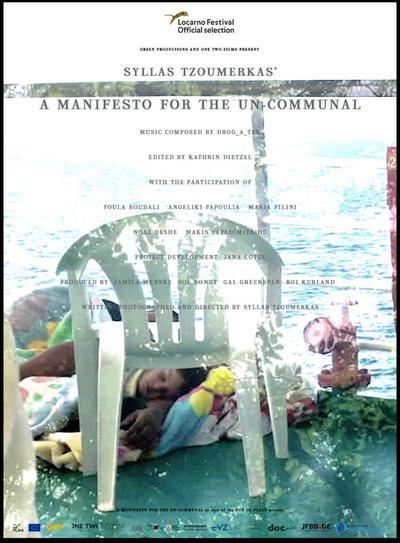
Syllas Tzoumerkas – A Manifesto for the Un-communal (2017)
2011-2020ArthouseGreeceShort FilmSyllas TzoumerkasSynopsis wrote:
A MANIFESTO FOR THE UN-COMMUNAL is a poem, a documentary, a video diary and a propaganda piece in praise of the outlandishly living.Shot in Germany, Israel, Greece and Denmark, A MANIFESTO FOR THE UN-COMMUNAL is the convergence of the voices, the stories and the living landscapes of seven+ characters that live against the warming comfort of the self-righteousness of their herd. People undefined by their class, undefined by their education, revolting against any sense of state or non-state, polyglottes and polyfucked, traitors, un-marginalized and always out of the margin. Or, as Homer would put it, “the Lawless, those without Hearth or Clan” (Iliad, 9.63).Read More »
-
Andrzej Zulawski – Trzecia czesc nocy AKA The Third Part of The Night (1971)
1971-1980Andrzej ZulawskiArthouseDramaPolandQuote:
A short excerpt from the Booklet essay by Daniel BirdTrzecia część nocy (The Third Part of the Night, 1971) is a film by Andrzej Żuławski, the enfant terrible of Polish Cinema. It is also a film about the Polish experience, but one made by a filmmaker too young to remember the War. It was made in 1971, before the so-called Polish cinema of moral concern of Holland, Kieslowski and Zanussi. It is based (in part) on the life of Żuławski s father, Miroslaw, during the Second World War. It is perhaps the first (and probably the last) film about Weigl Institute in Lwow. But above all else, it is the debut film of one of cinema s true visionaries.Read More »
-
Apostolos C. Doxiadis – Terirem (1987)
1981-1990Apostolos C. DoxiadisArthouseDramaGreeceΤεριρέμ
The mute wife (Olia Lazaridou) of a shadow-theater player (Antonis Kafetzopoulos) is suffering from cancer. An old woman, guided by her visions, discovers a Byzantine religious icon buried in a field. Her nephew sells the find to a thief, who then murders the old woman, without knowing that she had told the village priest about the holy icon she found. Two priests arrive in the village together with the puppeteer and his ailing wife, and there the wife sees a vision of the icon and where it was located in the field, which leads to the discovery of the bones of a saint. The wife sleeps on the spot where the holy relics were discovered and, upon awaking the following morning, regains her speech. Read More »