Arthouse

  • Rainer Werner Fassbinder – Acht Stunden sind kein Tag AKA Eight Hours Don’t Make a Day (1972)

    Drama1971-1980ArthouseGermanyRainer Werner Fassbinder

    Stories about workers determined to use their own initiative

    On October 29, 1972, the first part of Fassbinder’s five-part family series flickered across West German TV screens. Over the next months, the public broadcaster ARD showed all five episodes, in each case on a Saturday evening in the prime-time slot: I. Jochen and Marion, (October 29, 1972), II. Grandma and Gregor (December 17, 1972), III. Franz and Ernst (January 2, 1973), IV. Harald and Monika (February 18, 1973), and V. Irmgard and Rolf (March 18, 1973). Ratings during this time ranged between 45 and 60%, figures comparable with those for the broadcaster’s top-rating crime series TATORT.Read More »
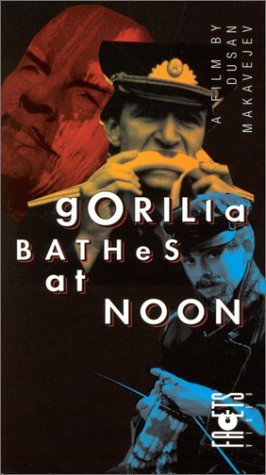
  • Dusan Makavejev – Gorilla Bathes at Noon (1993)

    1991-2000ArthouseComedyDusan MakavejevGermany

    29f7c043f76a2bde437fd0d52a185152

    A Russian Expatriate Adrift in Berlin
    The most striking image in “Gorilla Bathes at Noon,” Dusan Makavejev’s whimsical cinematic collage set in present-day Berlin, is a gigantic statue of Lenin that stands as a ludicrous anachronism in the post-Communist era. In one of the film’s zanier scenes, Victor Borisovich (Svetozar Cvetkovic), an expatriate Russian soldier and the film’s main character, impulsively hoists himself on ropes to the statue’s head to wash its face. Moments later, the police arrive and ensnare him in a net from which he protests, “Ich bin ein Berliner!”

    Not long afterward, workers begin detaching the head of the statue from its body. Lifted by crane, the severed head is lowered slowly onto a flatbed truck and carted off through the streets of Berlin. So much for Communism and kitsch monuments exalting its heroes.
    Read More »

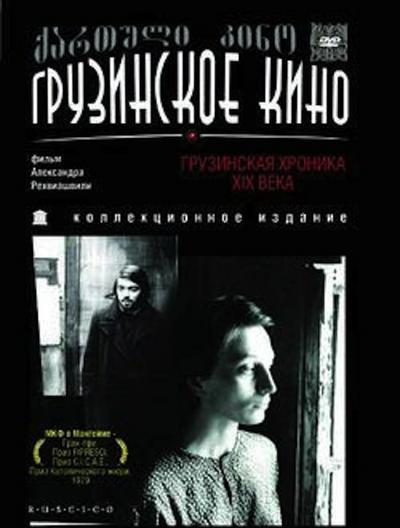
  • Aleqsandre Rekhviashvili – XIX saukunis qartuli qronika AKA The 19th Century Georgian Chronicle (1979)

    1971-1980Aleqsandre RekhviashviliArthouseDramaGeorgia

    29f7c043f76a2bde437fd0d52a185152

    The debut film by Alexander Rekhviashvili, one of the leaders of the new wave’s first flow, Georgian Chronicle of the 19th Century (Gruzinskaya hronika XIX veka, 1979), places us in a Kafkaesque city where a lonely student goes through all the circles of bureaucratic hell to help the peasants of his home village win back their land from bourgeois industrialists. The distorted urban sets in the Chronicle remind one of German expressionism and Caligari. The horrifyingly circular structure of the narrative, the morose suspense of the slow-paced action, the atmosphere of silent torture in a vacuum, bring to mind Orson Welles’s The Trial. The long sequence in the forest where two assassins chase the student and finally eliminate him, leaving the rest of the film without a hero, is obviously influenced by Kurosawa’s Rashomon. What is harder to find in Georgian Chronicle is the influence of Rekhviashvili’s native predecessors in the Georgian school.Read More »

  • Vladimir Carvalho – O País de São Saruê AKA The Land Of São Saruê & 3 shorts (1971)

    1971-1980ArthouseBrazilDocumentaryVladimir Carvalho

    O País de São Saruê (1971)

    Plot Outline: Documentary about a region in Northeast Brazil, situated in an area subject to severe drought, and the evolution of its economic activities.Read More »

  • Sergei Parajanov & Dodo Abashidze – Ashug-Karibi aka The Hoary Legends of the Caucasus (1988)

    Drama1981-1990ArthouseDodo AbashidzeGeorgiaSergei ParajanovUSSR

    Synopsis:
    Wandering minstrel Ashik Kerib falls in love with a rich merchant’s daughter, but is spurned by her father and forced to roam the world for a thousand and one nights – but not before he’s got the daughter to promise not to marry till his return. It’s told in typical Paradjanov style, in a series of visually ravishing ‘tableaux vivants’ overlaid with Turkish and Azerbaijani folksongs.Read More »

  • F.J. Ossang – Le Trésor des Iles Chiennes AKA Land of the Dead [+Extra] (1990)

    1981-1990ArthouseF.J. OssangFranceSci-Fi

    Quote:
    The world after the atomic age. An engineer disappears, together with his consortium (Kryo’Corp) and his discovery: a new energy source powered by the fusion of two primary substances. Ulysses, Kryo’Corp’s heir, organises an expedition to the only place these substances occur.Read More »

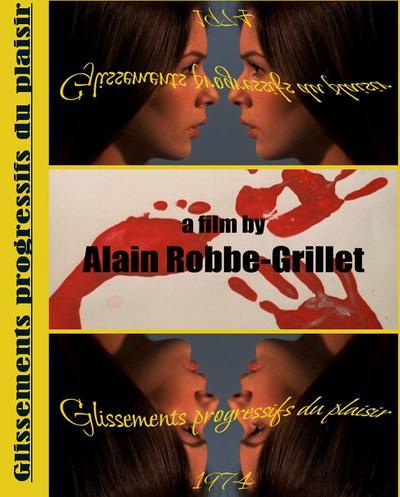
  • Alain Robbe-Grillet – Glissements progressifs du plaisir AKA Successive Slidings of Pleasure (1974)

    1971-1980Alain Robbe-GrilletArthouseFrance

    29f7c043f76a2bde437fd0d52a185152

    Quote:
    When you think of art house directors you probably think of some of the more famous filmmakers like Werner Herzog (Aguirre, the Wrath of God), Peter Greenaway (The Cook, the Thief, His Wife & Her Lover) or Alejandro Jodorowsky (Holy Mountain). Someone you may not know is French writer and filmmaker Alain Robbe-Grillet. Robbe-Grillet was part of the “nouveau roman” novelist movement which diverted from the classical style of writing and deviated from the norm with experimental prose. The same could be said with his film Glissements progressifs du plaisir (literal translation is “Gradual shifts of pleasure”) aka Successive Slidings of Pleasure where he blends dreamlike visuals with eroticism and, oddly, nunsploitation.Read More »

  • Özer Kiziltan – Takva aka A Man’s Fear Of God (2006)

    2001-2010ArthouseDramaÖzer KiziltanTurkey

    29f7c043f76a2bde437fd0d52a185152

    A man’s fight between his religious beliefes and his instincts and desires. The atmosphere during the religious ceremonies makes a thrilling contrast to the priest’s everydays somehow dirty business in Istanbul where all is only about money. For the viewer these contrasts are sometimes amusing and sometimes shocking. The not-too-bright main character Muharrem is played by the fantastic Erkan Can. The director manages to show Muharrem’s troubled emotions in fantastic pictures. In one of my favourite scenes Muharrem is almost haunted by display mannequins wearing sexy lingerie while he is on duty for his brotherhood.
    –totorochiRead More »

  • Hsiao-Hsien Hou – Feng er ti ta cai AKA Play While you Play AKA Cheerful Wind (1981)

    1981-1990ArthouseAsianHsiao-hsien HouTaiwan

    The pop-star leads from Hou’s first feature, Cute Girl, are reunited in the director’s follow-up, a brisk work of bubble-gum romance that begins to experiment with the rules of the genre. This time, Taiwanese singing sensation Feng Fei-fei plays Hsing-hui, a trendy photographer visiting a seaside village in Penghu with her successful boss/fiancé. When she happens upon a flute-playing medic blinded in an ambulance crash (Kenny Bee), sparks fly, songs are sung, and she’s left with the tough decision of who to say “I do” to. Despite the eye-rolling premise, Hou infuses the film with enough formal ingenuity (long takes, telephoto lenses, on-location shooting) that a case can be made for its auteurial significance.Read More »

Back to top button