Synopsis:
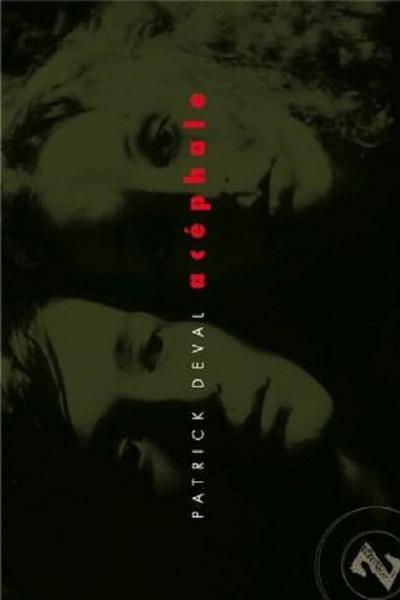
With its title taken from Georges Bataille’s journal Acéphale (literally, a headless man, but figuratively expressing the need to go beyond rational ways of thinking), Deval’s film is the most literary of the Zanzibar works. The film opens with an illustrative image: a head in the process of being shaved, in close up. This image is accompanied not by the sound of an electric razor but an electric saw, suggesting the need to achieve a tabula rasa by radical means. The story follows the adventures of a young man and his friends as they wander through a barely recognizable post–May 1968 Paris. In documenting the by-gone expressions and gestures of the ’68 generation in France, Acéphale becomes something of an anthropological film that reveals the rites and beliefs of the ideological novitiates.Read More »
Arthouse
-
Patrick Deval – Acéphale (1969)
1961-1970ArthouseExperimentalFrancePatrick DevalThe Films of May '68 -
Jean-Pierre Melville – Léon Morin, prêtre (1961) (HD)
1961-1970ArthouseDramaFranceJean-Pierre MelvilleJean-Paul Belmondo delivers a subtly sensual performance in the hot-under-the-collar Léon Morin, Priest (Léon Morin, prêtre), directed by Jean-Pierre Melville. The French superstar plays a devoted man of the cloth who is desired by all the women of a small village in Nazi-occupied France. He finds himself most drawn to a sexually frustrated widow—played by Emmanuelle Riva—a religious skeptic whose relationship with her confessor turns into a confrontation with both God and her own repressed desire. A triumph of mood, setting, and innuendo, Léon Morin, Priest is an irreverent pleasure from one of French cinema’s towering virtuosos. (Criterion)Read More »
-
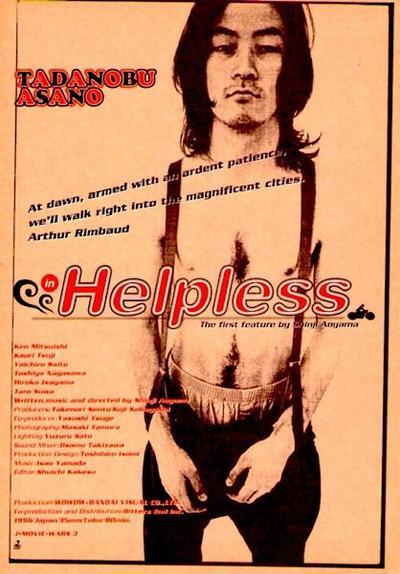
Shinji Aoyama – Helpless (1996)
1991-2000ArthouseDramaJapanShinji AoyamaYasuo is a gangster just released from jail. Believing his boss double-crossed him, enraged Yasuo is on his way to find the boss. But before setting out for the dangerous trip, Yasuo asks Kenji to take care of his mentally challenged sister, Yuri, and a mysterious black bag.Read More »
-
André Delvaux – Een vrouw tussen hond en wolf (1979)
Arthouse1971-1980André DelvauxBelgium

Synopsis:
The story of a woman’s love for two young men. Antwerp, 1940. Lieve marries Adriaan, a Flemish idealist who is drawn towards Germany by the occupation to the Eastern Front. She shelters the resistant François in 1942 and discovers with him what love is really about. At the liberation, she’s reunited with a bruised and sentenced Adriaan. In spite of her passion for François, she cannot bring herself to abandon him in these trying circumstances. But she slowly drifts away from her husband, while she senses that François, who is monopolized by his career, is slowly drifting away from her.Read More » -
Peter Delpeut – Diva Dolorosa (1999)
1991-2000ArthouseExperimentalNetherlandsPeter Delpeut
Quote:
“A rarity-packed treat for opera and silent-film buffs!”
– VarietyIn this mesmerizing collage of silent Italian melodrama, found-footage filmmaker Peter Delpeut (Lyrical Nitrate) affectionately captures the spirit of the World War One-era cinema diva. In all-but-lost gems such as La donna nuda (1914), and Tigre reale (1916), superstars such as Lyda Borelli and Pina Menichelli portrayed heroines teetering dangerously between defiant indulgence in sexual passion and hysterical remorse at their own cruelties. Delpeut’s inventive celebration of Black Romanticism is both striking and heartbreaking in its composition —a beautifully woven narrative of tempted fate and self-torment, elegantly guided by Loek Dikker’s original score. Zeitgeist Films is proud to present Delpeut’s stunningly experimental work in all its heaving bosomed, luridly tinted glory.Read More »
-
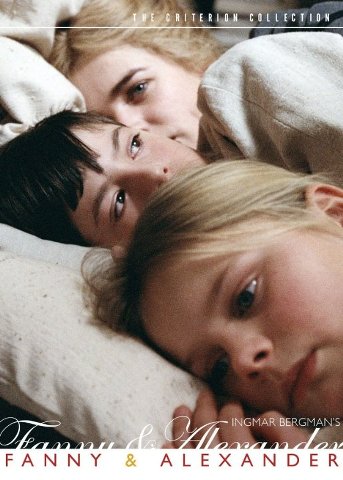
Ingmar Bergman – Fanny och Alexander [Theatrical Version] (1982)
1981-1990ArthouseDramaIngmar BergmanSwedenPlot Synopsis from ALLMOViE:
Though he made allusions to his own life in all of his films, Fanny and Alexander was the first overtly autobiographical film by Ingmar Bergman. Taking his time throughout (188 minutes to be exact), Bergman recreates several episodes from his youth, using as conduits the fictional Ekdahl family. Alexander, the director’s alter ego, is first seen at age 10 at a joyous and informal Christmas gathering of relatives and servants. Fanny is Alexander’s sister; both suffer an emotional shakedown when their recently-widowed mother (Ewa Froling) marries a cold and distant minister. Stripped of their creature comforts and relaxed family atmosphere, Fanny and Alexander suddenly find their childhood unendurable. The kids’ grandmother (Gunn Wallgren) “kidnaps” Fanny and Alexander for the purpose of showering them with the first kindness and affection that they’ve had since their father’s death. This “purge” of the darker elements of Fanny and Alexander’s existence is accomplished at the unintentional (but applaudable) cost of the hated stepfather’s life. Ingmar Bergman insisted that Fanny and Alexander, originally a multipart television series pared down to feature-film length, represented his final film, though within a year after its release he was busy with several additional Swedish TV projects, and he returned to make one more theatrical release movie before his death – the 2003 Saraband. Oscars went to Fanny and Alexander for Best Foreign Film, Best Cinematography (Sven Nykvist), Best Costume Design and Best Art Direction/Set Decoration.Read More »
-
Dorota Kedzierzawska – Wrony AKA Crows (1994)
1991-2000ArthouseDorota KedzierzawskaDramaPolandQuote:
A kidnapped happinessIn Wrony (Crows, 1994), the central place is given once again to a little girl, this time set against the background of a small town. It also is a film about love, but this time about the absence of it. Wrona, the skinny and mouthy girl of a fragile build with a face of both an innocent and a scamp, kidnaps another little girl (Maleństwo) from the neighbourhood. She does so in order to find someone to love and to be loved herself.
Read More » -
Marina Razbezhkina – Vremya zhatvy AKA Harvest Time (2004)
2001-2010ArthouseDramaMarina RazbezhkinaRussiaSynopsis:
Winner of a Golden Plaque award at the Chicago International Film Festival “for its complex and poetic evocation of an ambiguous period in Soviet history,” Marina Razbezhkina’s debut film HARVEST TIME is a beautiful portrait of a woman living in a small Russian village after World War II. More than a story of survival against ethics, or individuality against collectivity, HARVEST TIME is a piercing meditation on family unity. Read More » -
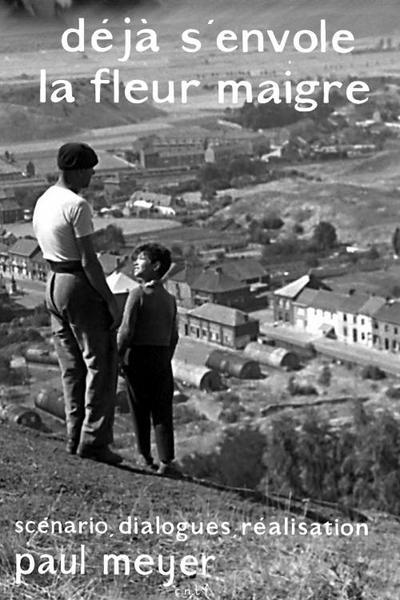
Paul Meyer – Déjà s’envole la fleur maigre AKA From the Branches Drops the Withered Blossom (1960)
1951-1960ArthouseBelgiumDramaPaul MeyerA diverse group of people from different nationalities struggle to earn a living in a Belgian coal-mining town. Hoping to find a better life, the dreams are shattered when coal prices hit an all-time low and production wipes out the main industry and livelihood of the workers.
Quote:
What was supposed to be a documentary to show the progressive nature of Belgium in regards to its immigration policy, turned out to be something completely the opposite. Struck by what he saw, the director decided to take the funds issued to him by the Belgian government to make a film which showed life as it really was in the mining region of Borinage. The promise of a better life for the immigrants, which the Belgian government wanted to show, was nowhere to be found in this film. Instead, we look in on reality of life in Borinage, with staggering unemployment, and a feeling by many of displacement and homesickness.Read More »