Arthouse

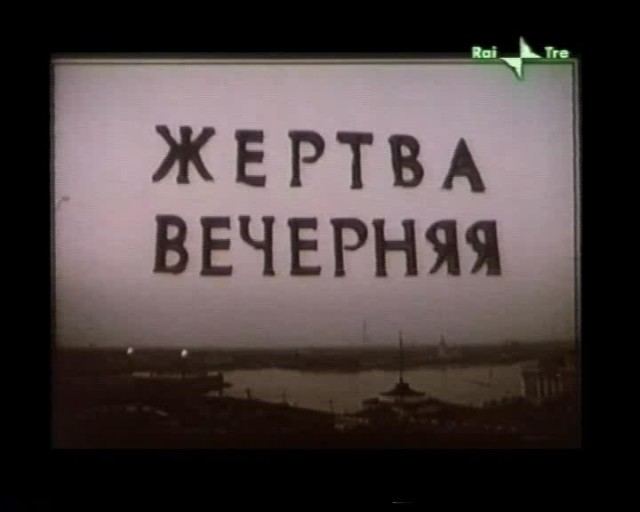
  • Aleksandr Sokurov – Zhertva vechernyaya AKA The Evening Sacrifice (1987)

    1981-1990Aleksandr SokurovArthouseDocumentaryUSSR

    29f7c043f76a2bde437fd0d52a185152

    Sokurov shows the official manifestation and fireworks on the 1st of May, one of the ritual celebrations of Soviet times, as a gathering of tired participants of a mass scene falling into pieces without the director’s orders and without any aims. Outbursts of joy without reason, mixed here and there with equally unmotivated signs of anxiety are given in brief sketches of a restless and pitiful crowd. A part instead of the whole, individual instead of common, a symbol growing up from details are the postulates of Eisenstein’s representation of the “people’s masses,” both the chorus and the protagonist of the Soviet official culture. Sokurov revises these postulates in the context of our time when the chorus has gone out of action, both in the aesthetic and in the social sense, and the protagonist is absent. However, both chorus and soloist are introduced into the picture of the festivity by the hand of the author: Sokurov puts a church canticle into the soundtrack of the film. It is an evening Orthodox prayer of repentance: “let my prayer be like incense before Thou, like my hands uplifted, an evening sacrifice.”Read More »
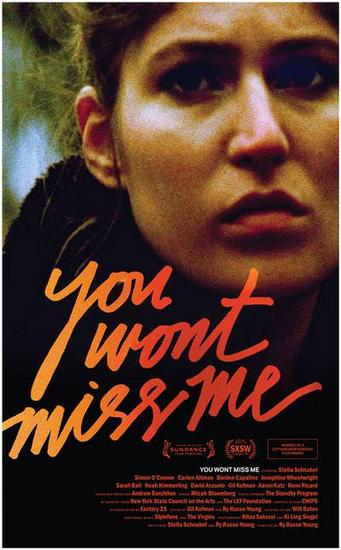
  • Ry Russo-Young – You Won’t Miss Me (2009)

    2001-2010ArthouseDramaMumblecoreRy Russo-YoungUSA

    29f7c043f76a2bde437fd0d52a185152

    Synopsis
    A woman struggling with a number of emotional demons tries to make sense of her life in this independent drama from writer and director Ry Russo-Young. Shelly Brown (Stella Schnabel) is the 23-year-old daughter of a woman with a long history of mental illness. Shelly has unfortunately inherited some of her mother’s instability, and the narrative follows her after she’s released from a brief stay in a mental hospital. Shelly dreams of a career as an actress, but at auditions she delivers readings that are intense enough to scare off most casting directors. Shelly wants to bond with other young women in the arts, but her paranoia and multiple insecurities make her a difficult friend at best and few of her peers are willing to bother. And while Shelly thinks she’s ready for a relationship, the manner in which she approaches men tends to result in rejections or one-night stands.Read More »

  • Jirí Menzel – Skrivánci na niti AKA Larks on a String [+Extra] (1969)

    1961-1970ArthouseCzech RepublicDramaJirí Menzel

    29f7c043f76a2bde437fd0d52a185152

    Long-Repressed Tale of Repression
    The junk heap to which the characters of “Larks on a String” are consigned is a kind of paradise. Here, in the early 1950’s, former members of Czechoslovakia’s banished bourgeoisie are nominally engaged in forced labor, but in fact are free to play cards, discuss philosophy, joke sardonically about their situation and languish as they choose.

    The men in this group — among them a professor who refused to destroy decadent Western literature, a saxophonist whose very instrument was considered an offense against the state and a lawyer who upheld the radical idea that a defendant ought to be allowed to plead his case — also spend a lot of time trading secret smiles and sidelong glances with a group of female prisoners nearby. The women, dressed in drably functional uniforms, nonetheless manage to look nymphlike as they laugh and frolic and hum little tunes. The setting is bleak and the season unspecified, but in spirit, it might as well be spring.Read More »

  • Mania Akbari – 10 + 4 (Dah be alaveh chahar) (2007)

    2001-2010ArthouseDocumentaryIranMania Akbari

    Free Image Hosting at www.ImageShack.us

    29f7c043f76a2bde437fd0d52a185152

    After casting painter and video artist Mania Akbari as the central figure of his groundbreaking Ten (2002), and then witnessing her outstanding debut as a feature film director in 20 Fingers (2004), Abbas Kiarostami urged her to direct a sequel to the film. In Dah be alaveh Chahar (10 + 4), though, circumstances are different: Mania is fighting cancer. She has undergone surgery; she has lost her hair following chemotherapy and no longer wears the compulsory headscarf; and sometimes she is too weak to drive. So the camera follows her to record conversations with friends and family in different spaces, from the gondola she had famously used in her first feature to a hospital bed. Yet, while he body shows the effects of the disease, Akbari is as tough, charismatic, and argumentative as in her previous screen appearances her luminous presence all the more alluring and precious as it becomes a sign of how fragile life itself is. Her cinematic language has been expanded and refined from the rigorous explorations of 20 Fingers, to take into account the unexpected aspects of facing simultaneously death and survival, social stigma and sympathy. Treading an elegant line between documentary and fiction, Akbari takes a daring look at complex social situations that arise in the face of mortality and emerges with a new zest for life.Read More »

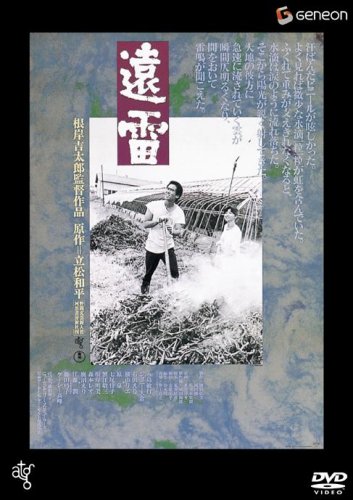
  • Kichitaro Negishi – Enrai AKA Distant Thunder (1981)

    1981-1990ArthouseDramaJapanKichitaro Negishi

    29f7c043f76a2bde437fd0d52a185152

    AMG wrote:
    Mitsuo Wada (Toshiyuki Nagashima) works at raising tomatoes in a greenhouse, next to a big public housing complex. Because his father has moved out to go live with his girlfriend, Mitsuo lives alone with his mother and grandmother, a situation that does not particularly curb his romantic life. First he becomes involved with Kaede (Rie Yokoyama) a cafe manager, but that is not going to be a very permanent relationship once he discovers she is married. Next, he goes through slightly more formal channels to meet Ayako Hanamura (Eri Ishida) and the two decide that marriage might be the best option for both of them. Unfortunately, his former lover Kaede has run off with his best friend, Hirotsugu Nakamori (Johnny Ogura) — who is in a lot of trouble already because of stealing some money — and the two are not heard from again until the day of Mitsuo’s wedding. Hirotsugu shows up alone at the wedding, bearer of a tragic tale — not the kind of auspicious beginning Mitsuo and his bride would have wanted for their new life together.Read More »

  • K.M. Madhusudhanan – Bioscope (2008)

    Arthouse2001-2010IndiaK.M. Madhusudhanan

    29f7c043f76a2bde437fd0d52a185152

    SYNOPSIS
    From the back of the case:
    The film Bioscope is set in the second decade of the 20th century. The film unfolds in the backdrop of cinema making its appearance in Kerala.

    The protagonist Diwakaran’s new journey begins with his acquisition of a bioscope from the Frenchman DuPont, who organizes bioscope shows on the coasts of Tamil Nadu. He returns home and starts conducting bioscope shows in his village. The villagers welcome the new images with innocence. Yet, some suspect that the bioscope box has ghosts of the British hidden in it.Read More »

  • Raoul Ruiz – Généalogies d’un crime AKA Genealogies of a Crime (1997)

    1991-2000ArthouseCrimeFranceRaoul Ruiz

    29f7c043f76a2bde437fd0d52a185152

    Drawing from an actual incident, artistically audacious director Raoul Ruiz and writer Pascal Bonitzer turn a story of psychoanalysis gone awry into a labyrinthine psychological mystery in Genealogies of a Crime. Weaving together flashbacks, flashbacks within flashbacks, multiple renditions of the alleged crime of le monstre, and surreal, voyeuristic compositions, Ruiz skewers psychoanalysis’ excesses in a narrative mind-bender that takes on such heady topics as nature vs. nurture, repetition-compulsion, and the nature of certainty. The dueling psychoanalytic societies provide moments of black comedy, with Michel Piccoli’s certifiably insane Georges as the ultimate dark joke. The flashback structure trickily melds Catherine Deneuve’s two identities as Rene’s lawyer and the embodied memory of the victim, suggesting that she may indeed be Rene’s karmic punishment. Yet there’s still the matter of that little girl holding a cat and a knife. Though some critics were put off by Ruiz’s pretensions, others deemed Genealogies of a Crime a beautifully shot and acted intellectual game, with Deneuve channeling an eerie psychosis reminiscent of her work with Roman Polanski and Luis Buñuel. — Lucia Bozzola, All Movie GuideRead More »

  • John Cassavetes – Cassavetes Gazzara Rowlands 1978 Interview (1978)

    USA1971-1980ArthouseDocumentaryJohn Cassavetes

    http://img268.imageshack.us/img268/3544/cassavetes19781.jpg

    This is a raw-footage version of a group interview for some unspecified TV station at a restaurant from 1978 with Cassavetes, Gena Rowlands, Ben Gazzara, Seymour Cassell and Paul Stewart on the occasion of Opening Night being released. It starts out with some general career-spanning questions to Cassavetes and then eventually gets into Opening Night with Cassavetes exhorting people to go see it in his own inimitable way. Mostly we hear from Cassavetes, Rowlands, Gazzara and Paul Stewart, with just a few reactions from Seymour Cassell who is sitting by listening and smoking.Read More »

  • Chantal Akerman – J’ai faim, j’ai froid AKA I’m Hungry, I’m Cold (1984)

    1981-1990ArthouseChantal AkermanDramaFrance

    Free Image Hosting at www.ImageShack.us

    29f7c043f76a2bde437fd0d52a185152

    Chantal Akerman was 15 years old when she saw the film Pierrot le Fou by Jean-Luc Godard. According to Akerman, who was born in Belgium in 1950, this was the impulse that motivated her to be a filmmaker. Akerman attended the Film Academy in Brussels for four months, but says that she found no inspiration there whatsoever. At the age of 18 she shot the short film Saute Ma Ville and made her first mark in the annals of film history with an explosive master piece that continues to be shown at film schools and is regarded today as one of the central short films of the 20th century.Read More »

Back to top button