Synopsis
Pipe (Michel Robin) has worked on the same farm for forty of his 66 years of living. Now he is in his “salad” years, and in retirement is free to explore the world in ways he never did before. He buys a small motorcycle with the help of an Italian migrant laborer and begins touring the countryside. Formerly somewhat docile, he gets into scrapes and fights, and eventually loses his cycle. Nonetheless, he has a chance to see the Alps from the sky. He has always wanted to see these legendary mountains, and is disappointed to realize that they are just big piles of rock.Read More »

Arthouse
-
Yves Yersin – Les Petites Fugues aka Little Escapes (1979)
1971-1980ArthouseDramaSwitzerlandYves Yersin -
Vicente Aranda – Fata Morgana (1965)
1961-1970ArthouseGialloSpainSpanish cinema under FrancoVicente Aranda“Gim is a beautiful fashion model whose life is in peril. There is a homicidal killer who seek to murder her only Gim is totally unaware of her danger. The only person who seems to be sure that the killer will strike is a professor at a local collage. A police detective also believes the killer will strike but knows not the killer nor the victim. Upon speaking to the professor he has the victims identity and must find her in the mostly deserted city populated by a small group of unusual people who attempt to thwart his search.Read More »
-
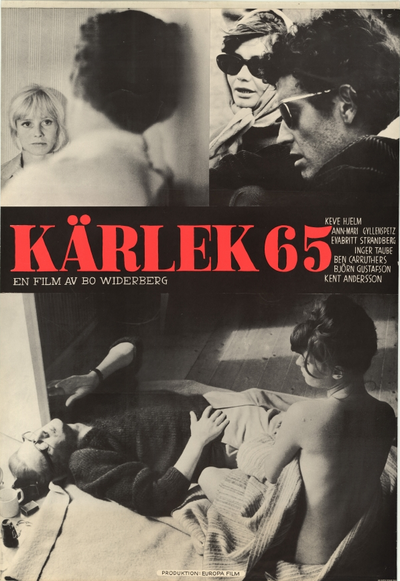
Bo Widerberg – Kärlek 65 AKA Love 65 (1965)
Drama1961-1970ArthouseBo WiderbergSwedenForeword: Love 65 shares common elements from director Michelangelo Antonioni, Federico Fellini and Jean-Luc Godard. Especially Fellini’s “8½” and Godards “Contempt” (both from 1963) which also deals with filmmakers, shares a striking resemblance to Love 65.
Synopsis: The movie is entirely built upon Keve, a successful movie director. He has a conveniently located cabin in the Kåseberga area on Österlen in Skåne, a beautiful wife, Ann-Marie, and daughter, Nina. All things considered, he should be happy but instead he feels unharmonical, lonely and disoriented. As every other summer he has invited his friends to a small party. Inger and Kent, a young couple in the divoce process are also there. During the preparations for the party, Keve leaves the cabin and walks about in the nearby village. He finds a poster which announces a lecture being held this day. He knows the lecturer Björn briefly and decides to go listen to what he has to say. At this very lecture he finds Björns wife Evabritt who makes a profound impression on Keve…Read More »
-
Rainer Werner Fassbinder – Querelle (1982)
Drama1981-1990ArthouseGermanyQueer Cinema(s)Rainer Werner Fassbinder

Quote:
More a dream about than a dramatisation of Genet’s novel, this is glorious and infuriating in equal parts. The port of Brest is built and lit more like one of Burroughs’ Cities of the Red Night, murderous deity Querelle’s ambisexual encounters are suffused with a sweaty, tangible eroticism, and Fassbinder’s ‘version’ stays faithful to Genet’s nightmare poetry. But its narrative detachment, weighty monologues, Resnais-like anachronisms, and (most irritating of all) listless rationale turn it into a lurid hymn to teenybop nihilism. All in all, perhaps an entirely appropriate parting shot from a drug-crazed German faggot. – TimeOut LondonRead More » -
Katsuhiro Otomo & Yoshiaki Kawajiri & Rintaro – Meikyû monogatari AKA Neo-Tokyo (1987)
1981-1990AnimationArthouseJapanKatsuhiro OtomoRintaroYoshiaki KawajiriFrom AMG:
Neo-Tokyo consists of three fast-paced tales set in a surreal cyberpunk landscape. Most of the tales center around either cops pursuing criminals or criminals running from the cops — none of the stories has a great deal of psychological depth. What makes this film an essential part of the animae canon is its particularly wonderful and inventive envisioning of the Tokyo of the future (which, in America, always seems like the Tokyo of today). As the late twentieth century counterpart to early modernist city symphonies and mid-century noirs, Neo-Tokyo has a good deal to say about 21st century metropolitan life and its effects on the human condition. It’s merely icing on the cake that it does so with a fabulous blend of humor and technological terror. –Read More » -
Franco Piavoli – Il Pianeta Azzurro AKA The Blue Planet [+Extras] (1982)
1981-1990ArthouseDocumentaryFranco PiavoliItalySynopsis
The film follows the cycle of the seasons upon a rural landscape, from the reawakening of life following the Winter thaw to the blossoming of Spring, the heat of Summer working in the fields and the twilight of Autumn. Man is confronted by nature through the succession of seasons and in the essential moments of his existence: youth, love, food, work, pain.Read More » -
Henrikas Sablevicius – Atspindziai AKA Reflections [Restored] (1968)
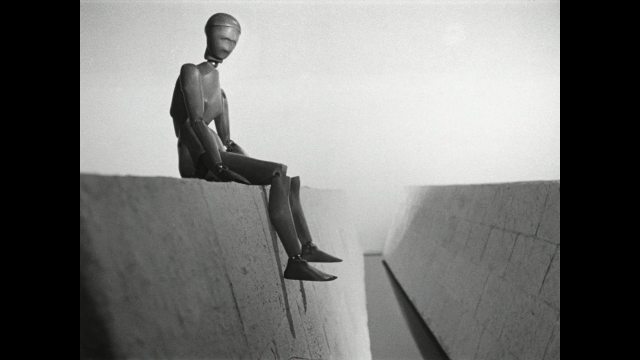
1961-1970ArthouseFantasyHenrikas SableviciusUSSR“Reflections” is a film created by Henrikas Šablevičius and the national television. Back then, the movie was seen as unconventional in the context of Lithuanian cinema: it employs a surrealistic etude of no clear narrative and has an extreme form. Thus, immediately after the release it was banned and had been unnoticed for almost two decades. By bringing graphic artist Stasys Krasauskas’ works to life in the conditional spaces of “Reflections”, the director, only by means of images, creates a story about human’s duality, the search for self, liberation, accepting the agency of the past and a limited opportunity to choose.Read More »
-
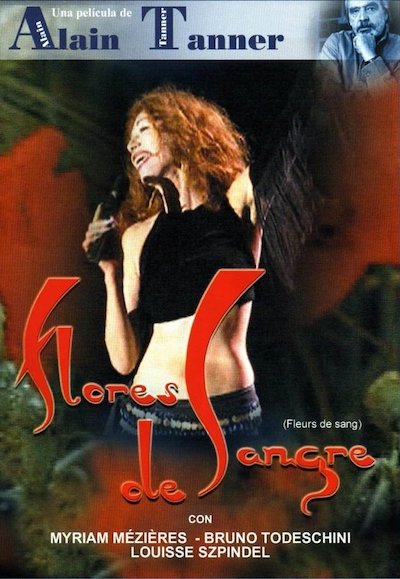
Myriam Mézières & Alain Tanner – Fleurs de sang AKA Flowers of Blood (2002)
Drama2001-2010ArthouseMyriam MézièresSpain

Quote:
As its titles suggests, Flowers of Blood belongs entirely to the physical and sensual dimension of Tanner’s œuvre – a dimension contributed by Myriam Mézières in a Flame in my Heart and The Diary of Lady M. The script in this case was written by Mézières herself, based on her own memories, and she actually co-directed the film with Tanner.Read More » -
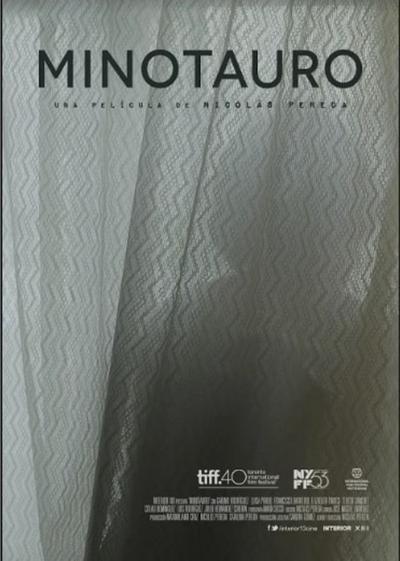
Nicolás Pereda – Minotauro (2015)
2011-2020ArthouseMexicoNicolás PeredaNicolás Pereda / Mexico-Canada, 2015 / New York, Toronto / 53′
Two young men and a young women occupy a flat in Mexico City. They spend their days reading alone, reading aloud, and sleeping. From time to time, a maid arrives to tidy their quarters. Time and even space cease to exist; there is only the present somnambulant moment, drifting between sleep and wakefulness.
A wraithlike fantasy capturing the languorous texture of privilege, Minotaur studies both the nearly-obsolete ritual of cloistering oneself from the world to read, and the social status that would make such an activity possible. Nicolás Pereda’s seventh film premiered at both the New York Film Festival and Toronto.Read More »